General Intuition Raises $220M for World Models That Generate Training Video
The AI startup, which spun out of gaming platform Medal a year ago, closed a funding round led by Valor Equity Partners and valued at $6.2 billion. The capital will support hiring as the company moves its video generation technology toward commercial deployment.
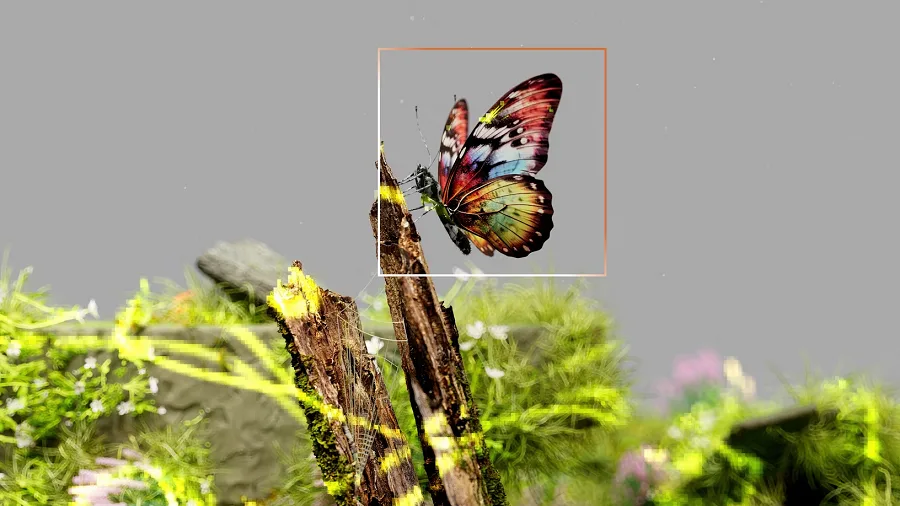
General Intuition Inc. announced a $220 million funding round at a $6.2 billion valuation today. Valor Equity Partners, Atreides, Seven Seven Six, Point72, Khosla Ventures and General Catalyst participated in the investment.
The company emerged from Medal B.V., a video sharing platform for gaming, roughly one year ago. Medal offers users a free application to capture and record video game footage, which General Intuition leverages to train its artificial intelligence systems.
Training AI models requires feeding them examples of the tasks they will eventually perform. A robot learning to weld car parts, for instance, needs exposure to footage of welding operations. Creating such training data by hand is often laborious and expensive.
General Intuition addresses this bottleneck by building world models capable of producing synthetic video for training purposes. The company unveiled MIRA, its latest algorithm, in June. According to the company, MIRA outperforms its predecessors in several key dimensions.
Capabilities and Technical Approach
Existing video generation tools face significant limitations. Most can only produce clips lasting seconds or minutes, making them unsuitable for simulating extended factory automation sequences. This constraint reduces their value for roboticists developing autonomous systems.
MIRA operates differently. The model can "run infinitely without diverging." Additionally, it renders intricate scenes featuring multiple objects moving rapidly and interacting with each other. This capability proves valuable for training robots to navigate and avoid obstacles.
Performance efficiency distinguishes MIRA from competing approaches. Using a single B200 graphics card, the model generates 20 frames per second at 720 by 576 pixel resolution.
The efficiency gains stem partly from latent diffusion, a computational technique MIRA employs. Rather than processing individual video frames directly, the model operates on a latent space—a compressed data representation requiring less memory than raw video. Reducing memory demands accelerates processing speed.
MIRA's parameter count also contributes to its efficiency. The algorithm contains 5.6 billion parameters, substantially fewer than those found in state-of-the-art frontier models.
Path to Commercialization
Currently, MIRA functions as a research demonstration rather than a production-ready commercial tool. In its present form, it can only generate synthetic footage from a single video game. Despite this limitation, General Intuition characterizes MIRA as a "stepping stone to physical AI."
The company is piloting a commercial iteration with a select group of customers focused on robotics, simulation and entertainment applications. General Intuition launched a waitlist for the commercial offering alongside today's funding announcement. The company plans to deploy the fresh capital toward expanding its AI research team.
Read more

Spotify Founder's Health Screening Startup Neko Brings Preventative Medicine to the U.S.
The body-scanning company co-founded by David Ek has arrived in New York with a 300,000-person waitlist and backing from nearly $1 billion in funding.
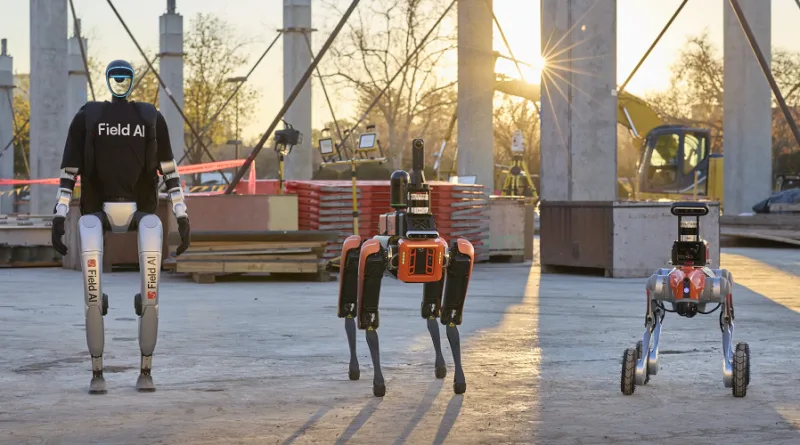
FieldAI Seeks $700M at $10B Valuation as Robot AI Demand Accelerates
The robotics AI startup is in advanced fundraising talks that would quintuple its valuation from last year, according to sources familiar with the matter.

Tech hiring slows even as employers post record open positions
A surge in IT job listings to three-year highs masks a contraction in actual hiring, with technology sector roles declining and unemployment ticking upward.