Gatik Secures $200M to Expand Autonomous Trucking Fleet Across North America
The self-driving freight company has raised Series D funding led by Qatar Investment Authority and Koch Disruptive Technologies, bringing its total contracted revenue to over $600 million.
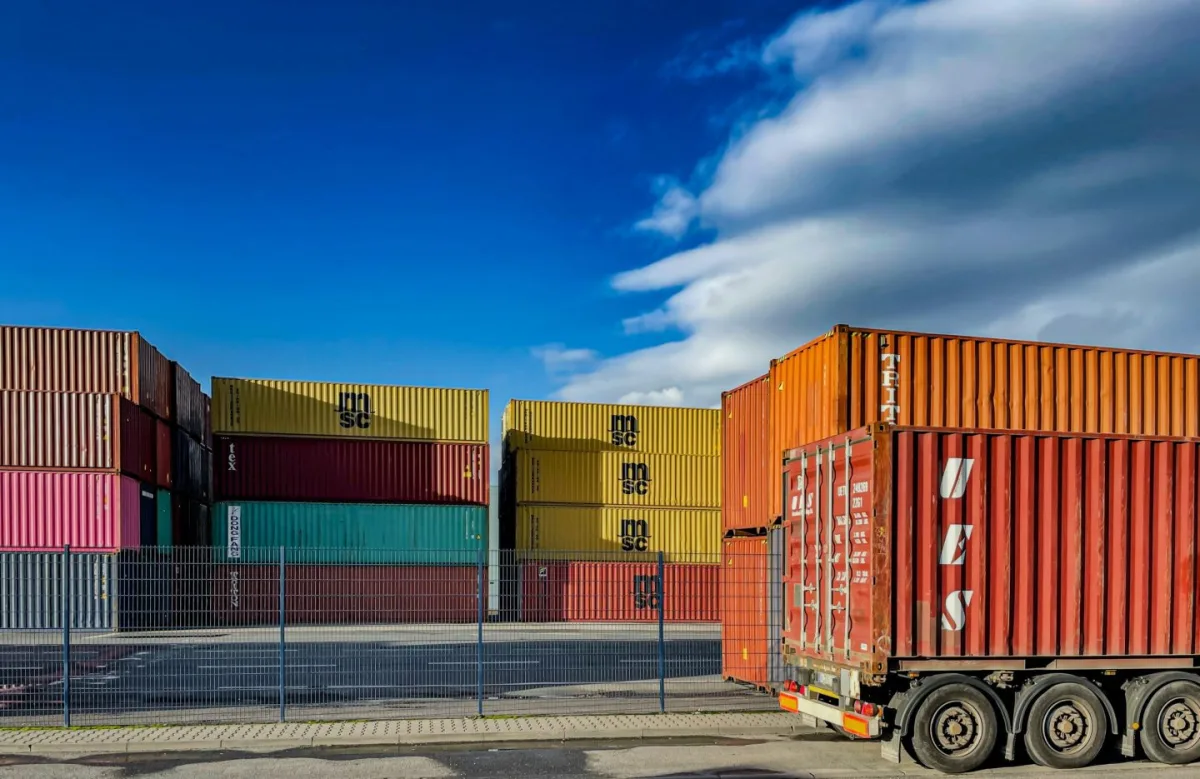
Gatik, which operates autonomous trucks for regional freight, has closed a $200 million Series D funding round to accelerate expansion of its driverless operations throughout North America. Qatar Investment Authority and Koch Disruptive Technologies spearheaded the investment, joined by Millennium Management, ARK Invest, Intact Private Capital, and additional backers.
The company has accumulated more than $600 million in contracted revenue and has successfully completed 85,000 fully autonomous orders. Gatik's operations maintain a 99% on-time delivery rate. Its autonomous vehicles currently transport goods between distribution hubs and retail locations across Texas, Arizona, Arkansas, and Canada, with dozens of fully driverless trucks now operating in the field. The company intends to grow its fleet to thousands of vehicles in the years ahead.
According to a Gatik spokesperson speaking to Reuters, the company aims to have more than 100 driverless trucks operational by the conclusion of 2026. The fresh capital will support commercial expansion, fleet growth, and continued investment in technology development, infrastructure, and workforce development.
From fixed routes to dynamic freight networks
Gatik's autonomous platform targets middle-mile freight operations on regional routes spanning both highways and local roads. The company's proprietary AI system, known as Gatik Driver, powers its autonomous freight capabilities. Its fully driverless trucks operate without any human driver or safety observer present.
When Gatik and Loblaw unveiled their initial Toronto operation in 2020, the deployment consisted of five vehicles running on five set routes with predetermined pickup and delivery points. By 2022, Gatik's fully autonomous Loblaw service was moving ambient, refrigerated, and frozen products from a distribution facility to five nearby retail locations. Loblaw characterized these routes as fixed, repetitive, and predictable.
More recent Gatik deployments have evolved significantly. PepsiCo noted that Gatik's newer systems can traverse both highways and local streets using dynamic route orchestration across networks with hundreds of potential pickup and drop-off points. PepsiCo explained that route adjustments—such as adding or removing stops, responding to demand fluctuations, and accommodating distribution centre activity changes—can be implemented within existing transportation operations without substantial network modifications.
TechCrunch reported that Gatik's operations have progressed from fixed trips under 10 miles to dynamic routes with dozens of stops spanning up to 400 miles. The company has concentrated its development on middle-mile freight, where goods travel between facilities like warehouses, distribution centres, and stores rather than to end consumers.
In June 2026, Gatik signed a multi-year contract with PepsiCo to deploy autonomous freight vehicles within PepsiCo's North American supply chain. The trucks are currently running across Texas, Arizona, and Arkansas, focusing on regional transportation networks with high-frequency product movement between sites. TechCrunch reported that the PepsiCo operation includes 41 fully autonomous box trucks transporting Frito-Lay products between distribution centres and stores in Dallas, Phoenix, and northwest Arkansas. PepsiCo's initial Gatik deployment started in 2022, several years before the companies expanded their commercial relationship in 2026.
Gatik has also deepened its partnership with Canadian retailer Loblaw. In September 2025, the two companies entered a five-year agreement for an initial deployment of 50 autonomous trucks across Loblaw's distribution network in the Greater Toronto Area. The plan calls for 20 trucks to be deployed by the end of 2025, with an additional 30 by the end of 2026. These vehicles will serve more than 300 Loblaw stores and transition from safety-driver operations to fully autonomous freight service.
Gatik and Loblaw started autonomous deliveries in 2020 and removed the safety driver from commercial routes in 2022. Prior to the fully autonomous deployment, the companies had completed more than 150,000 autonomous deliveries with a safety driver present.
Scaling AI and autonomous truck production
Gatik leverages simulation and synthetic data to develop and test its autonomous driving software. In July 2025, the company unveiled Arena, an internally created simulation platform designed to recreate driving environments without depending solely on real-world road testing. Arena produces structured synthetic data for testing autonomous driving performance across various conditions, including routine scenarios and rare or high-risk situations that are difficult to replicate repeatedly during actual operations.
Arena incorporates Nvidia Cosmos world foundation models to generate synthetic driving environments for training and validation. The platform can modify driving conditions and recreate infrequent scenarios from commercial operations, enabling Gatik to test identical situations repeatedly in a simulated setting.
Gatik also relies on Nvidia hardware for onboard AI processing. Nvidia announced in March 2025 that Gatik was incorporating DRIVE AGX into its Class 6 and 7 autonomous trucks to handle real-time processing of data required by its autonomous driving system. Nvidia characterizes DRIVE AGX as the onboard computing platform that processes real-time sensor data and executes AI workloads for autonomous driving.
Isuzu Motors invested $30 million in Gatik during 2024 as part of a partnership to develop Level 4 autonomous commercial vehicles in North America. The two companies are jointly designing a redundant chassis built for autonomous driving. Isuzu stated that the redundancy is intended to offer a recovery mechanism if the autonomous driving software encounters a defect.
Isuzu and Gatik are aiming for mass production of their jointly developed chassis beginning in 2027. Isuzu is also targeting 2027 for the launch of its Level 4 autonomous commercial vehicle business. Isuzu's 2025 integrated report identifies Gatik as its partner for autonomous logistics using medium-duty trucks in the North American middle-mile market, covering both autonomous vehicle development and mass production of chassis for autonomous systems.
Gatik's trucks are classified as Level 4 autonomous vehicles. At this level, the automated driving system can execute the driving task independently without human intervention when operating within the conditions for which it has been designed and validated. These operating limits are typically defined through an Operational Design Domain, or ODD. Isuzu defines an ODD as the road, geographic, environmental, and other conditions that must be met before an autonomous driving system can operate.
Gatik's current third-generation trucks function on both highways and surface streets. CEO Gautam Narang told TechCrunch that the vehicles can operate continuously throughout the day and manage conditions including light rain and snow.
Read more

Spotify Founder's Health Screening Startup Neko Brings Preventative Medicine to the U.S.
The body-scanning company co-founded by David Ek has arrived in New York with a 300,000-person waitlist and backing from nearly $1 billion in funding.
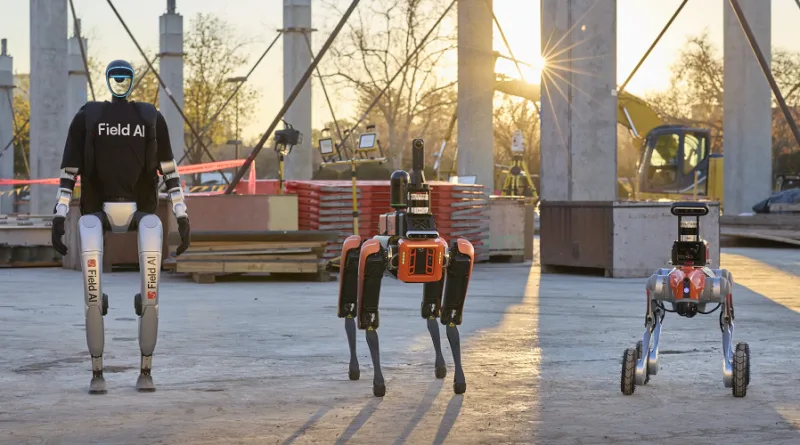
FieldAI Seeks $700M at $10B Valuation as Robot AI Demand Accelerates
The robotics AI startup is in advanced fundraising talks that would quintuple its valuation from last year, according to sources familiar with the matter.

Tech hiring slows even as employers post record open positions
A surge in IT job listings to three-year highs masks a contraction in actual hiring, with technology sector roles declining and unemployment ticking upward.