From Prototype to Ulta: How Dawn Myers Built a Hardware Company for Textured Hair
Richualist founder Dawn Myers created Mint, a tool that cuts wash day from over an hour to just minutes. Her journey from sketching on a legal pad to securing investment from Mark Cuban reveals the overlooked market for textured hair technology.
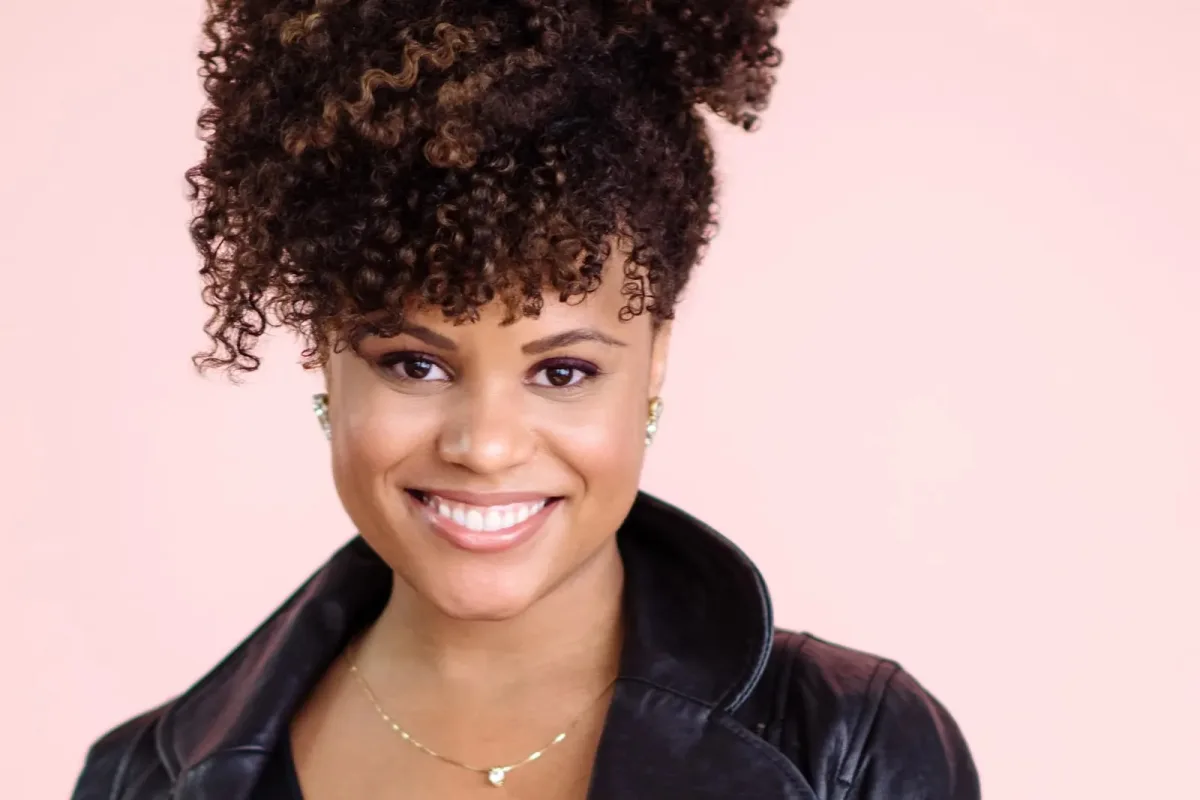
Dawn Myers spends considerable time managing her afro during wash days—a routine that involves extensive detangling, multiple products, and styling work that stretches beyond an hour. Like many people with textured hair, she found the process exhausting and wondered why the beauty hardware industry had overlooked this fundamental need.
The spark came roughly eight years ago while watching Shark Tank. A curly hair product pitch made her reconsider the tools available on shelves: blow dryers, curling irons, and other devices designed to straighten and chemically alter naturally curly hair. "I was watching 'Shark Tank,' and there was another curly girl idea," she recalled. "It takes around an hour and 20 minutes to wash and style her own hair." Myers recognized a persistent gap in the market—hardware designed specifically for textured hair remained virtually nonexistent.
The absence of such tools reflects deeper historical patterns. "If you think back to slavery, we were mandated to cover our hair. That's where do-rags come from. You had to cover your hair. Why? Because our hair was seen as ugly and unkempt and unacceptable," Myers explained. Hot combs, chemical relaxers, and flat irons followed, all engineered to straighten textured hair. "It's only been the past 15 years or so where women of color and Black women in particular and, quite frankly, white women as well have really felt comfortable exposing their naturally curly hair and really just embracing it."
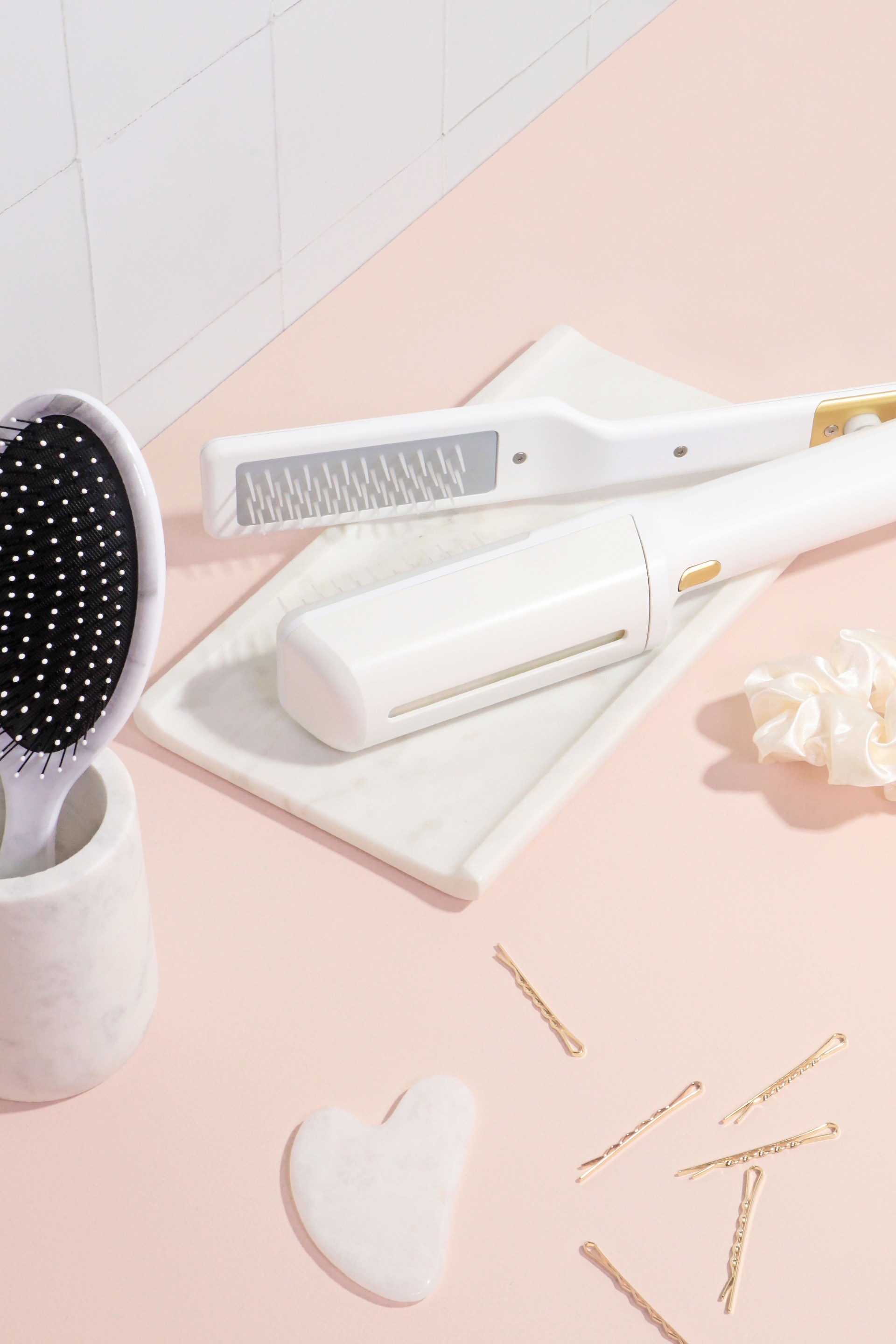
Myers moved quickly from inspiration to action. She sketched out her business concept on a legal pad, then assembled a working prototype using materials from Ace Hardware and CVS. That rough prototype eventually evolved into Richualist and its flagship product, Mint—a hair tool that detangles, conditions, applies gel, and styles in a single motion using refillable product pods. The device includes warming technology that gently heats the product before application.
The results speak for themselves. "We get that styling time down to about seven to 10 minutes," Myers said. "It's a massive game changer for the customer really stressed out by wash day." The tool also reduces shedding and breakage by up to 70% since users no longer need to repeatedly tug on their strands. A travel-size version extends the product's reach to people on the go.
Materials science company Dow became instrumental to Richualist's development. An early prototype caught Dow's attention during a startup accelerator program, and the company had independently identified textured hair care as an emerging opportunity. "It just so happens that Dow had identified this white space recently as well, and they were starting a textured hair care unit," Myers said. "So they ended up collaborating with us and giving us a lot of engineering help and manufacturing guidance."
Securing funding proved far more difficult than building the product. Hardware startups face skepticism from investors, and a niche problem targeting textured hair faced even steeper resistance. Myers encountered beauty industry executives unfamiliar with the concept of wash day itself. "There are no people who look like me in those R&D suites," she noted. "When she described wash days, these people didn't know what a wash day was. They didn't understand that there's this whole process that their customers have to go through." The industry's lack of understanding extended to the science: "Even the bonds in our hair are totally different than other technology types. We really do need bespoke technology."
Myers made an extraordinary personal sacrifice to move forward. She sold her home and withdrew funds from her 401(k) retirement account to finance initial product development. "That was a crazy bet, but it paid off," she said. The effort yielded approximately $1.4 million to commercialize and validate the product. The entire development cycle spanned roughly five years, during which Myers and her team conducted their own market research since industry data on textured hair care—such as average product consumption—did not exist.
Just as expansion and market launch approached in 2022, Myers received a stage three colorectal cancer diagnosis. She closed a funding round while undergoing treatment, managing deal negotiations from a chemotherapy chair at Johns Hopkins. She applied to Shark Tank in 2023 and appeared on the program later that year, with the episode airing in 2024. "I was still wearing a binder around my abdomen [a compression wrap] under the dress I wore for my 'Shark Tank' experience," she said.
The Shark Tank appearance yielded a deal with investor Mark Cuban and serial entrepreneur Emma Grede. With their backing, Richualist formally launched Mint and expanded into Ulta's online platform earlier this year. "We're actually about to market ourselves as sold out," Myers said, as the company plans further expansion strategies.
Richualist earned selection as one of TechCrunch's Startup Battlefield 200 companies this year, securing a spot at TechCrunch Disrupt, the publication's flagship annual startup conference. When asked how she learned about the event, Myers laughed. "I mean, who doesn't know about Disrupt?" Though she described herself as an introvert bracing for the networking demands, she expressed genuine excitement about the opportunity. "But what I am most excited for is textured hair to be sitting on the stage with some of the most sophisticated tech in the space."