From Medicine to Marketplace: How a London-Trained Doctor Built a Healthcare Staffing Platform
Iman Abuzeid abandoned her medical career to tackle a larger problem: the healthcare industry's broken hiring process. Her startup, Incredible Health, has raised $97.5 million by flipping the script—making employers compete for workers instead.
After finishing medical school in London, Iman Abuzeid chose a path that disappointed her father: she declined to pursue a residency. Yet her decision wasn't rooted in waning passion for healthcare. Rather, she recognized that software could amplify her impact far beyond what individual patient care could achieve.
"Working as a doctor is great, but you're only working with one patient at a time," she explained in conversation with Crunchbase News. "With software, you have millions of users using your products."
That insight led Abuzeid to co-found Incredible Health, a San Francisco-based platform for healthcare hiring that has secured roughly $97.5 million in backing from investors including Andreessen Horowitz, Base10 Partners, Obvious Ventures, Precursor Ventures and NFX. The company now serves 1.5 million healthcare professionals—encompassing one in every two U.S. nurses—alongside 1,500 healthcare employers.
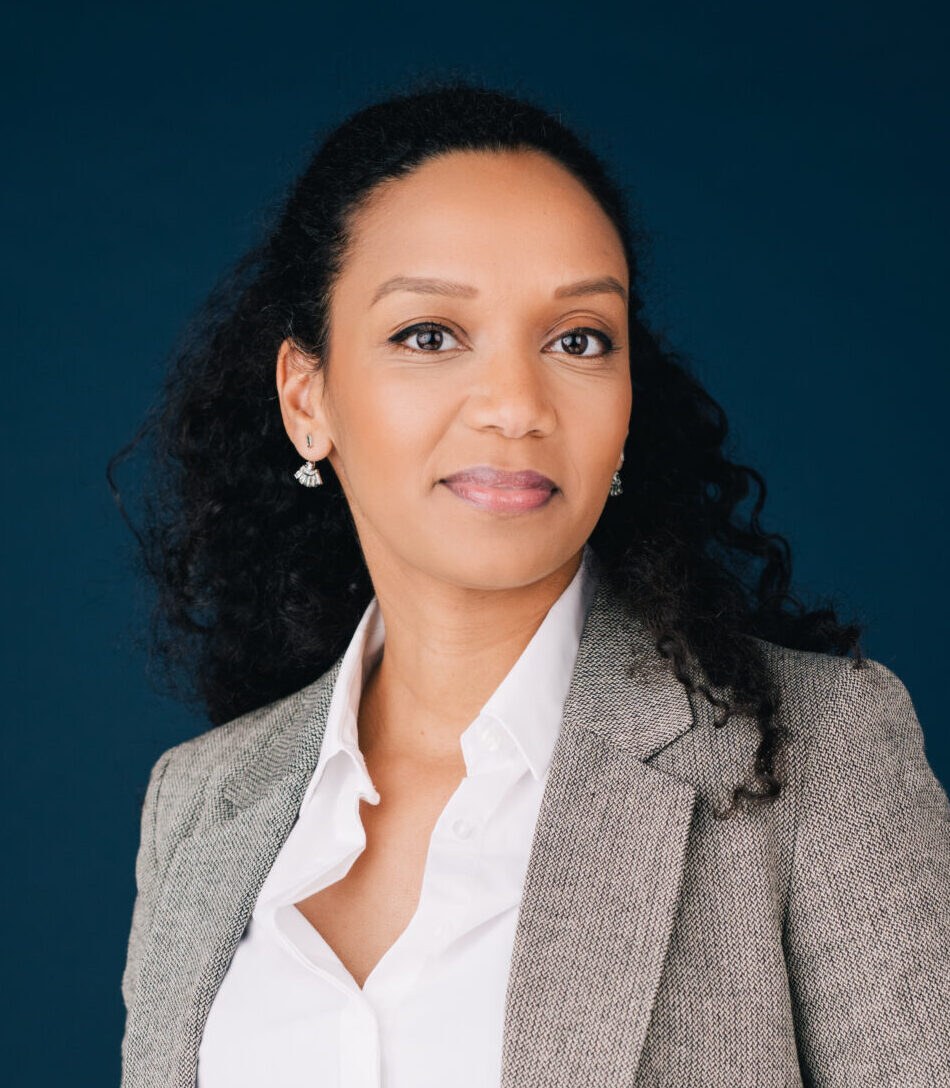
Before launching Incredible Health in 2017, Abuzeid completed medical training, provided strategic guidance at Booz Allen and McKinsey, and held a product management role at a health tech venture. Notably, she possessed no software coding skills.
A Medical Degree, Not a Medical Practice
Abuzeid hails from Sudan but spent her formative years in Saudi Arabia and the United Arab Emirates. At 18, she relocated to London to pursue undergraduate studies and medical education.
Entrepreneurship captured her imagination long before medicine did. Both of her grandfathers had built businesses in Sudan, and she absorbed their stories throughout her youth. As medical school progressed, the scalability and reach of technology and entrepreneurship increasingly appealed to her.
Upon completing her medical degree, Abuzeid moved to New York at age 24. Her tenure in healthcare consulting roles at Booz Allen and McKinsey gave her insight into the strategy, operations and financial mechanics underpinning the healthcare system.
She subsequently obtained an MBA from the Wharton School, concentrating on healthcare and entrepreneurship, then relocated to San Francisco in 2013. There, she joined an early-stage health tech firm in a product management capacity, where she learned to collaborate with engineers, data scientists and designers while observing how software products are constructed and scaled.
This role also introduced her to Rome Portlock, the software engineer who would eventually become her co-founder at Incredible Health.
Abuzeid remains a non-coder, though she has experimented with newer AI-powered coding tools. Portlock, an MIT-educated engineer whom she describes as "the best engineer I've ever worked with," has directed Incredible Health's engineering and data operations since inception.
Yet Abuzeid, serving as the startup's CEO, contends that a software founder's principal responsibility lies elsewhere. "At the end of the day, when it comes to creating software companies, it's about solving problems," she stated. "It's about identifying the markets, understanding the problems customers are facing and figuring out ways to solve them."
Spotting a Disconnect in Healthcare Recruitment
The founders identified the core problem through conversations within their own networks. Physicians in Abuzeid's circle frequently griped about staffing shortages. Simultaneously, nurses in Portlock's family reported submitting applications to numerous positions without receiving responses.
The contradiction was striking. Healthcare represents the largest employment sector in the United States by workforce size, Abuzeid noted, and it grapples with acute staffing deficits. Yet seasoned nurses struggled to gain traction with employers desperately seeking their expertise.
"We started to dig into it more, and we were like, 'This doesn't make any sense,'" she recalls.
Investigation revealed that hospital recruiting departments were typically lean, swamped with applications, and dependent on manual hiring procedures.
Incredible Health's answer inverts conventional hiring dynamics: employers submit applications to healthcare workers rather than the reverse. The platform automates candidate screening and job matching for permanent positions across hospitals, surgical centers, home health agencies and similar healthcare organizations.
Healthcare professionals access the service at no cost. Employers pay annual subscription fees for marketplace access and the company's additional recruitment tools. Major clients include Kaiser Permanente, Tenet Health, Trinity Health and Johns Hopkins.
A Deliberate Approach to Investor Selection
Incredible Health has accumulated approximately $97 million across seed, Series A and Series B funding rounds.
The fundraising journey required persistence. During the seed round, Abuzeid engaged with roughly 70 potential investors, with eight ultimately committing capital, including Obvious Ventures and Precursor Ventures.
At that stage, Abuzeid had to educate investors about the healthcare labor market and demonstrate that she and Portlock possessed the right qualifications to address it. "I think it was the vision and the mission and the team," she said. "At that point, you're really investing in the founders."
Each subsequent funding round attracted more capital than the company sought. Abuzeid credits this partly to fundraising from a position of financial stability. Incredible Health typically maintains near cash-flow break-even operations and has occasionally achieved positive cash flow.
Abuzeid exercises caution in selecting investors. She gravitates toward firms with marketplace expertise and partners with operating experience. She also values investors who have previously backed women and founders from underrepresented backgrounds.
"I don't want to be the first," she said. "I'm not here to overcome someone's bias. That's not a good use of my time."
While acknowledging systemic inequities in venture capital, Abuzeid clarified that she didn't partner with Portlock to counterbalance gender dynamics. Instead, she recognized that a technically proficient collaborator would complement her own skill set.
Abuzeid believes female founders should emphasize boldness in their pitches. Investors routinely hear ambitious narratives from male founders, she argues, and women ought to articulate equally expansive visions for their companies.
"It's really important to be ambitious and to be very clear about your vision and what you're trying to achieve," she said.
Automating Initial Screening Conversations
In 2025, Incredible Health joined the broader startup movement by integrating AI into its product suite.
The company built these agents collaboratively with healthcare systems such as Baylor Scott & White Health, Sutter Health, Johns Hopkins and Tenet Health. Involving customers during development enabled Incredible Health to embed the technology more seamlessly into existing enterprise workflows, Abuzeid noted.
One agent, Lyn, performs the initial recruiter conversation, poses clinical and behavioral questions, communicates the employer's value proposition, and outlines available positions. The candidate then moves forward for a potential meeting with a hiring manager.
A second agent, Gail, assists healthcare professionals in constructing résumés and preparing for interviews.
According to Abuzeid, Lyn has trimmed hiring timelines by 30%. Three-quarters of interviews now commence within 24 hours of application submission, compared with as long as two weeks previously. Roughly 40% happen outside standard business hours, when recruiters are typically unavailable.
These AI offerings extend Incredible Health's foundational objective of eliminating recruitment delays. They also exemplify how the founders' distinct expertise creates value. Portlock continues overseeing engineering, data and technical infrastructure, while Abuzeid draws on her background in medicine, healthcare consulting and product strategy.
For Abuzeid, this division of labor underscores her conviction that technical proficiency is not essential for launching a software company. "At the end of the day, when it comes to creating software companies," she said, "it's about solving problems."
Read more

Spotify Founder's Health Screening Startup Neko Brings Preventative Medicine to the U.S.
The body-scanning company co-founded by David Ek has arrived in New York with a 300,000-person waitlist and backing from nearly $1 billion in funding.

FieldAI Seeks $700M at $10B Valuation as Robot AI Demand Accelerates
The robotics AI startup is in advanced fundraising talks that would quintuple its valuation from last year, according to sources familiar with the matter.

Tech hiring slows even as employers post record open positions
A surge in IT job listings to three-year highs masks a contraction in actual hiring, with technology sector roles declining and unemployment ticking upward.