Evvy Closes $40M Series B to Expand Women's Health Data Platform Beyond Vaginal Microbiome Testing
The women's health startup, which operates a home-based microbiome analysis service, is using fresh capital to build a comprehensive dataset connecting biology, symptoms and outcomes while launching into fertility research.
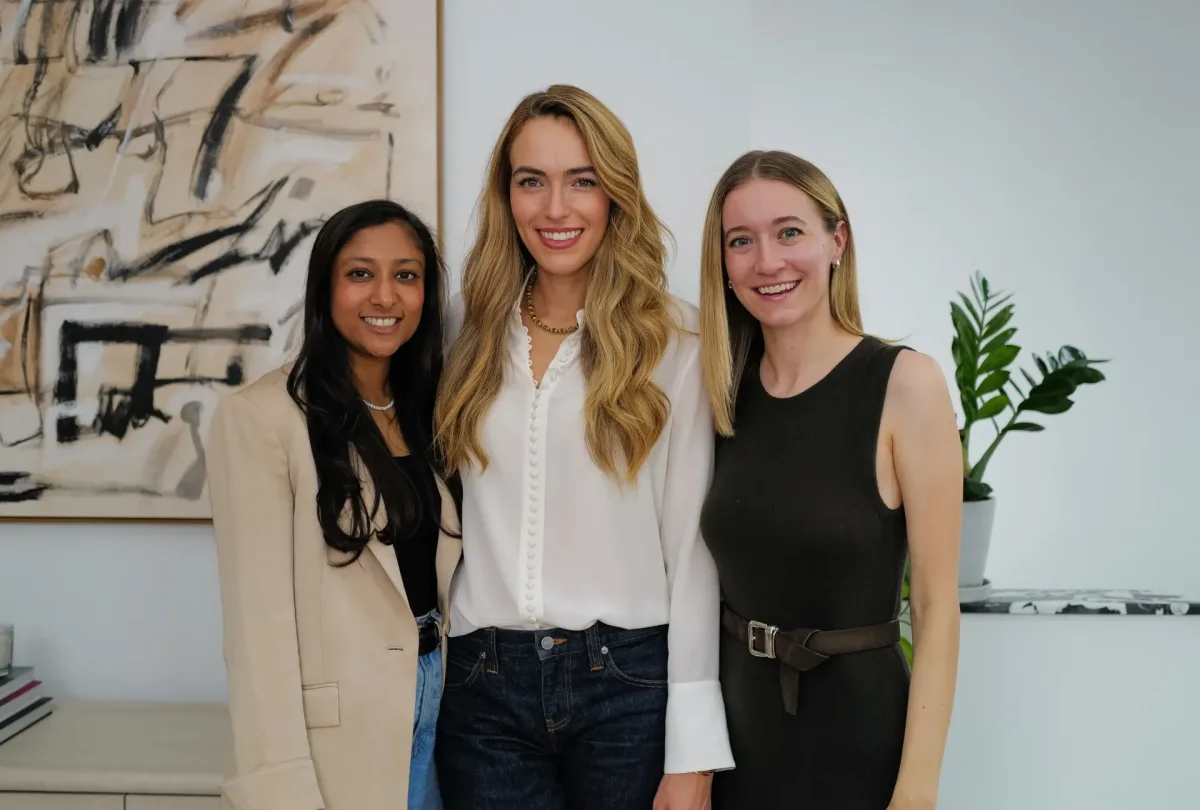
Evvy, a women's health technology company, announced Tuesday that it has secured $40 million in Series B funding, with Catalio Capital Management leading the round.
Founded in 2021 by Priyanka Jain, Laine Bruzek, and Pita Navarro, Evvy operates what the company describes as the only at-home CLIA-certified and CLEP-certified mNGS test for analyzing vaginal microbes using a single swab. Patients mail their samples to Evvy's laboratory, where metagenomic next-generation sequencing is performed. Results are then reviewed by clinicians on the platform and made available through a patient health portal.
According to Jain, "When a patient receives their results, they are presented alongside a diagnosis, clinical interpretation, and a clear path of next steps, including personalized prescription care when relevant."
The company now serves more than 100,000 patients nationwide and partners with 3,000 practitioners. Jain noted that Evvy has generated 15 peer-reviewed publications and abstracts, identified novel bacterial vaginosis subtypes, and discovered hundreds of previously uncatalogued vaginal microbiome genomes. Practitioners using the platform can leverage this collected data to deliver individualized treatment approaches to their patients.
Building a Comprehensive Women's Health Dataset
Beyond clinical treatment, Evvy's broader mission centers on constructing a dataset that integrates microbiome biology, symptoms, medical interventions, and health outcomes. Jain explained that this approach aims at "creating a continuous feedback loop that unlocks improvements to care and the discovery of entirely new biomarkers."
A significant challenge in precision medicine today is the scarcity of high-quality, representative biological data from female bodies. Jain observed that "You can't build precision medicine for women on datasets that never adequately measured female biology in the first place," pointing out that prominent AI models frequently fall short when addressing women's health questions.
She emphasized that "AI for women's health needs to be paired with new biological data at scale. AI can help us identify patterns across molecular signals, hormones, symptoms, treatments, fertility outcomes, and other biomarkers that traditional medicine has struggled to connect."
AI Integration and Fertility Expansion
In May, Evvy introduced EvvyAI, an artificial intelligence assistant focused on vaginal health guidance. The tool converts microbiome data collected by Evvy into real-time recommendations for users and directs patients to qualified clinicians when specialized expertise is needed.
The company is now expanding into the fertility sector, marking its initial major move beyond vaginal health applications. Evvy is currently gathering data and conducting research that connects vaginal microbiomes to infertility, gynecological cancer, preterm birth, IVF success rates, and recurrent pregnancy loss. A prospective study utilizing Evvy's vaginal microbiome tests in IVF clinics launched last year.
Jain stated that accumulating additional women's health data can help medicine move past the unexplained. She said, "Women shouldn't have to accept unexplained infertility, unexplained recurrence, or unexplained symptoms as answers when what they often mean is that medicine hasn't caught up to the data yet."
Other companies operating in the vaginal health space include Juno Bio, Tiny Health, and Daye.
Long-Term Vision
Looking ahead, Jain envisions Evvy creating a modern equivalent of the Pap smear. She described this as "An at-home, non-invasive sample that can provide women with more regular, data-rich insights across infections, inflammation, fertility, PCOC, endometriosis, premenopause, HPV progression, and more."
Jain concluded that "I don't think we can wait for traditional research methods to catch up. I believe women, as patients, can be part of pushing the industry forward."
Read more

Spotify Founder's Health Screening Startup Neko Brings Preventative Medicine to the U.S.
The body-scanning company co-founded by David Ek has arrived in New York with a 300,000-person waitlist and backing from nearly $1 billion in funding.

FieldAI Seeks $700M at $10B Valuation as Robot AI Demand Accelerates
The robotics AI startup is in advanced fundraising talks that would quintuple its valuation from last year, according to sources familiar with the matter.

Tech hiring slows even as employers post record open positions
A surge in IT job listings to three-year highs masks a contraction in actual hiring, with technology sector roles declining and unemployment ticking upward.