Depthfirst Secures $80M Series B to Build Security-Focused AI Models
The AI-native security startup is expanding its research capabilities and launching its first proprietary model designed specifically for detecting vulnerabilities in cryptocurrency smart contracts.

Depthfirst Inc., an artificial intelligence-native security platform, has announced a Series B funding round of $80 million aimed at developing specialized security models across multiple domains, growing its AI research capabilities, and accelerating enterprise customer adoption.
Established in 2024, depthfirst addresses a critical challenge in modern software development: the gap between the velocity of code deployment and the capabilities of conventional security solutions. As attackers increasingly leverage AI to identify and exploit software weaknesses, the company is building security tools that operate at the speed and scale of both development and adversarial threats.
The company's General Security Intelligence platform deploys custom AI agents to examine codebases, infrastructure configurations, and development workflows. Through deep contextual analysis and machine learning, the platform identifies intricate vulnerabilities that conventional security tools typically overlook.
Meritech Capital Partners LP led the Series B round, with participation from Forerunner Ventures, The House Fund, Accel Partners LP, Box Group, Liquid 2 Ventures, Alt Capital, and Mantis VC. The investment arrives less than three months after depthfirst closed a $40 million Series A funding round.
Recent public-market reactions suggest investors are starting to recognize that AI will disrupt the legacy security stack. But to win in security, companies will need to deploy security-specific models in products optimized for real security workflows.
Qasim Mithani, depthfirst co-founder and Chief Executive
Introducing dfs-mini1
Concurrent with the funding announcement, depthfirst unveiled dfs-mini1, its inaugural proprietary security model. The model concentrates initially on safeguarding cryptocurrency smart contracts, representing part of depthfirst's strategy to embed domain-specific intelligence into its existing customer-facing platform.
Built on an open-source foundation, dfs-mini1 underwent post-training using reinforcement learning tailored to security-specific scenarios and was assessed using OpenAI EVMBench, a testing framework for smart contract vulnerabilities.
In preliminary evaluations, dfs-mini1 demonstrated superior performance compared to frontier models while consuming 10 to 30 times less computational resources. Internal assessments also indicate the model's ability to transfer its learning beyond smart contracts, suggesting improved performance on additional security-related tasks.
When you own the training process, you can optimize for what actually matters in your domain. In our case, that means vulnerability detection and verification. The result is a model that can be cheaper to run, better at the task and more responsive to continued investment than a general-purpose system.
Andrea Michi, Chief Technology Officer
Read more

Spotify Founder's Health Screening Startup Neko Brings Preventative Medicine to the U.S.
The body-scanning company co-founded by David Ek has arrived in New York with a 300,000-person waitlist and backing from nearly $1 billion in funding.
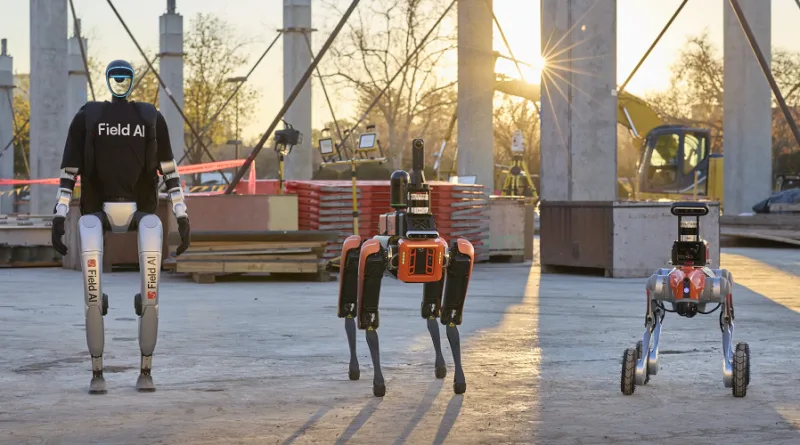
FieldAI Seeks $700M at $10B Valuation as Robot AI Demand Accelerates
The robotics AI startup is in advanced fundraising talks that would quintuple its valuation from last year, according to sources familiar with the matter.

Tech hiring slows even as employers post record open positions
A surge in IT job listings to three-year highs masks a contraction in actual hiring, with technology sector roles declining and unemployment ticking upward.