Defense Dollars Flow to Fusion Startups as Climate Tech Funding Cools
Fusion companies are pivoting toward military applications and weapons development as venture capital for climate tech dries up, reviving the defense connections that birthed the industry decades ago.
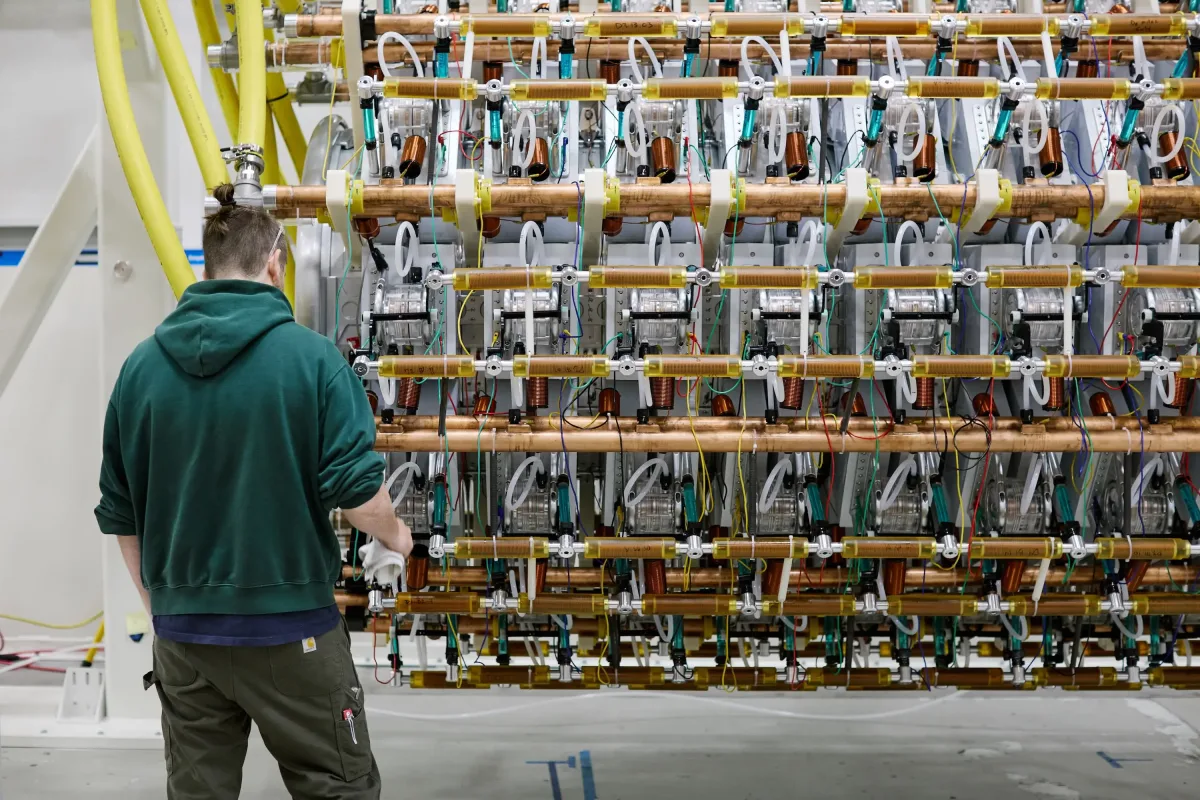
Fusion energy startups are reconnecting with their historical roots in defense and national security as they seek funding beyond the venture capital markets that have traditionally backed climate technology. The industry's origins trace back to physicists in the Cold War era who sought peaceful applications for thermonuclear science. That defense dimension has never fully disappeared—the landmark 2022 fusion breakthrough at the National Ignition Facility occurred at a facility that has served national security purposes for over 25 years.
The pivot has intensified as climate tech venture funding has contracted. While fusion startups have historically captured substantial portions of climate tech investment, the sector's capital requirements are enormous, making alternative funding sources attractive to venture investors managing their portfolios.
The defense sector presents a compelling opportunity. Military interest in laser weapons has surged as unmanned systems have transformed combat. Conventional air defense infrastructure was engineered for larger, less numerous human-piloted aircraft, creating inefficient matchups. A decade ago, one U.S. ally deployed a $3 million Patriot missile against a $200 consumer drone—effective but economically wasteful.
Laser-based weapons offer a different calculus. Rather than deploying single-use, high-cost missiles, they deliver rapid fire at comparatively low cost per shot, drawing power from generators, ship reactors, or engines.
Fusion startups developing laser-driven reactor technology have become natural partners for defense contractors pursuing these capabilities. Last week, Xcimer, a laser-focused fusion company, announced both a partnership and investment from RTX, the parent company of defense contractor Raytheon. Through RTX Ventures, the arrangement gives Xcimer capital while allowing RTX to investigate applications for Xcimer's laser technology within its own operations.
Xcimer, headquartered in Denver, operates what it claims is the world's largest privately controlled laser installation. The company intends to deploy this system in developing a commercial power facility where lasers compress fuel targets until atomic fusion occurs and releases energy. The startup's current laser platform, Phoenix, operates at substantially lower power levels than a commercial power plant would require, yet its capabilities have drawn interest from military applications.
Xcimer is not alone in pursuing defense partnerships. Pacific Fusion signed a memorandum of understanding last month with the National Nuclear Security Administration (NNSA) to collaborate on high-energy-density fusion research.
Pacific Fusion has begun construction on a demonstration facility in New Mexico near the Sandia and Los Alamos National Laboratories. While the facility's stated objective is proving that the company's technology produces more energy than it consumes, it serves additional purposes. The fusion reactions generated at Pacific Fusion's installation will exceed the power levels the government currently achieves in nuclear weapons testing.
It turns out that the facility that we're building also has utility in this world-leading defense application
Keith LeChien, co-founder and chief technical officer at Pacific Fusion
The alignment may appear fortuitous, but Pacific Fusion's leadership indicates otherwise. Defense considerations were "always on our mind," according to Carrie von Muench, co-founder and chief operating officer. LeChien, who invented the company's fundamental technology, previously held positions at Sandia National Laboratories, Lawrence Livermore National Laboratory, and the NNSA.
Fusion technology has evolved substantially since weapons scientists first conceived it decades ago, yet its military applications remain central to the field's trajectory. The renewed focus on defense partnerships may represent a natural evolution rather than a departure, positioning fusion startups to benefit from a different class of capital.
Read more

Spotify Founder's Health Screening Startup Neko Brings Preventative Medicine to the U.S.
The body-scanning company co-founded by David Ek has arrived in New York with a 300,000-person waitlist and backing from nearly $1 billion in funding.

FieldAI Seeks $700M at $10B Valuation as Robot AI Demand Accelerates
The robotics AI startup is in advanced fundraising talks that would quintuple its valuation from last year, according to sources familiar with the matter.

Tech hiring slows even as employers post record open positions
A surge in IT job listings to three-year highs masks a contraction in actual hiring, with technology sector roles declining and unemployment ticking upward.