Deep Tech Builders Move From Lab to Factory Floor, Controlling Bottlenecks
Startups across nuclear energy, defense, space and AI infrastructure are shifting focus from proving physics to manufacturing at scale. The winners will be those who control critical bottlenecks—whether power, factory capacity or domain expertise.
From nuclear reactors to satellite systems, deep tech companies are transitioning their focus away from theoretical validation and toward production viability. The emerging challenge is no longer whether the technology functions, but whether it can be built, distributed and financed in volume. Investors and governments are now backing builders that own their supply chains, deploy capital directly and convert one-time projects into standardized, repeatable offerings.
The competitive landscape will pivot around who manages the critical constraints. For AI data centers, those constraints center on electrical supply and thermal management. For weapons and robotic systems, manufacturing throughput becomes the limiting factor. For AI applications in financial services and insurance, specialized knowledge of the domain takes precedence. As these infrastructure challenges intensify, capital is flowing toward companies that integrate vertically, absorb financial risk themselves and transform ad-hoc solutions into commercial products.
If you're trying to deploy many gigawatts per year of nuclear, you've got to turn it from being a project into being a product. That's really what we're doing for the first time for nuclear.
Matt Loszak, co-founder and CEO of Aalo Atomics Inc.
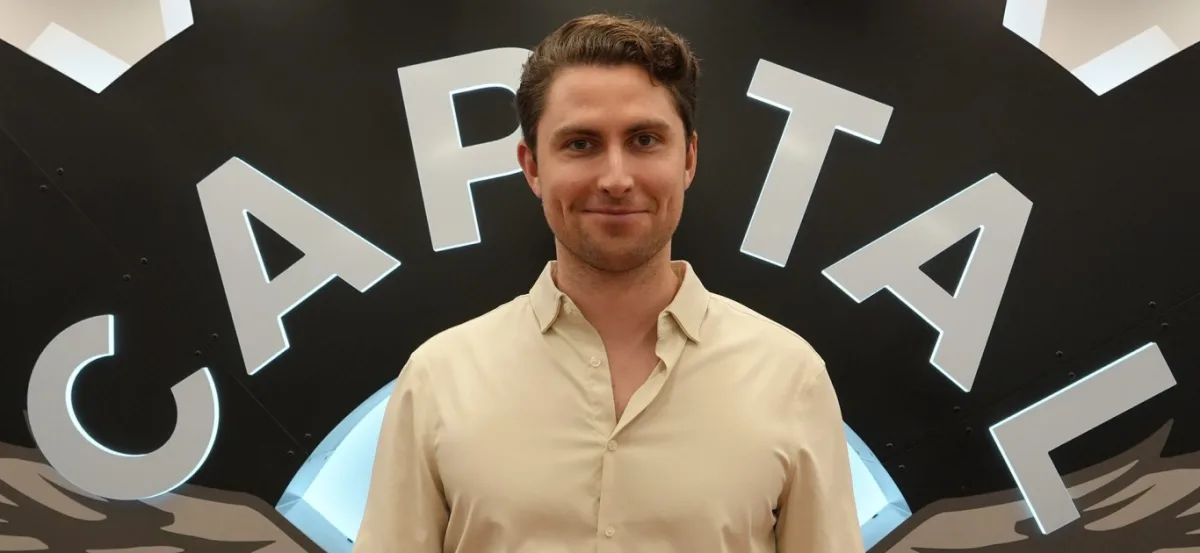
Loszak and other technology leaders shared their perspectives with theCUBE Research's John Furrier during the theCUBE + NYSE Wired: F1 Capital Factory event held in Austin, Texas. Discussions encompassed deep tech infrastructure spanning two-phase thermal systems, modular nuclear generation, solid propulsion systems, orbital communications, defense sector investment and machine learning applications in consumer lending and property insurance.
Seven key takeaways emerged from the gathering:
1. Aalo mass-manufactures nuclear reactors that ship on the back of a truck.
Conventional nuclear facilities require a decade or more to construct, a timeline incompatible with rapid data center expansion. Aalo's strategy centers on a single design principle: building the highest-output reactor capable of fitting on a standard truck bed. The reactors employ liquid sodium for heat removal and commercially available fuel assemblies, eliminating the need for emergency cooling systems during operational shutdowns, according to Loszak. Two and a half years after launching, the company had a fully operational prototype reactor following approximately $100 million in development spending. The organization is now transitioning into a 1 million-square-foot manufacturing facility with an annual production target of 100 units. Each commercial configuration—comprising five reactor modules and three turbine units—generates approximately 50 megawatts of power, with near-term objectives including full operational capacity for a Crusoe data center installation.
2. Two-phase cooling frees power for compute as AI racks near a megawatt.
Accelsius LLC employs two-phase thermal technology, whereby a working fluid vaporizes at the processor to dissipate heat levels that traditional single-phase water cooling can no longer manage effectively. Equipment that consumed 10 to 30 kilowatts several years ago now operates at 600 kilowatts and is advancing toward megawatt-scale performance, noted John Hewitt, CEO of Accelsius, and Josh Claman, executive chairman and founding CEO. This method eliminates water infrastructure from data centers, redirecting that capacity toward productive computing. Claman calculated the economic benefit at roughly $60 million in incremental revenue per 100 megawatts. Localized AI systems and inference hardware positioned in corporate facilities also require self-contained, low-overhead thermal solutions, prompting the company to develop a modular product portfolio tailored to each deployment scenario.
3. Solid rocket motors shift from performance at any cost to affordable mass.
Recent military engagements in Ukraine and the Middle East have revealed that Western military planning significantly underestimated the quantities of missiles and ordnance required for sustained conflict. This realization has reoriented the sector away from maximizing individual system performance toward achieving cost-effective production volume. X-Bow Systems Inc. manufactures the solid propulsion systems that propel these munitions, with rocket-assisted launch motors for Group 3 and Group 4 unmanned aircraft representing its fastest-growing segment, explained Jason Hundley, founder and CEO of X-Bow. The firm employs more than 500 people and commissioned its first production facility during the current year, which Hundley characterized as the first large-scale manufacturing operation of its type in the defense industrial base. Revenue projections exceed $1 billion annually within two years. Future products will employ autonomy-centric design, condensing a seven- or eight-stage manufacturing chain into one or two stages.
4. Defense investors bet that factories, not prototypes, decide physical AI's winners.
Marlinspike Partners LLC focuses investment capital on dual-use defense technology enterprises serving both private sector and government markets, operating on the premise that physical AI's dominant players will emerge from the manufacturing sector. Although startups can construct prototypes in California, achieving commercial scale demands the geographic space, regulatory environment and governmental cooperation available in Texas, according to Jude Akpunku, senior associate at Marlinspike. The firm's portfolio companies directly tackle manufacturing constraints. Foundry Robotics Inc. is constructing a production facility where automated systems manufacture additional robots, while Layup Parts Inc. produces composite components using automated assembly methods. The investment group also supports JetZero Inc., a developer of blended-wing aircraft designs with U.S. Air Force contracts targeting 50% fuel consumption reduction and scheduled for flight testing in the fourth quarter of 2027.
5. AI agents learn from mortgage lenders' top closers.
Prospective borrowers who initiate contact through online channels frequently experience 21 to 40 hour delays before receiving outreach from a lending institution, despite the reality that the first lender to make contact typically secures the transaction. AIVI LLC accelerates lead response timing and subsequently analyzes loan officer conversations to identify distinguishing practices employed by the highest-performing 20% of sales professionals, enabling automated systems to replicate those techniques. This methodology was presented by Giorgio Mihaila, co-founder and CEO of AIVI, and Akshay Lazarus, an advisor to AIVI. The subsequent frontier involves machine-to-machine interactions: when Mihaila deployed an AI agent to solicit quotes from 100 lending institutions for a home equity credit facility, merely 13 responded. Operating without external funding, the organization is targeting $10 million in annual recurring revenue by the following year.
6. Sovereign demand pushes CesiumAstro's satellite pipeline to $53B.
CesiumAstro Inc. develops communications infrastructure for orbital applications, encompassing integrated circuits, electronically steerable antenna systems and complete satellite platforms. Its sales pipeline has expanded from approximately $6 billion twelve months prior to $53 billion in identified prospects as national governments invest in independent satellite networks for both defense purposes and civilian broadband coverage, disclosed Kenneth Smith, chief financial officer of CesiumAstro. On October 1, the organization unveiled Element, which it designates as the industry's first completely integrated active phased-array satellite system. The company also completed an acquisition of Jariet Technologies, a design-only semiconductor firm, to guarantee access to specialized components required by its antenna systems. CesiumAstro obtained a $10 million award from the Texas Space Commission in the prior year and anticipates deploying machine learning to autonomously direct data traffic between orbital platforms and ground stations.
7. Landlord insurer Steadily lifts engineering throughput 300% with AI.
Steadily Inc. provides coverage for approximately 300,000 of the roughly 20 million residential rental properties across the United States, concentrating on small-scale landlords managing between one and three properties. Machine learning contributions remained incremental throughout 2024, but contemporary algorithms now deliver approximately 300% greater output per technical employee relative to two years prior, according to Darren Nix, co-founder and CEO of Steadily. Given insurance sector regulatory requirements, a human reviewer must authorize all material determinations, with machine learning systems preparing documentation that achieves approximately 85% accuracy. Voice-based machine learning handles claim submissions predominantly outside business hours, when callers anticipate automated response. Steadily achieved a doubling of scale this year, reaching approximately $600 million in annual premiums with nearly 300 staff members. Nix noted that an organization of equivalent size three years ago would have required two to three times the workforce.
Read more

Anthropic Files for IPO, Targeting Nasdaq Listing Under Ticker ANT
The AI developer has submitted S-1 paperwork to the SEC, positioning itself for what could become the largest public market debut by an artificial intelligence company.
Finding Real Product-Market Fit in the Age of AI: What VCs and Founders Actually Look For
Venture capitalists and startup founders are sounding alarms about inflated metrics and fake stickiness as AI startups race to prove they've achieved product-market fit. The bar for distinguishing real traction from hype has never been higher.

Carta and NewView team up to streamline employee share sales at private startups
As startups remain private for longer periods, a new partnership aims to make it simpler for founders to offer employees early liquidity through tender transactions.