Blue Origin's New Glenn Rocket Destroyed in Static Engine Test at Cape Canaveral
A New Glenn heavy-lift vehicle operated by Blue Origin suffered a catastrophic failure during a ground test Thursday, destroying infrastructure at the Cape Canaveral launch facility ahead of a planned mission to deploy Amazon's Leo internet satellites.
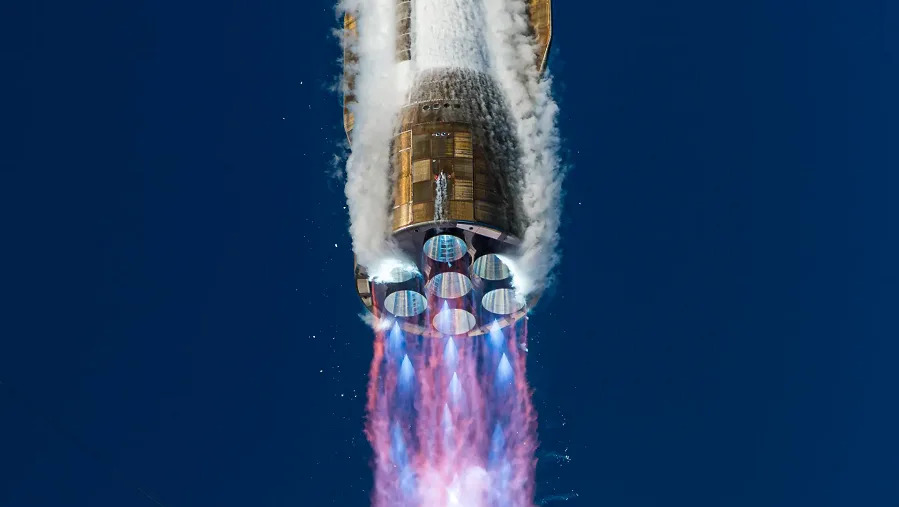
Jeff Bezos' Blue Origin Enterprises LP experienced a major setback when one of its New Glenn rockets detonated late Thursday during a ground-based engine test. The incident occurred before the vehicle was scheduled to lift off the following week carrying 48 of Amazon.com Inc.'s Leo satellites destined for low-Earth orbit. Amazon, the retail and cloud computing conglomerate, is developing this satellite network to deliver internet access to underserved regions worldwide. The satellites had not yet been loaded onto the rocket when the accident took place.
The malfunction happened during a static test, a procedure where rocket engineers fire engines at maximum power to verify operational readiness. According to reporting from Ars Technica citing unnamed sources, the blast caused severe damage to the launch facility. A lighting structure and the mobile launcher used to position New Glenn on the pad are believed to be beyond recovery.
Bezos acknowledged the incident on X, stating: "It's too early to know the root cause but we're already working to find it. Very rough day, but we'll rebuild whatever needs rebuilding and get back to flying. It's worth it."
About the New Glenn
The New Glenn measures 320 feet in height and consists of two distinct stages. Its first stage, responsible for reaching orbital velocity, incorporates seven engines powered by liquid oxygen and methane propellant. The upper stage employs two hydrogen-fueled engines for maneuvering in the vacuum environment.
According to Ars Technica's sources, the malfunction originated in the engine compartment of the first stage. Blue Origin engineered the first stage to return to Earth following payload separation, a capability the company first demonstrated in November of last year. This reusability feature reduces launch expenses and supports Blue Origin's objective to fly each first stage a minimum of 25 times.
Impact and Future Plans
The New Glenn can transport the Blue Moon Mark 1, a lunar lander with a three-ton cargo capacity. Just days before the test failure, Blue Origin secured a $188 million NASA contract to launch two moon rovers using the Blue Moon Mark 1 vehicle.
The ramifications of Thursday's test failure for Blue Origin's schedule remain uncertain. The Cape Canaveral facility where the explosion occurred represents the company's only currently operational launch complex. Blue Origin has initiated construction of a second launch site in the vicinity, though the project remains in preliminary phases.
Blue Origin had successfully completed three New Glenn missions since the beginning of 2025 and was reportedly preparing to transition to a monthly launch cadence before the accident. The company also plans to introduce an enhanced New Glenn variant featuring substantially greater payload capacity in the future.
Competitor Update
SpaceX Corp. conducted a test flight of its next-generation Starship V3 vehicle several days prior to Blue Origin's incident. The test achieved successful payload deployment, and the first stage returned to Earth as intended. The second stage, however, experienced a harder-than-expected landing, prompting the U.S. Federal Aviation Administration to temporarily suspend Starship operations pending investigation.
Read more

Spotify Founder's Health Screening Startup Neko Brings Preventative Medicine to the U.S.
The body-scanning company co-founded by David Ek has arrived in New York with a 300,000-person waitlist and backing from nearly $1 billion in funding.

FieldAI Seeks $700M at $10B Valuation as Robot AI Demand Accelerates
The robotics AI startup is in advanced fundraising talks that would quintuple its valuation from last year, according to sources familiar with the matter.

Tech hiring slows even as employers post record open positions
A surge in IT job listings to three-year highs masks a contraction in actual hiring, with technology sector roles declining and unemployment ticking upward.