Autoheal Lands $7.9M to Build AI-Powered Control Layer for Enterprise Software Factories
The platform engineering startup has secured seed funding to deploy specialized AI agents that monitor and improve other AI agents across the software development lifecycle.
Autoheal AI Inc., which aims to establish "self-improving software factories" through artificial intelligence, announced it has closed a $7.9 million seed round. Innovation Endeavors led the investment, with backing from Emergent Ventures, U&I Ventures, Darkmode Ventures, Batch Ventures and Param Hansa Values.
The acceleration of software delivery powered by AI code generation tools has created new operational headaches for enterprises. While development teams can now ship features faster than before, they face mounting production incidents, security vulnerabilities and soaring token expenses. Many organizations have responded by deploying dozens of specialized AI agents to handle different stages of development workflows, yet these agents frequently malfunction due to the complexity of large-scale rollouts and inconsistent context across systems.
Autoheal's platform consolidates the creation, management and optimization of software factory agents into a single unified system. By routing all agents through one interface, teams gain shared access to engineering context, private evaluation infrastructure, and centralized controls for cost and security. The system can operate within an organization's private cloud infrastructure, connecting to existing coding agents, code repositories, CI/CD pipelines and observability platforms.
The architecture relies on two specialized agents working in tandem, according to co-founder and Chief Executive Sid Choudhury. An "Evaluator agent" scores downstream worker agents using metrics like CI failures and incident reports. A "Healer agent" then attempts to repair underperforming agents by submitting pull requests that refine model selection, prompts, tools and capabilities. All modifications are version controlled in Git, tested against historical benchmarks and require human approval.
Choudhury and his co-founders previously held infrastructure roles at Microsoft Corp., ThoughtSpot Inc. and Harness Inc., where they identified a critical gap in how enterprises manage AI agents at scale. "Our experience taught us that while building the first version of an AI agent is easy, scaling it consistently across the enterprise SDLC is the real challenge," Choudhury said. "Platform engineers need a unified platform to deploy agents that don't just execute tasks, but continuously improve alongside complex enterprise workflows."
Operating in stealth mode until now, Autoheal has already attracted enterprise customers including Nomura Holdings Inc., AvidXchange Inc. and Empiric Earth Inc., all of which report reduced incident resolution times and thousands of hours saved in engineering effort.
Sameer Jain, Chief Information Officer at Nomura Bank, described how his production operations teams were previously drowning in alerts and spent hours manually triaging incidents, often pulling engineers away from their primary work. "Autoheal gives us a platform that takes investigation timelines down from hours to minutes," Jain said. "The fact it runs entirely within our own cloud, in compliance with our controls, makes it a natural fit for how we operate."
The company's roadmap includes developing reinforcement learning techniques to train customer-specific AI agents on proprietary engineering data. This would allow organizations to build enterprise-specific small language models that remain entirely within their secure private cloud environments, reducing operational costs while deepening domain expertise. Choudhury envisions eventually extending the platform beyond software engineering into data and security engineering domains.
Harpinder Singh, from Innovation Endeavors, highlighted the broader market opportunity. "Autoheal is building the agent infrastructure layer that makes that possible," he said. "The opportunity is much larger than one agent or one workflow. It is giving platform teams a repeatable scalable way to deploy specialized intelligence across the engineering organization."
Read more

Spotify Founder's Health Screening Startup Neko Brings Preventative Medicine to the U.S.
The body-scanning company co-founded by David Ek has arrived in New York with a 300,000-person waitlist and backing from nearly $1 billion in funding.
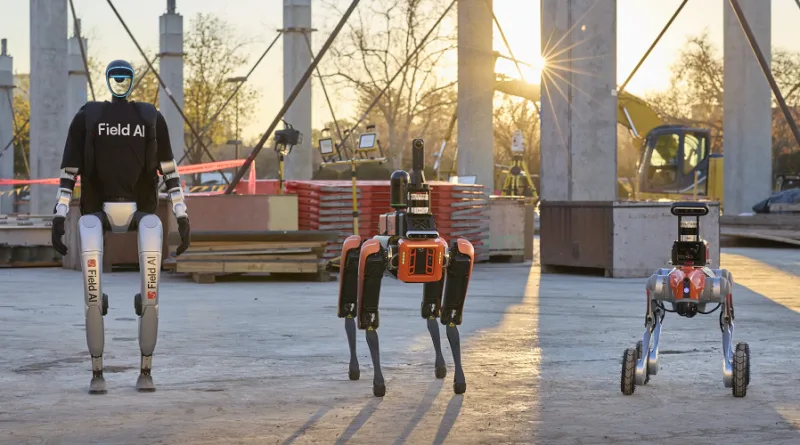
FieldAI Seeks $700M at $10B Valuation as Robot AI Demand Accelerates
The robotics AI startup is in advanced fundraising talks that would quintuple its valuation from last year, according to sources familiar with the matter.

Tech hiring slows even as employers post record open positions
A surge in IT job listings to three-year highs masks a contraction in actual hiring, with technology sector roles declining and unemployment ticking upward.