Ando launches AI-native messaging platform to compete with Slack and Teams
Sara Du's startup positions itself as a full replacement for legacy communication platforms, giving AI agents their own identities and the ability to participate naturally in team conversations.
During 2025, as Sara Du assisted organizations in constructing MCP servers, she encountered a recurring question: how could companies deploy AI agents directly within Slack? The technical obstacles proved substantial—syncing messages between systems, furnishing agents with appropriate context, and managing token consumption all presented significant challenges.
Investigating further, Du identified a fundamental architectural problem. "The deeper I went, the more I felt Slack and Teams were built for a world that was starting to pass us by," Du told TechCrunch. "Agents were treated as apps you install even as they were becoming participants in the team."
Du recognized what she calls "meat proxies"—situations where humans must translate and relay AI agent outputs to their colleagues. "The human effectively becomes the messenger between the agent and the rest of the company," she explained. A better approach would enable agents to "participate in the shared conversations where work already gets coordinated," allowing them to "understand why a decision was made, ask a colleague a question, build on another agent's work, and bring in a human when judgment is needed."
This vision led to Ando, which emerged from stealth on Thursday as a team messaging platform engineered for human and AI collaboration. The platform functions as a complete alternative to Slack or comparable internal communication tools for organizations deploying AI agents. Agents receive distinct identities and inboxes, enabling them to engage in conversations with the same fluidity as human team members.
The platform incorporates standard messaging features—channels, direct messages, group chats, and live calls with transcription capabilities viewable by agents. Agents can browse channels independently, select which ones to join, and initiate conversations without explicit mentions. They can also proactively notify human colleagues when circumstances warrant attention, rather than awaiting permission.
To accelerate development, Ando announced $20 million in pre-seed and seed funding on Thursday, backed by investors including Accel, Index Ventures, and Emergence.
The concept itself is not novel. Slack has transformed its native bot into an AI agent, while Microsoft has invested substantially in embedding Copilot throughout Teams with connections to its broader Office 365 ecosystem. Yet opportunities persist for challengers given the rapid integration of AI into workplace environments. Jack Dorsey, co-founder of Twitter and Block, recently unveiled Buzz, a messaging application combining people and AI agents, though it primarily targets developers.
Du contends that building a platform designed from inception around AI agents offers meaningful advantages over incumbents retrofitting existing products. She acknowledges, however, that Ando faces substantial headwinds. "A lot of people we showed it to early on were understandably unimpressed. It was, in many respects, just a jankier messaging platform. People would get stuck on that before they even got to what was different about the agents," she said.
Validation emerged as customer engagement deepened. Du observed agents performing beyond initial expectations—for instance, identifying parallel discussions across separate channels addressing identical issues, then independently assembling participants in a group conversation, providing context, and recommending solutions. "That was really delightful for me," she said. "I felt agents could better manage people than humans can because they can process a lot more messages than a human can in a shorter span of time."
Currently, Ando serves customers across software, real estate, and finance sectors in 15 countries, though most teams remain relatively small. The funding will support hiring and increased token expenditure. Du envisions agents enabling minimal teams to achieve previously impossible scale. "I think agents will let very small teams operate at a scale that previously required hundreds of people," she said. "They can take on more of the execution, research and coordination work, while humans spend more of their time on judgment, strategy and deciding what should happen next."
Read more

Spotify Founder's Health Screening Startup Neko Brings Preventative Medicine to the U.S.
The body-scanning company co-founded by David Ek has arrived in New York with a 300,000-person waitlist and backing from nearly $1 billion in funding.
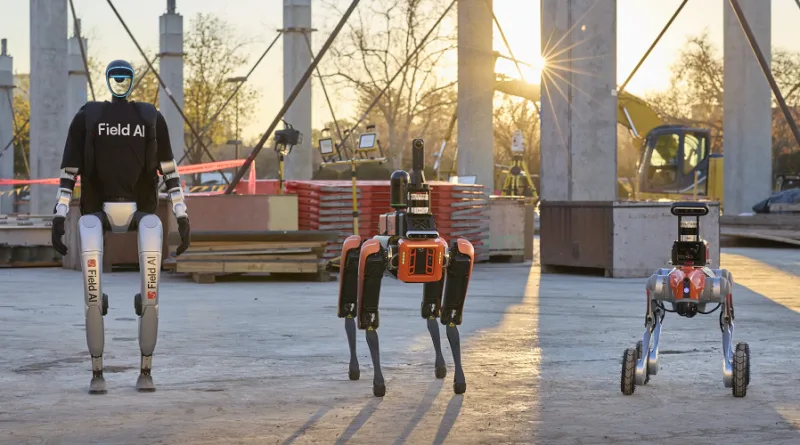
FieldAI Seeks $700M at $10B Valuation as Robot AI Demand Accelerates
The robotics AI startup is in advanced fundraising talks that would quintuple its valuation from last year, according to sources familiar with the matter.

Tech hiring slows even as employers post record open positions
A surge in IT job listings to three-year highs masks a contraction in actual hiring, with technology sector roles declining and unemployment ticking upward.