Admitting uncertainty beats false confidence in agency pitches
As AI disrupts business strategy, agency leaders who acknowledge what they don't know are winning more trust and deals than those claiming to have all the answers.

A recent client meeting with a Chief Revenue Officer took an unexpected turn. Rather than mapping out a comprehensive AI strategy, the conversation shifted to helping her draft an email to her own boss about the changes ahead. This scene has become typical across the agency world right now.
The real questions clients are asking aren't about technology roadmaps. They're asking how to get their own leadership to recognize that transformation is underway. Beneath discussions of tools and platforms, these conversations are fundamentally about people grappling with uncertainty. Executives are seeking help understanding unfamiliar territory, not because they lack intelligence but because the pace of change has outstripped their ability to develop genuine expertise. Admitting this gap publicly still carries risk for many senior leaders, yet nearly everyone faces the same challenge. The only variation is the degree of frustration or overwhelm they're experiencing on any given day.
This shared confusion has actually stripped away much of the posturing that once defined agency relationships. When genuine knowledge gaps exist across the board, transparency becomes the only viable path forward. Rooms that would have been defensive and performative a few years ago have become more open. Rather than claiming AI maturity the way they once boasted about martech sophistication, stakeholders are now simply asking for help breaking through obstacles.
The real culprit behind stalled deals and slowed projects rarely involves strategy disagreements. Instead, somewhere in the organizational chain sits a person harboring an unspoken concern—that the change will eliminate their role, expose gaps in their knowledge, or fundamentally alter a position they've held for years. When this person is encountered, momentum halts. Not through explicit rejection, but through silence, which proves far more difficult to address than a direct objection.
One client needed nothing more than acknowledgment from a senior stakeholder to move forward. Despite pushing through emails and collaborative outreach, nothing broke through because the resistance wasn't rooted in the actual plan. It was something unspoken that no meeting agenda would naturally surface. Progress only came by building momentum with everyone else who was ready to move, rather than waiting for that one person to shift first.
This moment presents a critical choice for how agencies position themselves with clients. The traditional model involves walking into a room and declaring, "We've solved this. Here's exactly how it works and how you'll execute it with us." That approach holds appeal for exhausted clients seeking reassurance that someone has things under control.
But in AI and other rapidly evolving categories, a consultant claiming to have everything figured out should trigger alarm, not confidence. Clients recognize this posturing quickly and actually respect agencies more for avoiding it. The real competitive advantage isn't possessing all the answers. It's refusing to pretend you do, stating this plainly in the first conversation rather than after being exposed. What agencies genuinely understand is the foundation—the principles that hold regardless of which platform trends this quarter. Everything else gets built collaboratively in real time, and what emerges this week may look substantially different in six weeks as conditions shift. That's not a process flaw. It's the honest reality of the current moment, and pretending otherwise just delays the inevitable discovery by the client.
Trust once flowed from reputation. Working with a major brand like Coca-Cola meant new prospects assumed you could handle their business without extensive vetting—a kind of inherited trust based on case study logos.
That model persists in some contexts, but it's no longer what drives new business or sustains relationships through volatile periods. Modern trust gets earned meeting by meeting through honest acknowledgment of knowledge gaps paired with genuine preparation.
For marketers entering difficult conversations this quarter—whether with internal leadership, clients, or partners who have withdrawn—the advice is straightforward: resist the urge to project certainty you don't possess. Instead, name the specific uncertainties and bring a substantive plan for navigating them together, not a polished presentation that ignores the unknowns entirely. This approach is the only pitch that actually withstands scrutiny.
Read more
Money20/20 USA 2026: dates, agenda themes and startup events in Vegas
Money20/20 USA 2026 runs October 18-21 at The Venetian Resort in Las Vegas. Here are the daily hours, the four agenda pillars, the headline sessions and the startup programme.
FII10 2026 in Riyadh: dates, agenda, speakers and the startup pitch
FII10 runs from October 26 to 29, 2026 at the King Abdulaziz International Conference Center in Riyadh. Here is the day-by-day agenda, the AI sessions with times, the confirmed speakers and the five startups pitching on Investment Day.
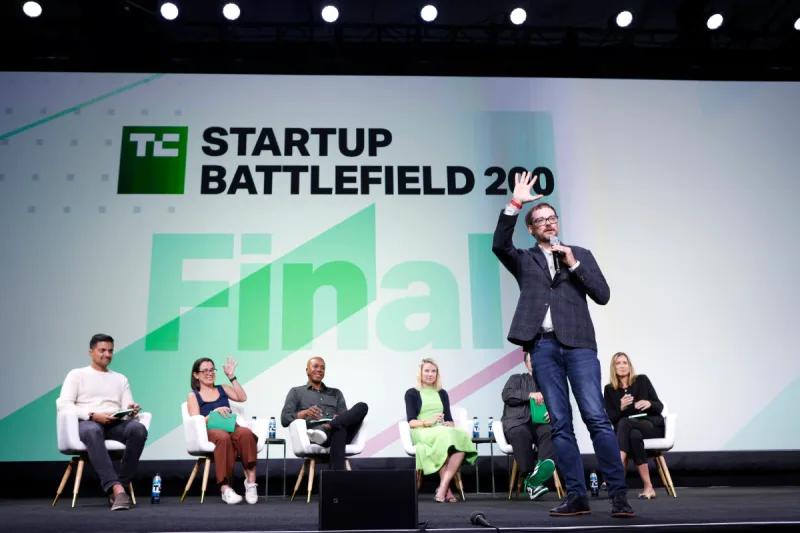
Five Founder-Led Investors to Judge Startup Battlefield 200 at TechCrunch Disrupt 2026
TechCrunch has selected five venture capitalists who each founded their own firms to judge the final round of Startup Battlefield 2026, where 20 startups will compete across three days in October.