Workday Shifts to Autonomous Agents That Work Without Prompts
Workday is moving beyond AI assistants that wait for user input, unveiling autonomous agents designed to handle finance and HR tasks independently while keeping humans in control of critical decisions.
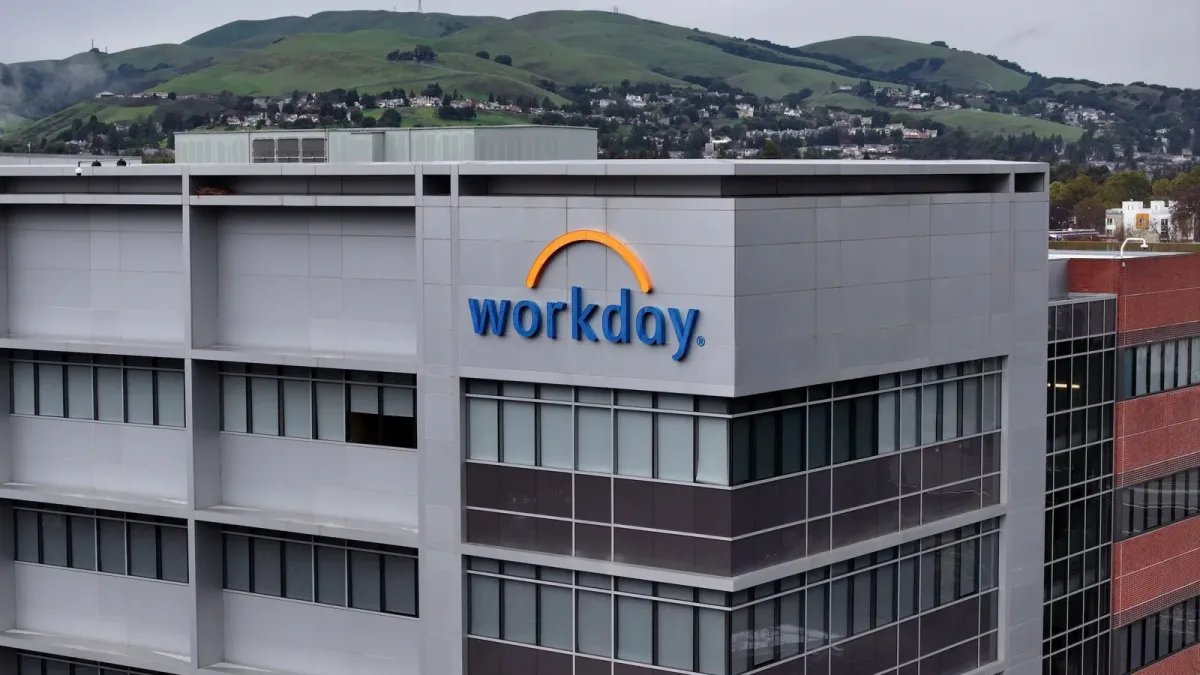
Workday believes the next wave of enterprise AI will center on autonomous agents rather than interactive assistants—systems that initiate work on their own, from detecting missing payroll information to drafting accounting records. The company unveiled a suite of "autopilot" agents on Tuesday, positioning them to operate across hiring, payroll, accounting and related business functions.
Until now, AI has worked like a copilot — helpful, but only when you ask it something. That's not enough anymore. Our agents work like autopilots — they get the work done on their own, and bring people in exactly when their judgment makes the difference.
Joel Hellermark, chief AI officer at Workday
Tuesday's announcements extended beyond the autopilot agents themselves. Workday rolled out a "Trusted Agent Platform" enabling organizations to construct custom agents using their chosen AI models while maintaining enterprise-grade permissions and audit capabilities. The company also debuted a "Decision Intelligence" product that allows finance and human resources professionals to model workforce scenarios and evaluate their financial consequences.
The timing reflects mounting industry anxiety about unpredictable AI agent behavior and potential risks, with some prominent voices advocating for development restraint. Workday leadership addressed these concerns directly during an Oct. 8 virtual press conference.
You all have seen the headlines
Gerrit Kazmaier, president of product and technology at Workday
Kazmaier emphasized that enterprise AI must be "reliable, secure and lawful." CEO Aneel Bhusri reinforced the importance of protective mechanisms, noting that the company's AI tools operate "designed to work within the guardrails."
Three New Agents
A "payroll agent" flags missing data or issues before payroll processing begins. An "accounting agent" extracts contract information, creates accounting entries, suggests revenue-recognition and billing timelines, and validates transactions for anomalies. A "talent acquisition agent" monitors open roles, identifies positions at risk of unmet hiring goals, surfaces qualified applicants, drafts recruiter messages for approval and schedules interviews.
The talent acquisition agent will be available to early adopters immediately, with broader rollout scheduled for early 2027. Workday plans to make the payroll and accounting agents available to early adopters in early 2027 as well.
Organizations retain control over which actions execute automatically, which require human review and which demand final human approval. Workday logs all agent activity to help customers track usage and manage expenses as adoption scales.
Probabilistic AI is great at guessing, but in payroll and finance a good guess isn't good enough.
Gerrit Kazmaier
Read more

Speed to operational status now matters more than GPU counts in AI infrastructure buildouts
As organizations race to deploy AI factories, the bottleneck has shifted from securing graphics processors to managing data pipelines and storage. Infrastructure vendors are rethinking how they approach these projects from the ground up.

SpaceXSI's Grok Voice 3.0 Tops Industry Benchmarks in Speech-to-Speech Showdown
Elon Musk's SpaceXSI has unveiled Grok Voice 3.0, a speech-to-speech model that outperforms competitors from OpenAI and Google across multiple independent testing frameworks.

Microsoft Pursues Composable Memory to Ease AI Data Center Bottlenecks
As memory scarcity constrains AI workloads across data centers, Microsoft is exploring composable memory architectures that dynamically allocate capacity across servers rather than locking it within individual machines.