Speed to operational status now matters more than GPU counts in AI infrastructure buildouts
As organizations race to deploy AI factories, the bottleneck has shifted from securing graphics processors to managing data pipelines and storage. Infrastructure vendors are rethinking how they approach these projects from the ground up.

The push to stand up artificial intelligence factories has traditionally centered on acquiring enough graphics processing units, but infrastructure builders are discovering that raw compute capacity represents only part of the equation. Data movement, storage expenses and the timeline for bringing a complete system online have become equally critical concerns.
Infrastructure suppliers are now reconsidering their approach to these deployments. Organizations that previously concentrated solely on assembling the largest GPU clusters are now grappling with the challenge of supplying those systems with sufficient data, according to Ben Lee, director of solution management at Super Micro Computer Inc.
In the past, we really, really focused on the computational resources, right? But recently we figure out that people need to start looking from the data perspective.
Ben Lee, Super Micro Computer Inc.
Lee shared these insights during remarks at the AI Data Pipeline Forum, speaking with theCUBE Research's John Furrier on theCUBE, the livestreaming platform operated by SiliconANGLE Media. The discussion centered on how data pipelines, comprehensive system validation and specialized deployment teams enable organizations to accelerate the launch of AI factories.
AI factory deployment starts with the data pipeline
Supermicro's customer base frequently encounters data infrastructure challenges only after their GPU systems are already built. During the current year, elevated pricing for solid-state drives and memory modules has made organizations reluctant to commit to appropriately sized storage infrastructure, yet the capital already committed to compute resources leaves them with limited alternatives, Lee noted. Supermicro has shifted its approach to address storage and compute simultaneously, working alongside partners including Vast Data Inc.
We still talk about the GPU workload, size the GPU cluster. We know this is very important. But now we partner with a strong partner like VAST.
Ben Lee, Super Micro Computer Inc.
The company now approaches each AI factory as an integrated system and advocates for unified accountability across the entire deployment. This philosophy extends to its collaboration with Broadcom Inc. on AI factory management, encompassing servers and storage systems developed with partners such as ScaleFlux. Supermicro's Data Center Building Block Solutions are engineered to accommodate deployments ranging from 5 megawatts to 1 gigawatt in capacity. As these systems expand in scope, attention to foundational elements becomes increasingly important, Lee emphasized.
Fully validate, because every small things will just create the big issues for the whole big clusters. So you have to really go into every single detail for the validation, down to the component level, down to a system level, and to the rack level and the cluster level.
Ben Lee, Super Micro Computer Inc.
This validation discipline has become the determining factor in how quickly AI factories reach operational status. Supermicro brought xAI's liquid-cooled Colossus-1 cluster to full operation within 120 days, coordinating a specialized team that managed supply chain logistics, rack assembly and field engineering activities, according to Lee.
https://www.youtube.com/embed/ADshUNxCHb8?feature=oembed
Then we talk about a time to deploy, and more important, time to be operational. This is really important because when you start to put the money and you have to pay Supermicro in certain way, you want to see your whole system or whole cluster online in very, very short period.
Ben Lee, Super Micro Computer Inc.
Read more

SpaceXSI's Grok Voice 3.0 Tops Industry Benchmarks in Speech-to-Speech Showdown
Elon Musk's SpaceXSI has unveiled Grok Voice 3.0, a speech-to-speech model that outperforms competitors from OpenAI and Google across multiple independent testing frameworks.

Microsoft Pursues Composable Memory to Ease AI Data Center Bottlenecks
As memory scarcity constrains AI workloads across data centers, Microsoft is exploring composable memory architectures that dynamically allocate capacity across servers rather than locking it within individual machines.
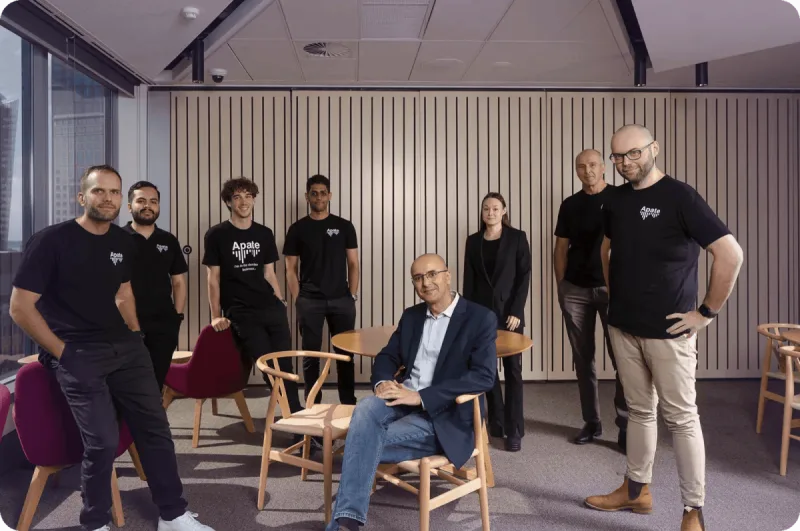
Australian startup deploys AI decoys to outwit scammers and gather fraud intelligence
Apate.ai uses thousands of AI agents posing as vulnerable victims to engage scammers, extract their operational details, and feed that intelligence to banks and government agencies.