Australian startup deploys AI decoys to outwit scammers and gather fraud intelligence
Apate.ai uses thousands of AI agents posing as vulnerable victims to engage scammers, extract their operational details, and feed that intelligence to banks and government agencies.
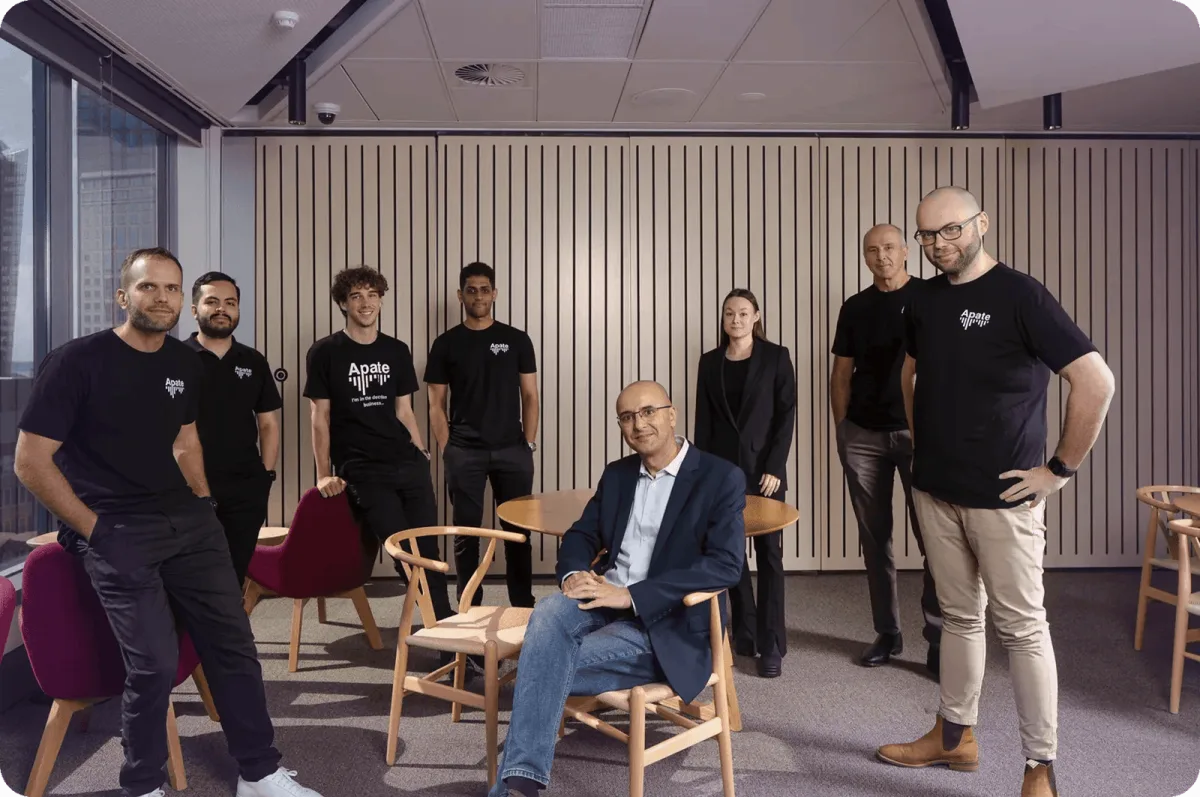
While most organizations deploy AI agents to accelerate product development or streamline internal processes, Apate.ai has taken a different approach: sending them into the field to be deliberately scammed. The Australian startup, established in 2024 from research conducted at Macquarie University in Sydney, operates a network of thousands of AI agents that impersonate unsuspecting targets. These agents engage with fraudsters through phone calls, text messages, emails, and social platforms, assuming personas of different ages, genders, accents, and languages to maintain scammer engagement and extract actionable intelligence.
According to the company, its agent network has consumed 17 years of scammers' time across 2.5 million interactions. For Apate's clients—banks, telecommunications providers, government bodies, and utility companies—the real value lies in what the agents uncover during these exchanges: financial account details, cryptocurrency wallet addresses, contact information, malicious domains, brand names being impersonated, and operational specifics about ongoing fraud schemes.
Apate, competing as a finalist in this year's Startup Battlefield 200 at TechCrunch Disrupt, processes the gathered data and distributes it to customers to strengthen their fraud prevention strategies. The company is presenting to venture capital judges at the conference, which runs through October 15 at Moscone West in San Francisco.
The approach represents an evolution of scam-baiting, a practice people have long pursued as a hobby to waste scammers' time. However, the urgency has intensified as artificial intelligence has become a tool for criminals. The FBI documented over 22,000 complaints tied to AI-enabled crimes during 2025, resulting in approximately $893 million in losses. Investment fraud accounted for more than $632 million of that total, with perpetrators leveraging AI to conduct conversations and create deepfake audio and video impersonations of celebrities, business leaders, and other trusted individuals.
From personal experience to automated defense
The genesis of Apate traces back to a genuine scam attempt. Years earlier, Dali Kaafar, the company's founder and chief executive, received a fraudulent call while attending a family gathering. Choosing to engage with the caller for his children's amusement, Kaafar extended the conversation for 44 minutes. The experience sparked a realization: those 44 minutes represented time the scammer could not spend targeting an actual victim. This observation led Kaafar to consider whether the process could be mechanized while simultaneously gathering useful information.
https://www.youtube.com/embed/oLAH4RfCZXQ?si=Z7LUr39_aXW4uwTd&autoplay=1&mute=1
The concept evolved into research initiatives at Macquarie University, where Kaafar collaborated with colleagues to apply machine learning and natural language processing techniques to analyze scam call patterns and develop improved detection and prevention strategies.
"Most of the industry works after the fact. Telcos block numbers, but scammers just get new ones. Banks watch transactions, but by then the scammer has already reached the customer. We go to the scammer directly and get the information before anyone gets hurt," Brad Joffe, co-founder and chief commercial officer, told TechCrunch. "Our AI agents talk to tens of thousands of scammers every day across calls, messages, email, and the web. What we offer our customers is what comes out of those conversations, and what they can do with it."
Technology and customer operations
Apate combines cutting-edge foundation models with proprietary fine-tuned models to power its agents and analytical capabilities. The company trains these models using conversation data collected from scammer interactions and research from Kaafar's academic work.
Beyond access to the agent network itself, customers receive an intelligence dashboard providing analytics and insights on fraud patterns affecting their users, staff, brands, and services. Organizations can direct agents toward specific objectives, such as extracting particular financial information. Text-based agents can monitor forums, investment communities, and social networks for fraudulent activity, then infiltrate conversations using false identities to expose scammer details.
The customer roster includes Commonwealth Bank of Australia, TPG Telecom, and various utilities, telecommunications companies, and public sector organizations. According to Joffe, TPG has redirected nearly 590,000 calls to Apate's agents, Commonwealth has experienced a 76% reduction in publicly documented scam losses, and an undisclosed Australian financial institution has leveraged Apate's outbound agents to dismantle 22 separate fraud operations.
Funding and expansion plans
Investors see commercial potential in the scammer-deception model. Apate secured $8.15 million in seed funding during August from Lobby Capital, OIF Ventures, Investible, Concept Ventures, and Baobab Ventures. The 20-person team has accumulated just under $10 million in total capital and intends to allocate the new round toward product development and geographic expansion, including establishing a London office and strengthening operations in the United States.
"Apate is named after the Greek goddess of deception, which felt appropriate given what our agents do," Joffe said, noting that the company incorporates footage of scammers cursing at the bots into its presentation materials. "We track that as a sign of frustration and every swear word gets celebrated by us at Apate. We are probably one of the only businesses in the world that celebrates when people swear at our product."
Read more

Speed to operational status now matters more than GPU counts in AI infrastructure buildouts
As organizations race to deploy AI factories, the bottleneck has shifted from securing graphics processors to managing data pipelines and storage. Infrastructure vendors are rethinking how they approach these projects from the ground up.

SpaceXSI's Grok Voice 3.0 Tops Industry Benchmarks in Speech-to-Speech Showdown
Elon Musk's SpaceXSI has unveiled Grok Voice 3.0, a speech-to-speech model that outperforms competitors from OpenAI and Google across multiple independent testing frameworks.

Microsoft Pursues Composable Memory to Ease AI Data Center Bottlenecks
As memory scarcity constrains AI workloads across data centers, Microsoft is exploring composable memory architectures that dynamically allocate capacity across servers rather than locking it within individual machines.