WindBorne's Autonomous Weather Balloons Land $50M Air Force Deal
The startup's fleet of atmospheric sensors will supply data to the U.S. Air Force under a contract that could reach nearly $50 million, marking the company's largest government engagement to date.
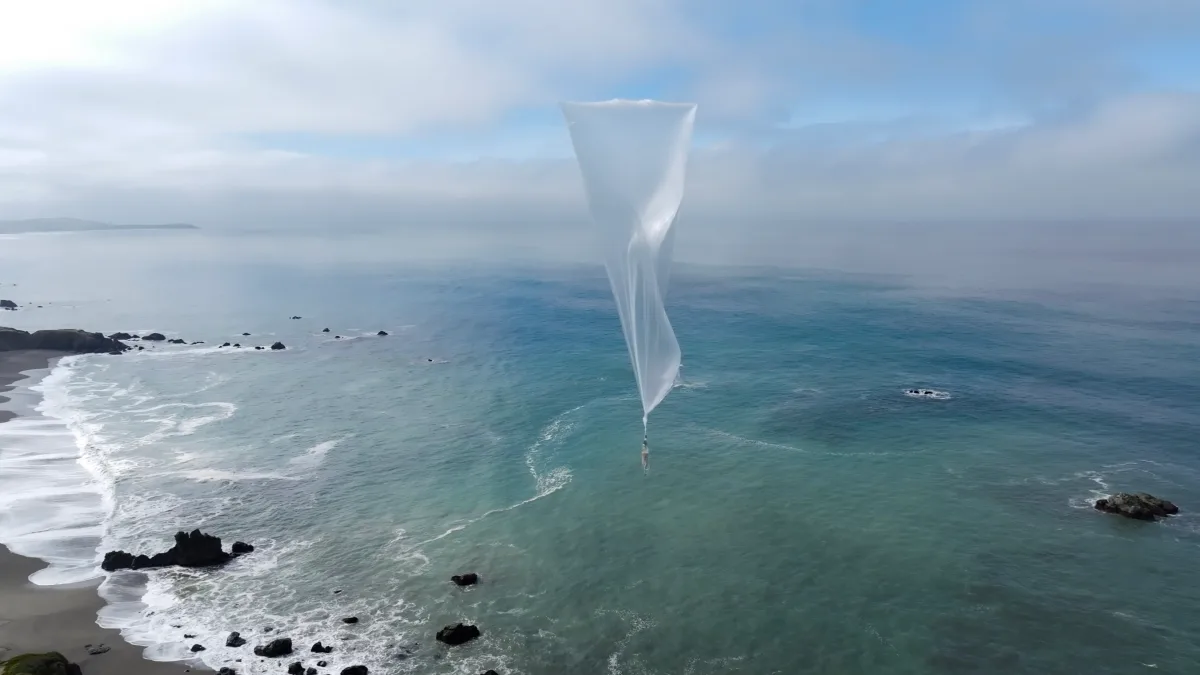
WindBorne Systems has secured a substantial procurement agreement with the U.S. Air Force to supply atmospheric measurements gathered by its network of autonomous weather balloons. The deal carries a potential value of up to $49 million, though the Air Force will pay incrementally as it places orders for data collection in specific geographic areas and time periods. The military branch has already committed $1.7 million in initial orders, with expectations for additional purchases ahead.
The Redwood City-based company, established in 2015, operates approximately 700 weather balloons globally that transmit sensor data used both for direct sale to customers and as input for the company's proprietary AI-driven weather prediction system. While WindBorne has maintained ongoing relationships with U.S. government agencies including the National Weather Service, Air Force, and Navy, this represents the organization's most significant government contract to date.
According to WindBorne co-founder and CTO Andrey Sushko, the agreement will enable continued expansion of the balloon constellation and fund research initiatives to enhance balloon hardware and performance. Sushko emphasized that the contract was awarded without competitive bidding, explaining: "This is largely a vehicle through which continued growth of the constellation can be supported, as well as some work on research and development to continue to improve the hardware and performance of the balloons." He further noted that "a determination by the government that for this capability of collecting global data, we were the only company able to provide it in the way that met their needs for these operations."
In August, WindBorne CEO John Dean announced the company had completed a $37 million Series B funding round aimed at scaling operations. That same period saw the launch of WeatherMesh 6, the company's latest forecasting model iteration, which the organization claims delivers superior accuracy compared to the European Centre for Medium-Range Weather Forecasts' (ECMWF) traditional physics-based simulation approach.
The emergence of transformer-based model architectures combined with the ECMWF's public release of extensive historical weather data has positioned AI weather forecasting as a particularly effective application of deep-learning methods. Rather than relying on expensive supercomputer infrastructure running complex atmospheric equations, modern approaches leverage decades of accumulated weather observations to generate predictions at accelerated speeds. Contemporary models from major research organizations and government entities have demonstrated improved accuracy relative to conventional forecasting methods, though both approaches remain necessary for comprehensive weather understanding.
Recent advances from Google DeepMind's weather modeling work and specialized cyclone forecasting capabilities are becoming increasingly integral to U.S. government hurricane preparedness strategies. In August, WindBorne achieved a notable milestone by becoming the first organization to deploy an unpowered flight vehicle—a balloon system without an engine—into the eye of a typhoon for data collection purposes.
The company navigates its balloons by modulating altitude, venting air, or releasing sand ballast to position the vehicles within specific wind patterns that carry them to target locations. Sushko highlighted the significance of this achievement: "That's a pretty novel step, and the two ingredients for that are one, having good wind and weather models, and knowing how to navigate them; and two, having a large enough constellation that you have balloons in the right places. It's one of the first times that a deep-learning model was used for actual operational decisions."
Read more

Speed to operational status now matters more than GPU counts in AI infrastructure buildouts
As organizations race to deploy AI factories, the bottleneck has shifted from securing graphics processors to managing data pipelines and storage. Infrastructure vendors are rethinking how they approach these projects from the ground up.

SpaceXSI's Grok Voice 3.0 Tops Industry Benchmarks in Speech-to-Speech Showdown
Elon Musk's SpaceXSI has unveiled Grok Voice 3.0, a speech-to-speech model that outperforms competitors from OpenAI and Google across multiple independent testing frameworks.

Microsoft Pursues Composable Memory to Ease AI Data Center Bottlenecks
As memory scarcity constrains AI workloads across data centers, Microsoft is exploring composable memory architectures that dynamically allocate capacity across servers rather than locking it within individual machines.