Trust, Not Raw AI Power, Is What Holds Back Enterprise Adoption
A new Cisco study of Australian organizations reveals that the real bottleneck for scaling artificial intelligence is no longer technological capability—it's organizational trust. Companies are sitting on AI systems far more powerful than they're willing to deploy.
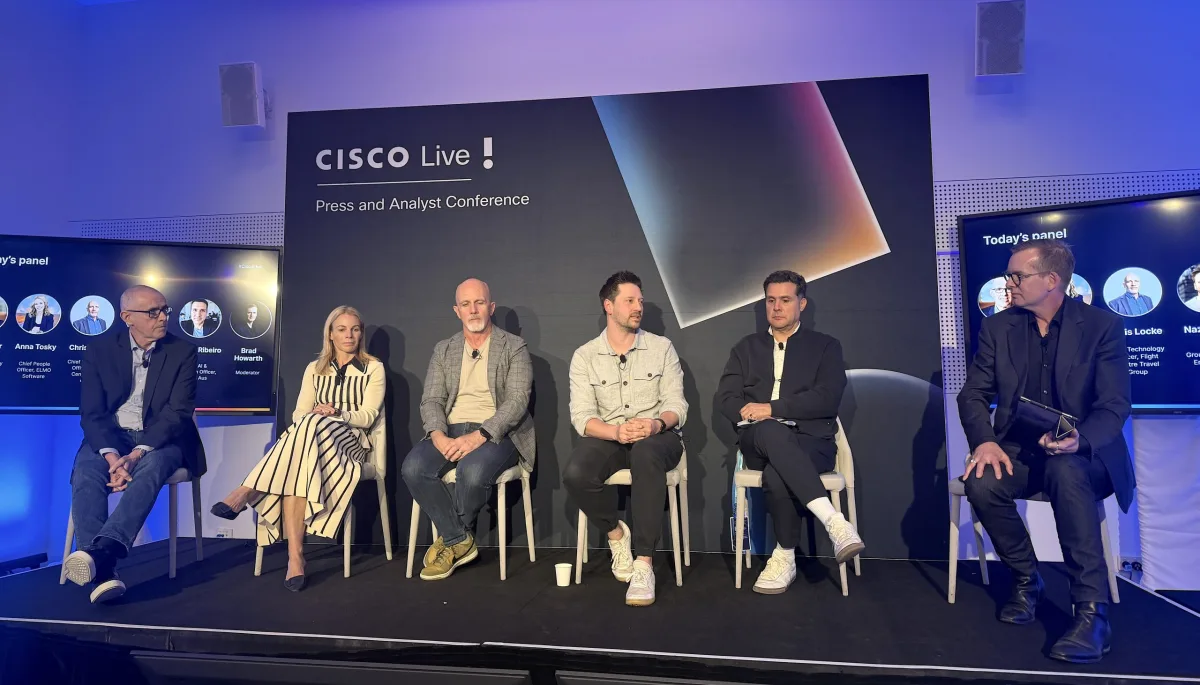
The debate around enterprise AI has long centered on raw performance metrics: which language model delivers superior results, which processors offer the fastest throughput. When technology itself was the limiting factor, this focus made sense. That constraint no longer exists. Modern AI systems can accomplish substantially more than most enterprises will permit them to do, and the chasm between capability and deployment is fundamentally about trust.
This observation forms the centerpiece of "Permission to Scale: The Critical Role of Trust in Successful AI Adoption," research unveiled today at Cisco Live APJC in Melbourne. Independent researcher Brad Howarth authored the study, which gathered insights from 25 Australian organizations and featured panel discussions with corporate leaders including Carl Solder (Cisco ANZ chief technology officer), Anna Tosky (Elmo Software chief people officer), Chris Locke (Flight Center Travel Group CTO), Naz Wilson (Funlab group culture and enablement manager), and Lucio Ribeiro (TBWA Australia chief AI officer).
Australia as a Trust Bellwether
Australia presents a particularly revealing case study. Research from the University of Melbourne and KPMG cited in the report shows that while half of Australians engage with AI regularly, only 36% express confidence in the technology, and merely 30% believe its advantages outweigh its dangers. This represents the lowest trust level among 47 nations examined. Stefan Leitl, vice president and general manager of Cisco Australia and New Zealand, emphasized the broader implications: "It's a playbook that travels well beyond Australia."
Culture Gets Overlooked in Favor of Infrastructure
Among the six pillars in Cisco's AI Readiness Index, Solder observed that information technology leaders and chief technology officers naturally gravitate toward domains where they hold established expertise—infrastructure and data management—while delegating cultural considerations to other departments. He described a customer that allocated substantial resources to infrastructure, governance, data capabilities and technical talent development but "didn't focus on the culture. And they found that there was a big pushback from their employees and customers on using the toolsets they've invested in."
This pattern repeats across industries: organizations invest millions in AI platforms only to encounter disappointing adoption rates. Howarth outlined an adoption "flywheel" dynamic where successful implementations generate measurable results, those results cultivate confidence, and confidence unlocks expanded deployment. Yet many organizations remain stuck in a holding pattern, waiting for trust to materialize before committing to deployment.
Establishing trust requires setting realistic expectations. Many users reject AI systems after encountering a single error, despite error rates substantially lower than human performance in comparable tasks. The automotive sector experienced similar dynamics when individual Tesla incidents generated disproportionate media attention. In reality, Tesla's Autopilot system experiences approximately one crash per 7 million miles of operation, whereas human drivers average one crash per 1 million miles. Perfection represents an unattainable standard; outperforming human benchmarks on speed and accuracy provides a more grounded objective. Organizations launching pilots or proof-of-concept initiatives should establish these expectations upfront, as perfectionist assumptions erode confidence.
Leadership Must Model the Way
Locke highlighted an instructive example of executive leadership through personal adoption. Flight Center's 77-year-old founder, Graham "Skroo" Turner, incorporates AI into his daily workflow. "He's a big Anthropic Claude user," Locke noted. "This is also a guy who once said the internet wouldn't catch on back in 2000. He may have gotten that one wrong, but he's betting on AI catching on, so I think he gives us permission to play."
Ribeiro articulated a more systematic framework, defining trust as a composite of four dimensions: ownership, competence, consistency and transparency. He was direct about the limitations of surveying anxious employees on AI adoption preferences. "You never ask a barber if you need a haircut, as the answer is always yes." His recommended approach centers on candor: organizations cannot guarantee job preservation, but they can commit to making employees "the most prepared, trained, trusted person" should AI reshape their responsibilities.
At Funlab, where 79% of staff members are age 21 or younger, peer-driven learning mechanisms predominate. The organization convenes its "AI Super Squad," drawing representatives from every business unit monthly. Wilson explained that initial sessions primarily addressed a fundamental question: which tools were permissible to use. Many employees' actual constraint was "just not knowing whether I am allowed to do certain things or not."
Calibrated Trust Requires Measurement
The report's organizing principle is calibrated trust—the ability to discern when to rely on AI outputs, when to validate them independently, and when human judgment must prevail. Blind reliance on these systems introduces substantial risk.
When asked how organizations prevent over-reliance, particularly in high-pressure environments where workers accept outputs without scrutiny, Tosky spoke candidly. "The AI slop. It's real," she said. "You ask the employee a question, prompt the AI system and then they send a report without looking at it, and it's completely wrong. It's 10 pages you now have to read." Elmo maintains human oversight across nearly all workflows, and Tosky advocated for redesigning underlying processes rather than simply deploying more autonomous agents. "It's very unsexy, but start with the process itself, instead of just going, 'OK, let's throw a bunch of agents at it.'"
The report recommends a specific practice for IT leadership: discontinue using login frequency as a proxy for trust, and instead monitor how frequently employees question or override AI recommendations. Login metrics indicate engagement; override rates reveal critical thinking.
A contact center scenario illustrates another overlooked consequence. When AI handles routine, repetitive tasks that previously offered cognitive relief for agents, the remaining work becomes relentlessly demanding and high-stakes, driving elevated turnover. Tosky termed this phenomenon "AI brain fry" and recommended reassessing performance metrics and break structures. Wilson added that when AI absorbs routine work, employees forfeit the repetition that develops domain knowledge and professional judgment—a talent pipeline challenge most organizations have not addressed.
Autonomous Agents Demand Higher Safeguards
AI systems that generate content differ fundamentally from agents that execute actions. Flight Center now deploys agents for a limited portion of airline ticketing previously handled by offshore contractors, with security protocols embedded from inception. Locke noted he used AI to arrange his Uber to the conference, but for a return flight to Europe? "Not yet."
Fewer than half of survey respondents expressed high or extreme confidence that their organizations possess the foundational readiness for more autonomous AI systems, and more than half identified infrastructure modernization as necessary. Cisco's 2026 Relentless Defense report determined that only 36% of Australian organizations enforce consistent controls across AI agents and nonhuman identities. Lendi Group CTO Devesh Maheshwari characterized the objective as "bounded autonomy, where the agent can act on your behalf but cannot go beyond the boundaries you have established."
This represents a strategic opportunity for Cisco's enterprise customer base. Solder contended that trust enforcement must operate at network and security infrastructure levels. "Built into the network and security underneath, control stops being the brake and becomes the permission to move faster," he stated. Cisco is positioning its networking, security and Splunk capabilities as the foundational trust layer for agentic AI, a positioning the research substantiates commercially.
Key Takeaways for IT Leadership
- Establish AI as a cross-functional leadership initiative. Incorporate the chief people officer and chief financial officer alongside the CTO. AI represents cultural transformation and commercial change, not merely a technology implementation. Organizations that confine AI to IT departments frequently end up with technically sound platforms that remain underutilized, the exact scenario Solder described.
- Begin with modest scope and transparent outcomes. Pursue visible, manageable wins initially, then communicate results publicly, including error metrics. The research demonstrated that achieving three times faster execution with no degradation in accuracy persuaded skeptics far more effectively than directives. Evidence builds trust more powerfully than advocacy.
- Make boundaries explicit and accessible. Workers should understand precisely what AI applications are permitted without consulting policy manuals. Funlab discovered that much initial reluctance stemmed not from technological anxiety but from ambiguity about permissible use. Transparent guardrails enable confident experimentation.
- Track meaningful metrics. Login counts demonstrate usage but not appropriate trust levels. Monitor how regularly employees validate, challenge or disregard AI outputs. A workforce that never questions AI recommendations signals danger, not success.
- Strengthen foundations before expanding agent autonomy. Enhance identity management, observability and governance for agents before broadening their decision-making authority. Agents operate at computational speed, and most enterprises lack consistent controls for nonhuman actors. Autonomy should follow readiness, not precede it.
The enterprises that emerge as AI leaders won't necessarily possess the most sophisticated models. They will have cultivated sufficient confidence among employees, boards and customers to permit those systems broader operational scope. As Solder summarized, "The leaders in our research aren't scaling AI first. They're scaling trust."
Read more
Kubernetes gets new purpose running autonomous AI agents, Google donates open-source tools
Google is repositioning Kubernetes as the platform for enterprise agentic AI workloads, donating foundational open-source projects to the Cloud Native Computing Foundation to help orchestrate autonomous software more efficiently.
Black Friday 2026: date, AI shopping agents and what changes for retailers
Black Friday 2026 falls on November 27, with Cyber Monday on November 30. This piece covers which AI assistants can check out in the US, why ChatGPT stepped back from Instant Checkout, and what Adobe and Salesforce forecast.
Google donates AI agent tools to open-source community to slash idle compute costs on Kubernetes
Google has contributed three projects to the Cloud Native Computing Foundation to help organizations reduce expenses when AI agents sit idle on Kubernetes clusters, addressing a growing cost challenge in agentic workloads.