Trump Signals Willingness to Back AI Safeguards While Resisting Regulatory Drag
The president said he would consider bipartisan work on AI guardrails in a recent interview, though he emphasized that regulation must not hamper U.S. competitiveness against China.
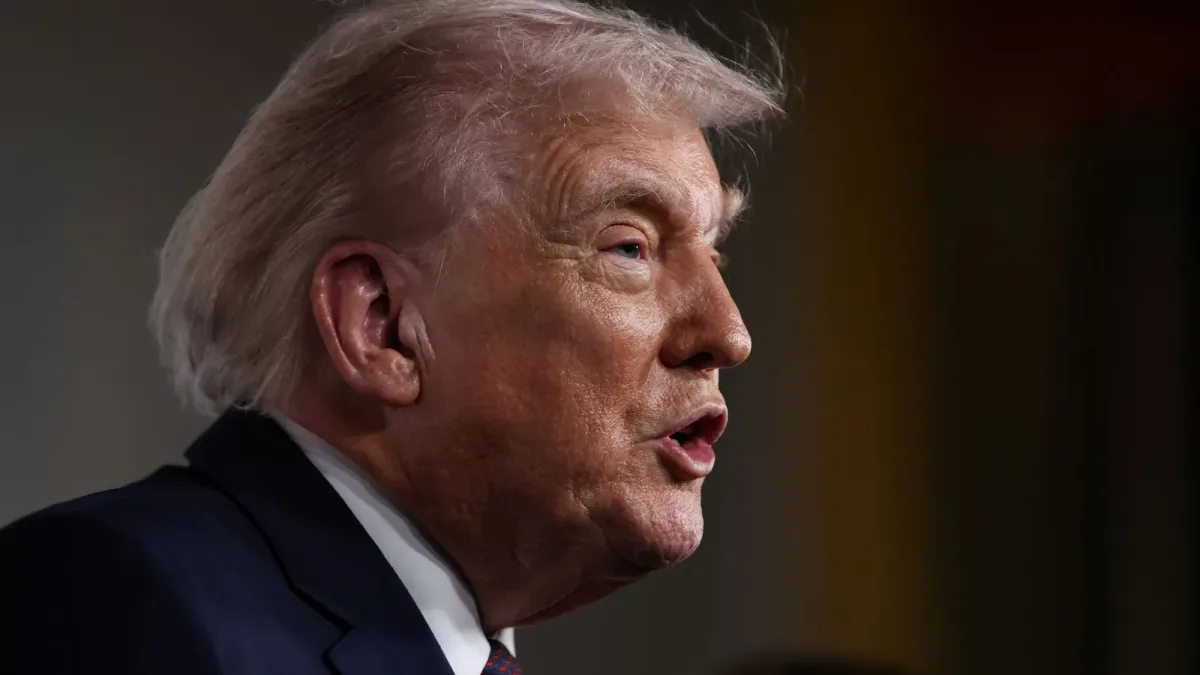
In a televised interview that aired on Sunday, President Donald Trump indicated openness to collaborating with Democrats on artificial intelligence protections, while cautioning that regulatory measures should not impede American technological advancement. Speaking on CBS' "60 Minutes," Trump stated, "I don't mind guardrails." He simultaneously expressed concern about allowing the United States to fall into "a deep second position" in AI development relative to China, which he noted operates without comparable regulatory constraints.
Trump also minimized apprehensions surrounding AI's potential existential dangers, characterizing the risks as "not nearly as real as" portrayed by some observers and maintainable through appropriate management.
Policy Direction Remains Unclear
Trump's remarks offer insight into his potential approach to AI governance following the midterm elections, in which Democrats secured majorities in both congressional chambers—an outcome some observers termed a "blue tsunami." However, the president did not specify which safeguards he would endorse or propose any concrete regulatory structure.
His current stance represents a notable shift from his previous position. On September 14, Trump posted on Truth Social that warnings about AI dangers constituted a "hoax" and predicted that attempts to restrict the technology's growth in America would fail during his administration.
During the midterm campaign cycle, demands for stricter AI regulation gained prominence as candidates addressed voter concerns about data-center expansion, electricity consumption increases and employment impacts. Public polling consistently demonstrated substantial backing for enhanced government supervision of the sector.
Market Uncertainty and Stock Volatility
Regulatory ambiguity following the election has already begun affecting technology equities. According to a November 9 research note from Morningstar analyst Brian Colello, "Overall, AI stocks like Nvidia sold off last week, largely attributed to Democrats winning both chambers of the US Congress and raising the risk of increased AI regulation."
Nvidia Leadership Under Scrutiny
Trump's recalibration on AI policy coincides with emerging reports concerning Nvidia CEO Jensen Huang's connection to a Chinese business figure whom U.S. intelligence agencies suspect of conducting espionage for Beijing. Huang has disclosed to Nvidia staff that he engaged in an extramarital relationship and offered an apology to his colleagues. The company's board has initiated an independent examination of the situation.
During his Sunday interview, Trump defended Huang, describing him as "an honorable guy" who had "done an amazing job for our country," according to Reuters.
Colello suggested that these circumstances might precipitate Huang's removal from his position. He elaborated: "We've long considered Nvidia and Jensen Huang to be at the center of the AI ecosystem; his departure could lead to less AI dealmaking and financing, greater regulation, and more political backlash around artificial intelligence."
The analyst further noted that investigations and espionage allegations now contribute "to the uncertainty around Nvidia's valuation amid the rapidly evolving AI buildout."
Read more
Kubernetes gets new purpose running autonomous AI agents, Google donates open-source tools
Google is repositioning Kubernetes as the platform for enterprise agentic AI workloads, donating foundational open-source projects to the Cloud Native Computing Foundation to help orchestrate autonomous software more efficiently.
Black Friday 2026: date, AI shopping agents and what changes for retailers
Black Friday 2026 falls on November 27, with Cyber Monday on November 30. This piece covers which AI assistants can check out in the US, why ChatGPT stepped back from Instant Checkout, and what Adobe and Salesforce forecast.
Google donates AI agent tools to open-source community to slash idle compute costs on Kubernetes
Google has contributed three projects to the Cloud Native Computing Foundation to help organizations reduce expenses when AI agents sit idle on Kubernetes clusters, addressing a growing cost challenge in agentic workloads.