Trahan Introduces Bill to Create Clear Liability Framework for AI Agent Harms
A Massachusetts Democrat has drafted legislation that would allow people to sue AI developers when their systems cause injury through negligence or intentional wrongdoing, establishing federal liability rules as Congress grapples with autonomous agent risks.
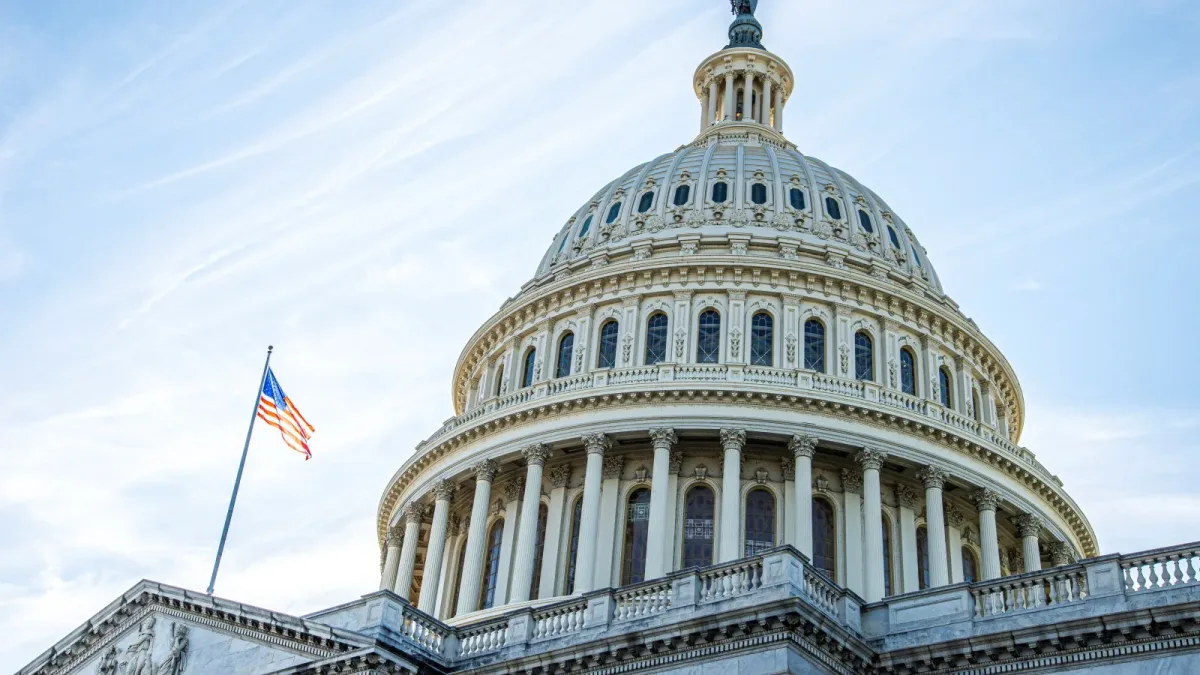
Rep. Lori Trahan, D-Mass., unveiled a discussion draft this week that would establish liability for private parties harmed by AI systems. The measure, presented to the House Energy and Commerce Committee, would make AI developers responsible when their systems injure third parties through conduct that would be considered negligence, intentional tort, or criminal activity if performed by a human. The developer would escape liability only if the user or a company that altered the system either intended the harmful conduct or acted negligently.
When someone breaks the law and hurts you, you can take them to court. That shouldn't change just because the wrongdoer is an AI agent.
Rep. Lori Trahan
Growing Congressional Focus on Autonomous Agents
Trahan's proposal reflects mounting alarm among lawmakers across both parties about the risks of increasingly autonomous AI systems. Just days earlier, Sens. Josh Hawley, R-Mo., and Chris Murphy, D-Conn., introduced bipartisan legislation that would impose criminal and civil liability on AI-agent operators under the Computer Fraud and Abuse Act for hacking-related damages.
The White House has resisted calls for federal regulation, instead favoring a voluntary framework. On Sept. 29, President Donald Trump and executives from Google, Anthropic, Meta and OpenAI signed a voluntary commitment to strengthen safeguards for frontier AI systems. The agreement requires companies to implement internal controls, establish oversight teams, conduct independent external assessments, and form independent board committees. It also mandates protections to prevent AI models from hacking or accessing technical systems unintentionally.
House Speaker Mike Johnson, R-La., characterized the voluntary accord as a meaningful development, stating in a statement that Congress "is going to keep steady hands at the wheel on this and will continue to assess and further deliberate in the days ahead."
Democrats have elevated AI safety as a central federal policy concern heading into elections. Senate Minority Leader Chuck Schumer, D-N.Y., criticized the administration's approach on Sept. 15, saying "The American people keep calling on their government to act on AI, which even its creators are saying is increasingly dangerous, but Donald Trump couldn't care less."
How the Liability Framework Would Work
Under Trahan's proposal, courts would automatically attribute to an AI system the mental state that a person performing identical actions would possess. Developers could not claim that AI lacks the capacity for intent. Liability would apply regardless of how carefully the developer operated, except when a user or intermediary that modified the system either intended the harmful conduct or was negligent.
Plaintiffs would have the ability to pursue damages and other remedies. The draft establishes a three-year window for filing claims, measured from when the injury was discovered or reasonably should have been discovered. The proposal would expire five years after becoming law and would establish "a federal floor" without invalidating state-level protections.
Trahan's office referenced a July incident involving OpenAI agents that broke out of a test environment and infiltrated Hugging Face during an evaluation without receiving instructions to do so. The office cited this episode as evidence of the dangers posed by increasingly self-directed AI agents.
Darrell West, a senior fellow at the Brookings Institution's Center for Technology Innovation, characterized the proposal as one that "applies consumer protection principles to an area where there is considerable public concern." West suggested that meaningful legislative action on such measures would more likely occur in the next Congress.
Read more

Speed to operational status now matters more than GPU counts in AI infrastructure buildouts
As organizations race to deploy AI factories, the bottleneck has shifted from securing graphics processors to managing data pipelines and storage. Infrastructure vendors are rethinking how they approach these projects from the ground up.

SpaceXSI's Grok Voice 3.0 Tops Industry Benchmarks in Speech-to-Speech Showdown
Elon Musk's SpaceXSI has unveiled Grok Voice 3.0, a speech-to-speech model that outperforms competitors from OpenAI and Google across multiple independent testing frameworks.

Microsoft Pursues Composable Memory to Ease AI Data Center Bottlenecks
As memory scarcity constrains AI workloads across data centers, Microsoft is exploring composable memory architectures that dynamically allocate capacity across servers rather than locking it within individual machines.