Red Hat Pushes Agentic AI Into Production With New Platform and Partnerships
At its May summit, Red Hat unveiled expanded capabilities and managed services designed to help enterprises move AI from pilots to measurable business outcomes while managing costs across hybrid infrastructure.
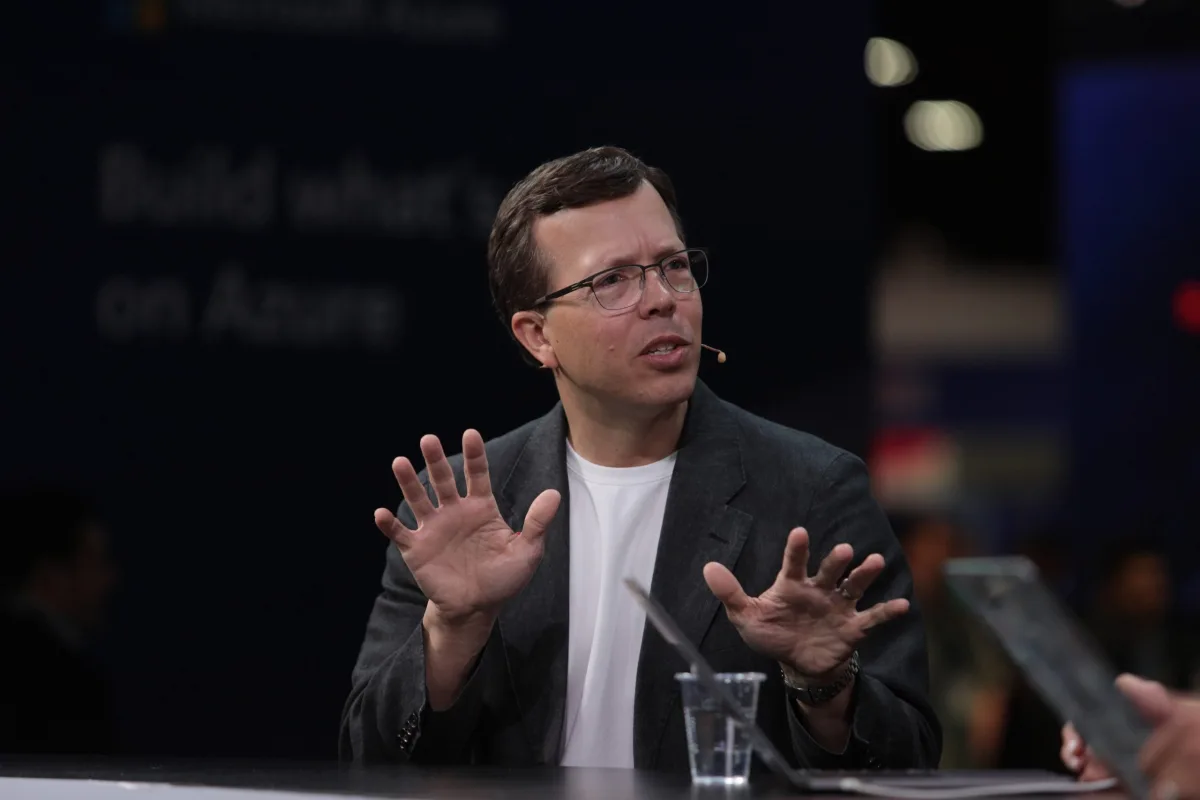
The gap between enterprise AI ambitions and the infrastructure required to realize them remains a significant obstacle. Red Hat Inc. is tackling this challenge by helping organizations transition from experimental AI initiatives to production deployments that generate tangible business value.
Managing complex AI workloads across existing infrastructure without allowing expenses to escalate is a critical concern for many organizations. During Red Hat Summit 2026 in May, the company detailed its strategy through enhanced platform features, increased automation capabilities, and an open-source approach that incorporates community-driven development.
I think everybody here loves that because that does lead to sovereignty as well. They're actually building on top of open source and enhancing it in a way that provides more value in supporting it, which is key to their success.
Rob Strechay, principal analyst at theCUBE
Red Hat AI 3.4 and New Managed Services
Hybrid cloud environments introduce distinct operational complexities when deploying and managing AI workloads at scale. Red Hat's response includes Red Hat AI 3.4, an updated enterprise AI platform that enables agentic AI deployments and large-scale inference operations across hybrid settings.
The company introduced two new managed services alongside the platform update: Red Hat AI Inference and Red Hat OpenShift Virtualization Service on IBM Cloud. The inference service integrates real-time AI inference capabilities directly into production workflows, while the virtualization service facilitates the migration and operation of virtual machines at scale. Both offerings aim to accelerate the adoption of hybrid cloud infrastructure.
What's really going to drive inference demand exponentially is AI agents. We provide a platform where customers can deploy and manage their AI agents across a hybrid infrastructure environment.
Joe Fernandes, vice president and general manager of Red Hat AI
Ansible Automation Platform 2.7 represents the next component of Red Hat's agentic strategy, linking AI-generated insights to controlled infrastructure actions. The platform's self-service capabilities enable authorized personnel in distributed locations—such as branch offices and manufacturing facilities—to oversee servers and networks while maintaining established governance boundaries.
Customers are now able to use their own data to calculate savings and efficiencies. Every action, whether it's triggered by humans, an event or an AI agent, passes through the same [access controls], approval gates, audit trails, content signing and credential management.
Sathish Balakrishnan, vice president and general manager of Red Hat's Ansible business unit
Addressing AI Budget and Cost Challenges
AI cloud spending is projected to reach approximately $2.5 trillion by 2026, expanding at a rate of roughly 44% annually, according to theCUBE Research. Yet substantial spending does not guarantee concrete returns. Data indicates that while 50.7% of organizations use public AI tools such as ChatGPT and Copilot, only 20.2% have achieved enterprise-wide AI deployments built on a governed framework.
Most people are token consumers and that is part of the reason they're trying to figure out how do they get to production. How do they get out of these death-by-pilot situations and become token producers so that they can offset the cost or at least lower the cost so they can get to the [return on AI investment] of those applications? You can use [OpenShift] infrastructure along with things like vLLM and some of the other things in Red Hat AI to get and become efficient in how you produce your tokens.
Rob Strechay
Red Hat's collaboration with Advanced Micro Devices, Inc. seeks to reshape how enterprises think about AI economics. Rather than purchasing the most advanced and costly hardware available, organizations may achieve superior outcomes by aligning compute resources with specific workload requirements, according to AMD leadership.
So many of these enterprises just ran out and bought big [graphics processing unit] clusters because they knew they had to solve for AI. Enterprises are coming to us and saying, 'This is exploding. It's good that we're using AI, but we can't afford this anymore.'
John Hampton, corporate vice president of global enterprise technical sales at AMD
Red Hat has also partnered with Intel Corp. to guide customers in selecting the optimal hardware and software combination for their specific needs. As organizations work to lower inference expenses, both companies are highlighting the advantages of balancing CPUs and GPUs rather than depending exclusively on one technology.
As we've gone through this with our customers in the industry, we've seen that people often have just assumed, 'I've got a hammer. I need the nail to hit it with.' Once they take a step back to say, 'Wait a minute. I have these [central processing units] in my data center' or 'I need to figure out how to balance the right number of CPUs with the right number of GPUs to achieve that outcome I'm looking for,' they're actually going to get better results at a better price point for delivering lower-cost tokens.
Bill Pearson, vice president of data center and AI at Intel
Strategic Partnerships Spanning Enterprise to Edge
Red Hat announced multiple partnerships at the summit, including Red Hat AI Factory with Nvidia Corp. The collaboration encompasses backing for Nvidia's Blackwell architecture and the forthcoming Vera Rubin platform, along with participation in Nvidia's OpenShell initiative for AI agent sandboxing and secure execution.
Moving AI from corporate experimentation to an industrial engine requires a sovereign, consistent foundation across the hybrid cloud. Through our strategic co-engineering efforts with Nvidia, Red Hat provides the architectural control and open source innovation enterprises need to scale agentic AI with confidence.
Chris Wright, chief technology officer and senior vice president for global engineering at Red Hat
Additional partnership announcements centered on agentic AI and edge infrastructure. Boomi LP, a data activation platform, is working with Red Hat to develop a unified stack for deploying agentic AI at scale. Separate collaborations with Panasonic Connect and Voyager address edge computing and space edge micro data centers.
The expanding network of partnerships reflects the broadening scope of enterprise applications for agentic AI. Organizations face the challenge of determining how these capabilities align with their particular business objectives, according to Red Hat's leadership.
From the board level down … you have a feeling of, 'We have to be able to harness what this technology can do.' The people that will be the most successful with AI are the people that have the most questions. People that know business, they know their domain. Those are the ones [that] have no barriers to what they can do and change. It's just about getting started.
Matt Hicks, president and chief executive officer of Red Hat
Sovereign AI and Enhanced Governance
Sovereign AI has emerged as a priority for enterprises seeking greater autonomy over their data and computing resources. Gartner Inc. forecasts that the sovereign cloud infrastructure-as-a-service market will expand at a compound annual growth rate of 36% through 2028.
Red Hat is broadening its sovereign cloud capabilities while enabling customers to retain their existing infrastructure investments. This includes partnerships with Core42, which focuses on sovereign-by-design infrastructure, and Sopra Steria, a long-standing European partner on sovereign AI initiatives.
Red Hat is also strengthening its software security offerings as enterprises embrace agentic AI. Fedora Hummingbird Linux is a container-native operating system built for agent-first development, featuring an automated software delivery pipeline. Red Hat Hardened Images provides a collection of minimal container images intended to minimize vulnerabilities and improve software supply-chain security.
https://www.youtube.com/embed/5xzfzuqK3Ow?feature=oembed
Whether an organization is meeting jurisdictional mandates or reclaiming its data from proprietary silos, we are providing the capabilities and platforms to build a more self-determined future.
Ashesh Badani, senior vice president and chief product officer of Red Hat
Read more

Kubernetes gets new purpose running autonomous AI agents, Google donates open-source tools
Google is repositioning Kubernetes as the platform for enterprise agentic AI workloads, donating foundational open-source projects to the Cloud Native Computing Foundation to help orchestrate autonomous software more efficiently.
Black Friday 2026: date, AI shopping agents and what changes for retailers
Black Friday 2026 falls on November 27, with Cyber Monday on November 30. This piece covers which AI assistants can check out in the US, why ChatGPT stepped back from Instant Checkout, and what Adobe and Salesforce forecast.
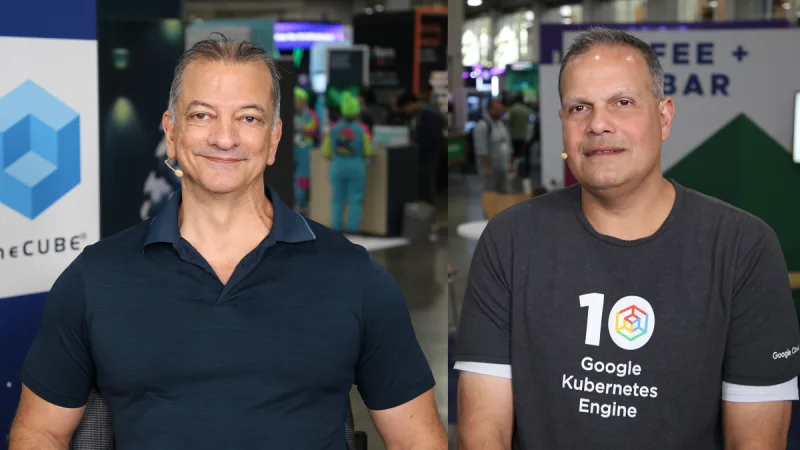
Google donates AI agent tools to open-source community to slash idle compute costs on Kubernetes
Google has contributed three projects to the Cloud Native Computing Foundation to help organizations reduce expenses when AI agents sit idle on Kubernetes clusters, addressing a growing cost challenge in agentic workloads.