Red Hat and Nvidia partner on OpenShell to secure enterprise AI agents
As OpenClaw gains traction in the AI community, Red Hat is integrating Nvidia's OpenShell runtime into its platform to address growing security concerns around autonomous agents in enterprise environments.
The rapid rise of OpenClaw in artificial intelligence circles has put security front and center for organizations considering deployment. Recognizing this shift, Red Hat LLC and Nvidia Corp. are collaborating on OpenShell, a secure, open runtime designed to govern and protect OpenClaw deployments in enterprise settings. Red Hat is now integrating OpenShell into its AI platform, with the technology placing agents in isolated sandbox environments to limit their access and capabilities.
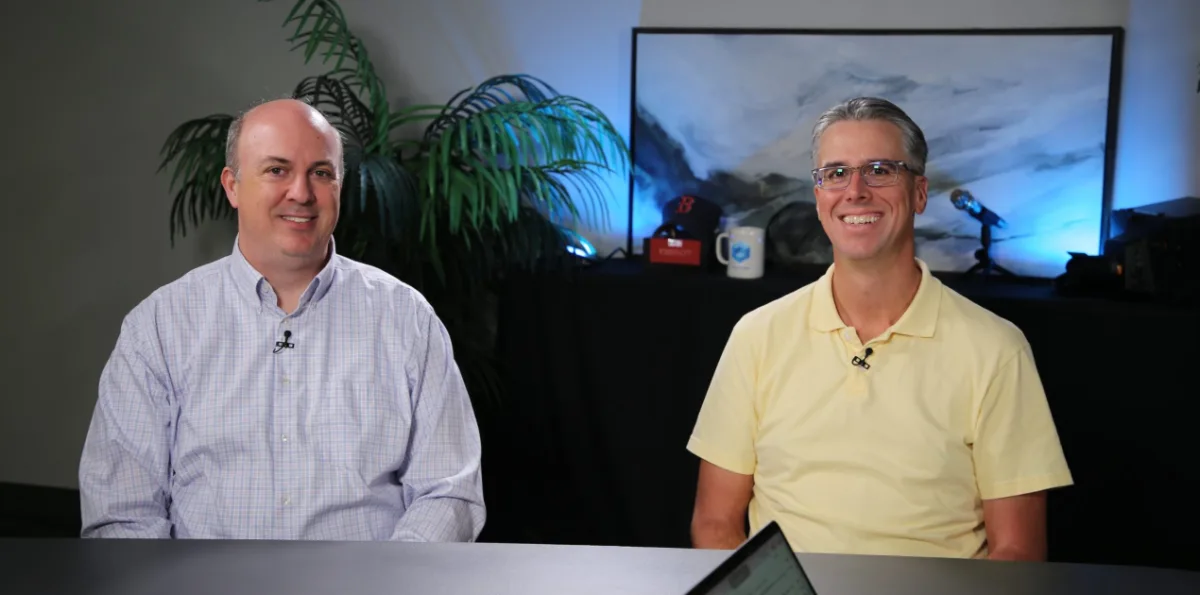
Ahead of the upcoming KubeCon + CloudNativeCon NA event, Red Hat executives outlined their approach to agent security. "OpenClaw came out with a bang," said Pete Cheslock, principal AI community architect at Red Hat. "This autonomous agent that can just do everything — it was really shocking to see the ecosystem and the community expand around it. As people started to dive into it … you start to ask the questions that everyone should be asking, especially enterprise, which is, what can this access and what can it do? That's where tools like OpenShell started answering some hard questions."
Securing OpenClaw with OpenShell
On Nov. 9, Red Hat will host an OpenShift Commons Gathering, bringing together open-source practitioners and industry leaders. Stu Miniman, senior director of market insights for hybrid platforms at Red Hat, noted that Kubernetes represents just one component of a broader cloud ecosystem that is becoming increasingly heterogeneous as AI workloads expand across multicloud environments. "There's no better way to start your week than going [to OpenShift Commons]," he said. "We've got financial services companies, we've got companies that are working on AI, working on virtualization, working on some of those key cloud-native pieces, as well as we've got two of our Red Hat general managers. We are a clear leading contributor to all of these and have broad customer adoption."
The collaboration between Red Hat and Nvidia centers on deploying OpenClaw agents alongside OpenShell's architecture to monitor and secure access to sensitive information. Cheslock emphasized that the OpenShell community, though nascent, is expanding rapidly with contributors from multiple organizations. "The OpenShell community is obviously new … but it's growing at pretty incredible clip," he said. "We've got contributors from a wide variety of companies. It builds on top of some core Kubernetes special interest groups. The agent sandbox is one of them, so that you can deploy these agents in a secure way using Kubernetes native APIs. Engineers who have to deploy these agents, there's a lot of new stuff that they have to learn but they don't have to learn the APIs to deploy it."
While agents pose security risks, they also offer defensive capabilities. AI-powered security tools can identify vulnerabilities faster and at greater scale than human analysts, enabling organizations to discover and remediate weaknesses before attackers exploit them.
https://www.youtube.com/embed/eXpWKpCAwnA?feature=oembed
Red Hat is prioritizing customer confidence in agent deployment through robust security measures. "We're trying to make sure that customers can feel secure and understand and use these tools," Miniman said. "That's front and center. There's even more effort being put on security than ever, which has always been a focus of Red Hat … it's that trust, compliance and security. If we make sure that layer is as locked down and reliable and trusted as possible, everything else comes secondary."
Read more

Google Unveils Genie 4, a World Model That Generates 3D Environments From Text
Google DeepMind has previewed Genie 4, an AI system capable of creating photorealistic three-dimensional worlds from natural language descriptions, with improved character animation and audio generation compared to its predecessor.
Dell's Scimone: AI Agent Guardrails Enable, Rather Than Limit, Enterprise Autonomy
As companies deploy autonomous AI agents, Dell's chief security officer argues that thoughtful governance frameworks built at design time actually allow organizations to grant agents more freedom while maintaining control.
AI infrastructure shifts from raw compute to systems thinking: 11 takeaways from CASPA's CEO Summit
The era of competing on processor speed alone has ended. As hundreds of thousands of chips now operate as unified systems, the industry's focus is turning to interconnects, memory, power and the bottlenecks that surround the processor itself.