Physical infrastructure becomes the new AI battleground at TechCrunch Disrupt 2026
As AI scales beyond software, energy, data centers, and cooling systems are becoming the real constraints—and the real opportunities. Two infrastructure leaders will discuss where founders should be looking.
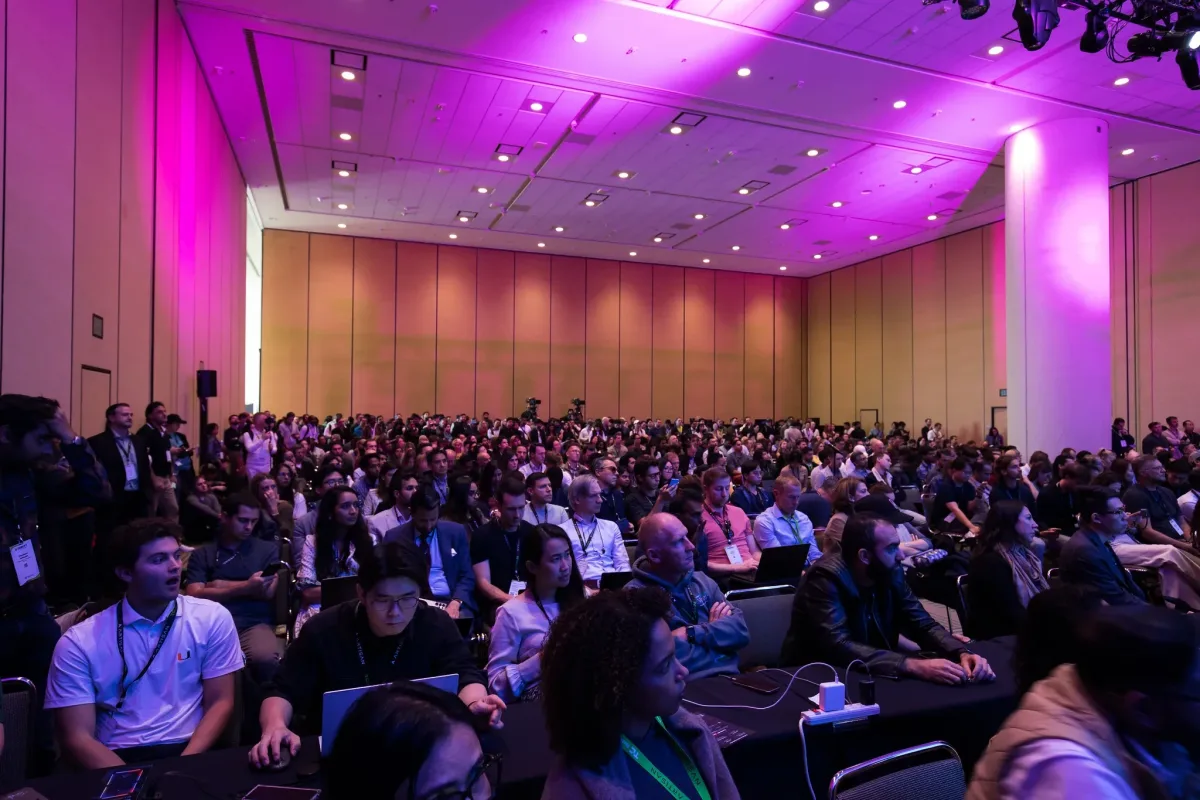
Software may power artificial intelligence, but the challenge of expanding it has shifted into the physical realm. Every model, agent, and application requires computational resources and the infrastructure to support them.
At TechCrunch Disrupt 2026, the Smart Systems Stage will host Ben Longmier, CEO of Ambrosia Energy, and Bill Thayer, SVP and Head of Datacenter Solutions at Bloom Energy, for a discussion titled "Where the AI Infrastructure Boom Is Creating Winners."
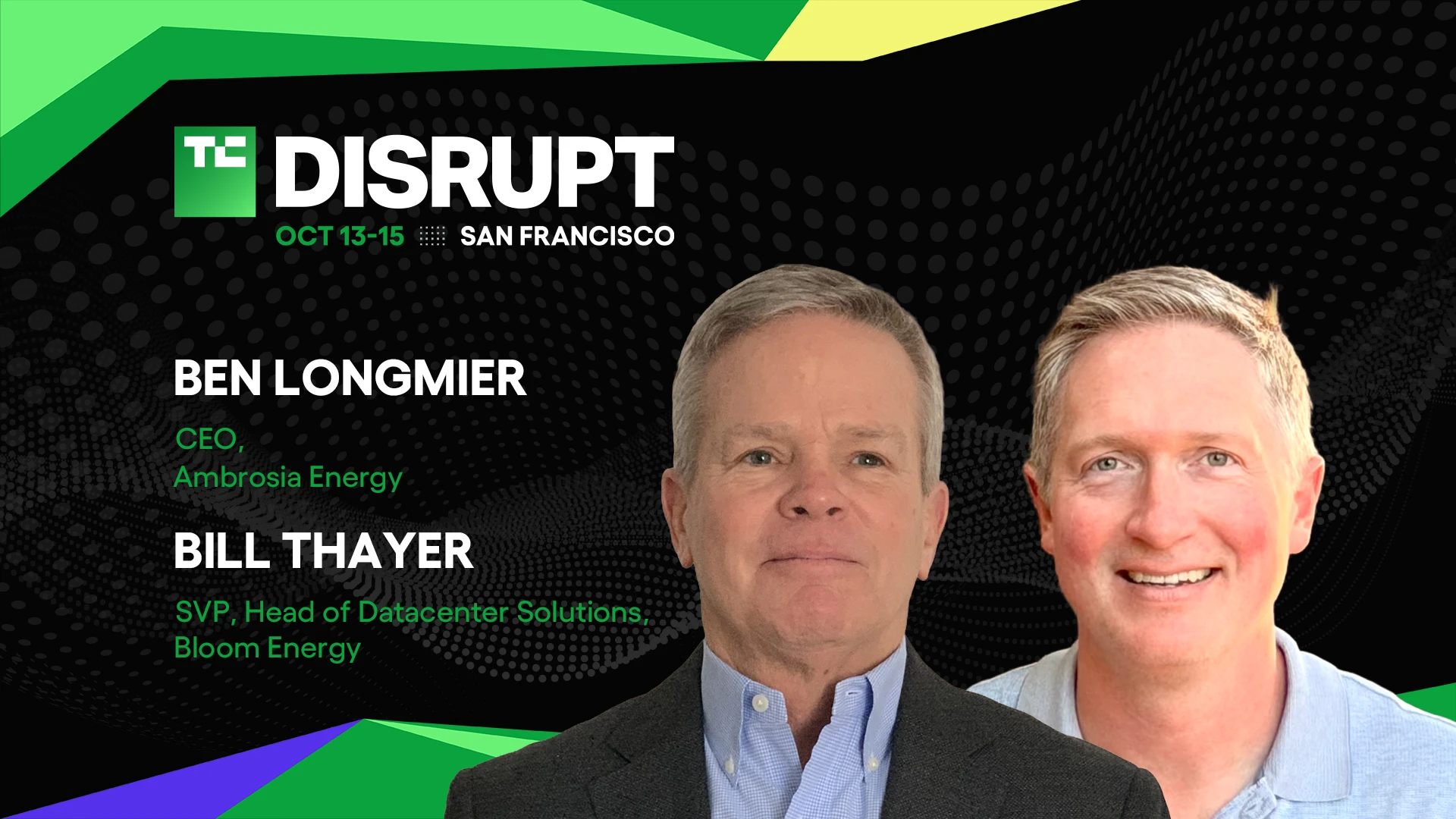
The session will analyze which bottlenecks are generating lasting business opportunities, identify emerging market segments, and explore what entrepreneurs can develop as artificial intelligence expands into physical infrastructure.
Infrastructure constraints are reshaping the AI market
Industry discourse has largely centered on models, processors, and end-user applications. Yet these components function within an interconnected ecosystem. Expanding AI requires a growing physical foundation: electricity generation, transmission networks, computing facilities, thermal management, power distribution hardware, and operational systems.
This introduces distinct complications. When computational demand outpaces the speed at which power and infrastructure can expand, what emerges? Are certain shortages temporary fluctuations, or will they fundamentally alter market dynamics for an extended period? At what point does a shortage transform from obstacle into its own market segment? The panel will address these core questions.
Rather than examining AI through a purely software perspective, Thayer and Longmier will focus on the foundational systems beneath it—and what these pressures could signal for builders, capital providers, and organizations preparing for the subsequent wave of AI expansion.
Identifying durable opportunities in infrastructure
Infrastructure expansions generate possibilities, though advantages rarely distribute uniformly. The difficulty lies in pinpointing which components of the infrastructure stack genuinely require novel approaches, where investment will sustain itself, and which new segments can develop into lasting enterprises instead of temporary spikes in demand.
Assembling specialists in power systems, data center operations, and sector analysis will broaden the conversation's scope. The discussion will likely address where supply constraints are materializing, how the sector is reacting, and which domains merit founder attention as additional funding enters the AI infrastructure space.
For builders, this suggests moving past conventional AI applications. For capital allocators, it signals the importance of recognizing where infrastructure demand could establish competitive advantages. For technology executives, it provides insight into the tangible systems increasingly determining where and how AI can develop at scale.
The next breakthrough may not be an AI company
The subsequent major breakthrough driven by AI expansion might not resemble a traditional AI enterprise. It could originate in electricity production, computing centers, thermal regulation, electrical grid systems, power management hardware, infrastructure platforms, or completely novel sectors without established terminology.
The unifying element remains consistent: artificial intelligence is placing new demands on physical systems, and addressing those demands requires innovation. This elevates the session beyond a technical infrastructure conversation. It centers on recognizing which markets might materialize next—and which organizations are ready to address them.
Longmier and Thayer will take the stage at TechCrunch Disrupt 2026 on the Smart Systems Stage to examine where the AI infrastructure expansion is generating its next set of possibilities. The conference features over 250 speakers delivering more than 200 sessions.
Attendees can secure passes with savings of up to $100 before the event opens at Moscone West on October 13 at 8 a.m. PT. Bring a co-founder, business partner, colleague, or associate and purchase a second pass at half price.
Read more

Speed to operational status now matters more than GPU counts in AI infrastructure buildouts
As organizations race to deploy AI factories, the bottleneck has shifted from securing graphics processors to managing data pipelines and storage. Infrastructure vendors are rethinking how they approach these projects from the ground up.

SpaceXSI's Grok Voice 3.0 Tops Industry Benchmarks in Speech-to-Speech Showdown
Elon Musk's SpaceXSI has unveiled Grok Voice 3.0, a speech-to-speech model that outperforms competitors from OpenAI and Google across multiple independent testing frameworks.

Microsoft Pursues Composable Memory to Ease AI Data Center Bottlenecks
As memory scarcity constrains AI workloads across data centers, Microsoft is exploring composable memory architectures that dynamically allocate capacity across servers rather than locking it within individual machines.