Oracle tackles the production gap: Why AI agents stall between demo and deployment
Enterprises struggle to move AI agents from proof-of-concept to live systems. Oracle's database chief explains why security, resilience and data access are the real barriers—and how the company is addressing them.

Building a working AI agent prototype is straightforward for most organizations. Transitioning those agents into production environments without compromising security, reliability or costs remains a formidable challenge. This disconnect between ambition and execution is forcing database vendors to fundamentally reconsider how their platforms must support agent workloads.
According to Çetin Özbütün, executive vice president of product and research for data warehouse and autonomous database at Oracle Corp, roughly 70% of organizations intend to roll out AI agents. However, the percentage that successfully move beyond pilot phases remains minimal. Özbütün shared these insights during an exclusive conversation with theCUBE Research's Dave Vellante at Oracle AI World.
AI is very easy to demonstrate, but when you try to bring it into production, enterprises usually encounter four different deployment difficulties. The first of them is around security. It's very hard to securely provide access to AI agents, and that's one of the top challenges.
Çetin Özbütün, Oracle Corp
Building an AI architecture agents can trust
Security represents the initial obstacle in moving agents to production. AI systems are uncovering database vulnerabilities at rates that outpace typical patching cycles, leaving organizations exposed to exploitation. Oracle's Autonomous AI Database addresses this through mandatory encryption of data both at rest and in transit, with no option to disable these safeguards.
As soon as the vulnerability is found, before it's released anywhere else, we bring it into production in Autonomous AI Database.
Çetin Özbütün, Oracle Corp
Resilience emerges as the second critical requirement. Since agents operate continuously and generate unpredictable, intensive loads on data infrastructure, Oracle guarantees 99.995% availability without exceptions. This metric reflects actual client connectivity and query execution capability rather than underlying system status alone.
We patch our systems on a weekly basis, for example. All of our patches are online patches, so the database is up and running, accepting new connections, accepting new requests while we're running the patch.
Çetin Özbütün, Oracle Corp
Oracle's Deep Trust AI architecture enforces customer-defined security policies at the database layer itself. New features roll out to Autonomous AI Database immediately upon announcement, preceding on-premises availability. This continuous deployment model eliminates manual intervention from administrators seeking the latest capabilities.
https://www.youtube.com/embed/a-DuXwXcOlQ?feature=oembed
You do nothing as the user or administrator of Autonomous Database to get this functionality. As soon as a new functionality is available, like Oracle Deep Data Security, it becomes available for you to use on day one.
Çetin Özbütün, Oracle Corp
Read more

Kubernetes gets new purpose running autonomous AI agents, Google donates open-source tools
Google is repositioning Kubernetes as the platform for enterprise agentic AI workloads, donating foundational open-source projects to the Cloud Native Computing Foundation to help orchestrate autonomous software more efficiently.
Black Friday 2026: date, AI shopping agents and what changes for retailers
Black Friday 2026 falls on November 27, with Cyber Monday on November 30. This piece covers which AI assistants can check out in the US, why ChatGPT stepped back from Instant Checkout, and what Adobe and Salesforce forecast.
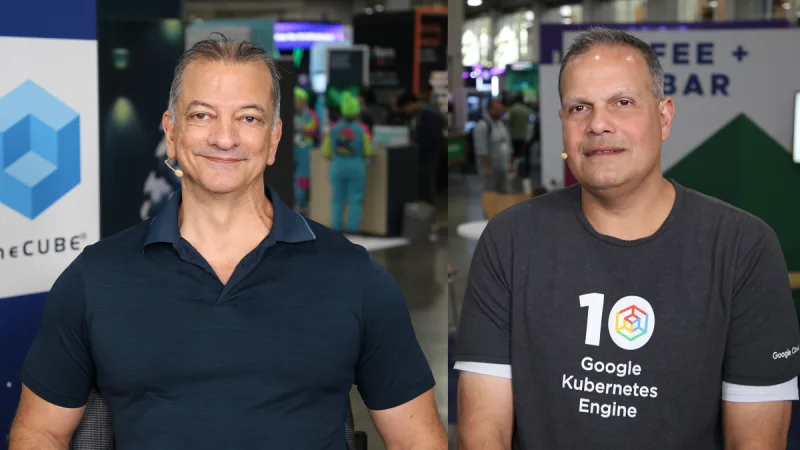
Google donates AI agent tools to open-source community to slash idle compute costs on Kubernetes
Google has contributed three projects to the Cloud Native Computing Foundation to help organizations reduce expenses when AI agents sit idle on Kubernetes clusters, addressing a growing cost challenge in agentic workloads.