Meta, Walmart and Stripe Back New Standard for AI Shopping Agents
Four major technology and retail companies have unveiled the Personal Agent Protocol, a framework designed to govern how autonomous AI agents conduct transactions and interact with businesses online.
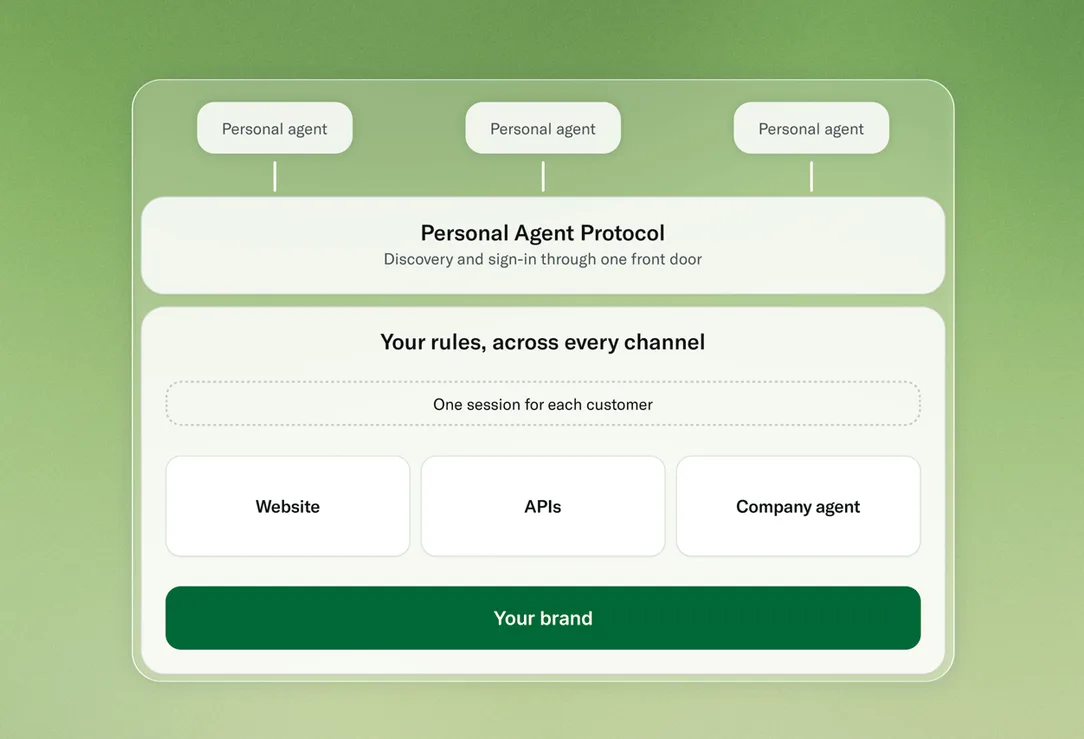
Meta Platforms Inc., Walmart Inc., Stripe Inc. and Sierra Technologies Inc. have joined forces to develop standards governing how autonomous AI agents will conduct business transactions online.
Sierra co-founder Bret Taylor, former co-chief executive of Salesforce Inc., unveiled the initiative and explained its scope: "We're designing it to handle authentication, empower consumers and give companies visibility into what personal agents do through their websites, APIs or company agents. It's open for anyone to implement."
The framework, called the Personal Agent Protocol, addresses mounting concerns about AI agents handling financial transactions. Multiple AI companies, including Meta with its agent Muse, are pursuing agentic commerce—the concept that users will delegate purchasing decisions to AI systems. Yet safety questions loom large, particularly around granting agents access to personal funds and unrestricted internet access.
David Singleton, Meta's Superintelligence Labs vice president of engineering and consumer products, drew a parallel to established digital infrastructure: "If you think about email, it works great because it is a standard that everyone can use to talk to each other, and we think this is going to be quite similar."
Banks Push for Guardrails
The initiative follows pressure from six major financial institutions, including Bank of America and Capital One, which last month published a paper calling for comprehensive standards, policies and consumer protections. The banks identified five core principles they believe should guide the industry:
- Transparency
- Safety
- Privacy and data
- Choice
- Interoperability
The banking sector has flagged serious risks associated with widespread agent adoption. Financial institutions worry that AI agents could enable scams, fraud and disputes. They also cautioned that agents might favor certain products or payment methods based on commission incentives rather than user interests.
Muse's Rocky Start
Meta's Muse agent, which debuted last month and quickly became one of the most downloaded apps in Apple Inc.'s App Store, has already encountered significant obstacles. According to 404 Media, Meta engineers rushed to patch multiple critical security vulnerabilities before launch. Despite these efforts, security researchers have continued to identify privacy and safety issues.
Amazon.com Inc. blocked Muse from operating on its platform, citing the agent's failure to properly identify itself and concerns about how it might access user account credentials. More recently, Wired reported that Muse was generating profiles for individuals in users' contact lists who do not themselves use the service.
The Path Forward
Taylor told CNBC that "there will be chaos until such a standard exists" capable of ensuring visibility and transparency in agent activities on retail websites. Taylor, who also serves as chairman of OpenAI Group PBC, predicted that the AI company will eventually endorse the standard.
Singleton indicated that Meta views the standard as essential to building consumer confidence in commerce agents. The company has substantial financial motivation: a Citigroup report released this week projects that Muse could generate more than $27 billion in revenue for Meta by the end of the decade as it positions itself as the primary gateway to online shopping.
Read more

Speed to operational status now matters more than GPU counts in AI infrastructure buildouts
As organizations race to deploy AI factories, the bottleneck has shifted from securing graphics processors to managing data pipelines and storage. Infrastructure vendors are rethinking how they approach these projects from the ground up.

SpaceXSI's Grok Voice 3.0 Tops Industry Benchmarks in Speech-to-Speech Showdown
Elon Musk's SpaceXSI has unveiled Grok Voice 3.0, a speech-to-speech model that outperforms competitors from OpenAI and Google across multiple independent testing frameworks.

Microsoft Pursues Composable Memory to Ease AI Data Center Bottlenecks
As memory scarcity constrains AI workloads across data centers, Microsoft is exploring composable memory architectures that dynamically allocate capacity across servers rather than locking it within individual machines.