Kora launches AI-native Linux OS designed for Snapdragon PCs, with Qualcomm partnership
Kora Systems has unveiled a Linux operating system that embeds AI models and agents at the kernel level, moving beyond the app-sandboxed AI of macOS and Windows. Qualcomm has spent nearly a year collaborating on the effort to bring the system to Snapdragon-powered machines.
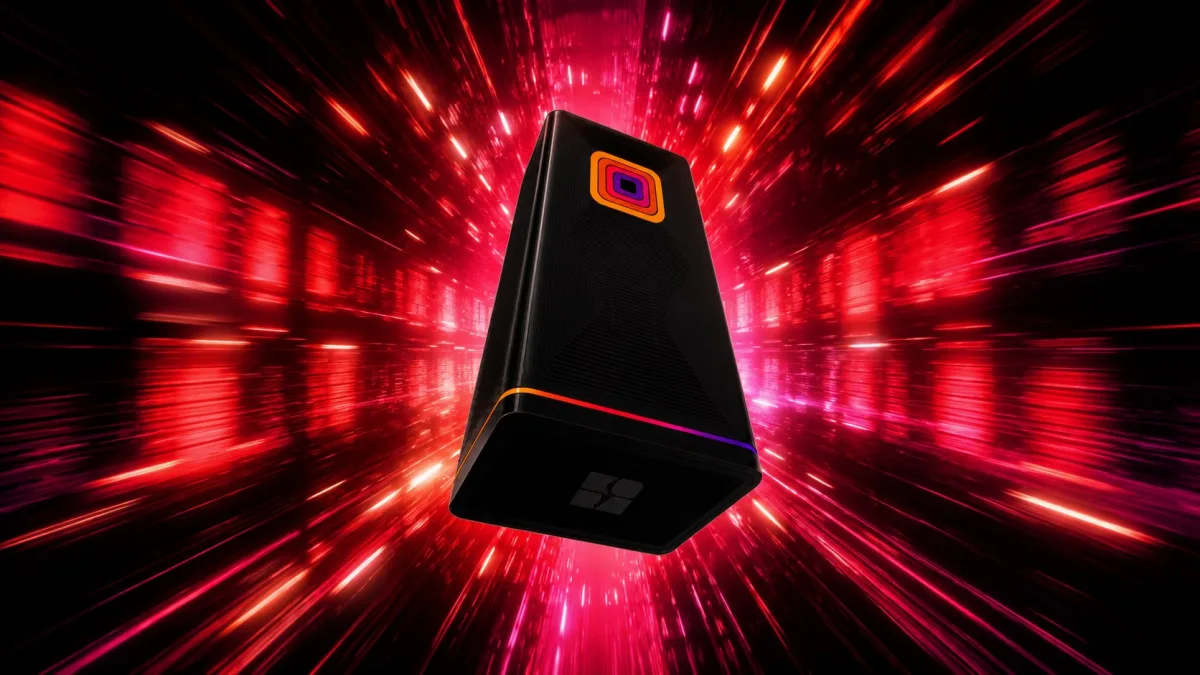
Kora Systems Inc. has introduced Kora, a Linux-based operating system that integrates artificial intelligence models and agents directly into the system architecture. The company has worked closely with Qualcomm Technologies Inc. over the past year to optimize the platform for Snapdragon-powered PCs.
The initiative targets what Kora identifies as a fundamental limitation in how AI functions on existing desktop platforms. On macOS and Windows, most AI applications operate within browser tabs or isolated app containers, with minimal access to underlying system resources. Kora contends that the proprietary nature of these platforms prevents deeper integration. Linux, the company argues, offers the openness required to rebuild an entire operating system around AI capabilities from the kernel upward.
Architecture and core features
At the heart of Kora's design sits Cortex, an inference engine that unifies the CPU, GPU, neural processing unit and networked machines into a single computational resource. Models execute locally on user hardware by default, with larger frontier models accessed for more demanding tasks.
The traditional desktop interface of folders and applications has been replaced with what Kora calls neural workspaces. Each workspace organizes itself around a specific user task, with the user controlling permissions for applications and agents within that space. A neural file system underpins the architecture, keeping memory and context stored locally on the device.
Third-party developers can build applications using the same foundational components that power Kora's native software through a software development kit. The SDK exposes primitives including memory, semantic search and email functionality. Models, AI services and agents can integrate at the system level, and agentic services can operate as part of the operating system itself, drawing identity, memory and compute resources from Kora.
Market opportunity and vision
Chief Executive Kirt McMaster described the desktop operating system as "the ultimate harness." According to McMaster, approximately 45 million people currently account for 80 percent of AI spending, and nearly all of their work takes place on desktops running operating systems designed four decades ago. Kora projects that by 2033, this group will expand to 150 million people with annual spending exceeding $400 billion. "Nobody has built an operating system for them," McMaster said.
Origins and team experience
Kora emerged from Playtron Corp., a company founded by McMaster to develop a Linux-based Windows alternative for gaming PCs. Playtron's engineering team created GameOS, a complete Linux operating system deployed on gaming devices. That same team has been developing Kora on this foundation since November 2025. GameOS continues within the new system as GameFrame, a single-click mode that converts the desktop into a console interface for PC gaming.
The founding team counts Kora as their fourth operating system, following Cyanogen, Android and GameOS. Chief Business Officer John Lagerling previously led Android business development at Google LLC. He joined when the platform had 100,000 users and remained through its growth to one billion users. Lagerling attributes that success to openness and believes AI requires the same approach.
Chief Technology Officer Franck De Girolami stated that the company believes "50 superpowered engineers can take on Windows." His engineering team now works alongside AI models and agents throughout development, to the extent that "Kora is built inside Kora."
Qualcomm collaboration and capabilities
A joint announcement from Qualcomm and Kora detailed their partnership outcomes. The companies have produced a complete Linux desktop environment running on PCs equipped with Snapdragon X2 Elite processors. Cortex now distributes AI workloads across the entire chip. Qualcomm engineers participated throughout the project, and the chipmaker is also contributing X2 Elite support to the mainline Linux kernel.
The systems can execute a 26 billion-parameter language model locally, according to the joint release. Kedar Kondap, Qualcomm's senior vice president and general manager of compute and gaming, noted that the X2 Elite was engineered to run sophisticated AI directly on the device. Kora has also developed translation technology enabling selected Windows x86-64 applications to run within the Linux environment, allowing users transitioning from Windows to retain access to their existing software.
Timeline and availability
The first devices to reach market will run HUMAIN OS, an enterprise operating system that Kora is co-developing with Saudi Arabian AI company HUMAIN. These PCs are scheduled for 2027 release, and the partners describe them as the first from hardware manufacturers to combine a Linux-based desktop operating system with Snapdragon X2 Elite processors. Kora itself will launch later in 2027, with pricing details to be announced closer to release.
Funding and investors
Kora is a venture-backed company with backing from Samsung Next, Square Enix Holdings Co. Ltd., Polychain Capital LP, Van Eck Associates Corp., Circle Internet Group Inc. and Alumni Ventures. The announcement did not disclose the total amount raised.
Read more

Kubernetes gets new purpose running autonomous AI agents, Google donates open-source tools
Google is repositioning Kubernetes as the platform for enterprise agentic AI workloads, donating foundational open-source projects to the Cloud Native Computing Foundation to help orchestrate autonomous software more efficiently.
Black Friday 2026: date, AI shopping agents and what changes for retailers
Black Friday 2026 falls on November 27, with Cyber Monday on November 30. This piece covers which AI assistants can check out in the US, why ChatGPT stepped back from Instant Checkout, and what Adobe and Salesforce forecast.

Google donates AI agent tools to open-source community to slash idle compute costs on Kubernetes
Google has contributed three projects to the Cloud Native Computing Foundation to help organizations reduce expenses when AI agents sit idle on Kubernetes clusters, addressing a growing cost challenge in agentic workloads.