Intel and Broadcom Chiefs Warn of Capital Constraints Threatening AI Sector Growth
The CEOs of two major chip suppliers outlined funding access and infrastructure challenges facing the artificial intelligence industry at a Singapore financial conference.
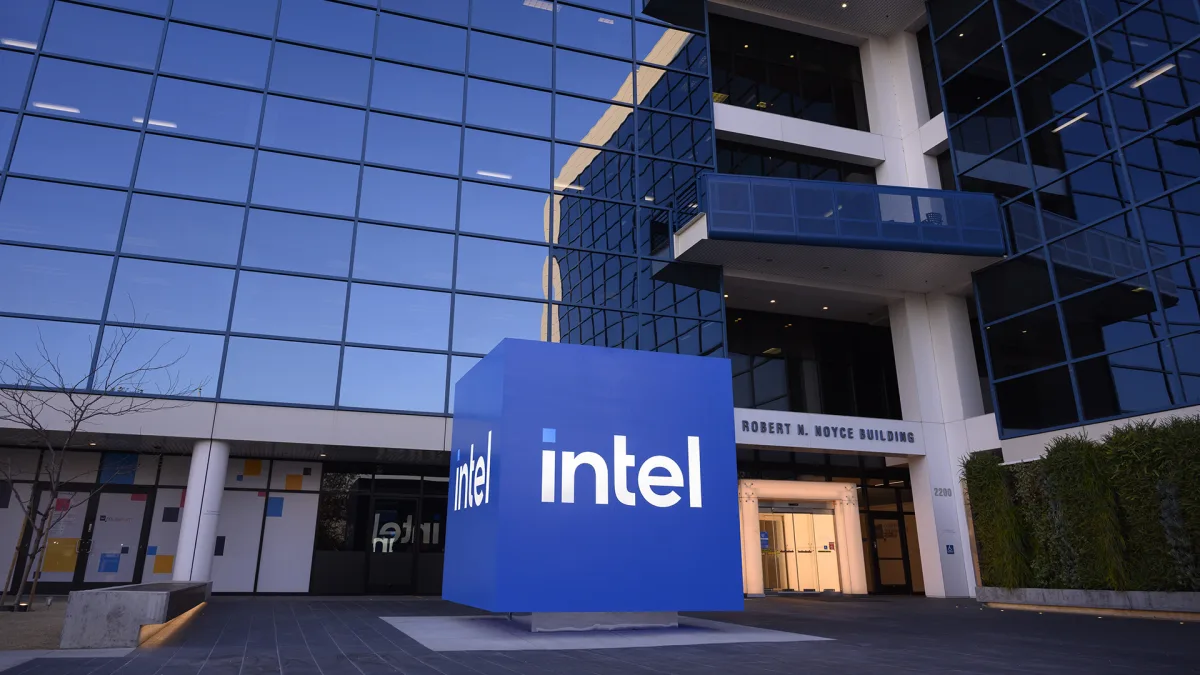
Lip-Bu Tan, who leads Intel Corp., and Hock Tan, the chief executive of Broadcom Inc., raised concerns about capital availability as a potential obstacle for the AI sector during remarks at a financial conference held in Singapore today. Both executives serve as leaders of companies that rank among the most critical semiconductor suppliers to the artificial intelligence industry.
Intel manufactures central processing units that are in substantial demand because AI agents rely on them to operate their applications. The company revealed last month that it can fulfill only 50% of current orders. Broadcom specializes in manufacturing network processors and proprietary AI accelerators for data center environments.
The market for certain data center semiconductors is currently experiencing supply shortages relative to demand. Hock Tan projected at the conference that this imbalance would begin to normalize between 2028 and 2029, though he cautioned that the mismatch between computing capacity demand and industry supply could extend through 2030.
Training Costs and Profitability Questions
Hock Tan also examined other obstacles confronting the AI sector, particularly the substantial expenses involved in training large language models. He singled out OpenAI Group PBC for discussion, noting that Broadcom collaborated with the organization to create its inaugural proprietary inference chip this year.
For now it's still losing money because they're spending a lot on training. So frankly, it doesn't tell anything at this point except that there is a lot of potential revenue growth out of providing frontier generative AI models.
Hock Tan
In a report published last month, the Financial Times noted that Anthropic PBC maintains gross margins surpassing 80% when excluding expenditures for model training and revenue distributed to go-to-market collaborators. The organization is reportedly positioned to achieve positive adjusted operating income for a second consecutive quarter.
Pilot Projects and Customer Acquisition
Hock Tan observed that AI companies currently derive a substantial share of their enterprise revenue from pilot initiatives rather than full-scale deployments. He used an analogy to illustrate the temporary nature of these arrangements: "When you are a kid you go to a video arcade, you play. Your parents give you $10 of tokens, you finish it in 10 minutes and you haven't learned anything."
The executive recommended that AI labs expand their customer base to include organizations capable of generating meaningful returns from inference expenditures. He also commented on the volatility affecting AI-focused equities, suggesting that numerous investors "set very extreme expectations only to find out that it's almost like they are in a casino."
Capital Access as Primary Constraint
Despite widespread investor interest in artificial intelligence, Hock Tan identified capital availability as potentially "the biggest constraint" for the sector. Lip-Bu Tan from Intel concurred with this assessment, emphasizing that "if there's any challenge in the front, it's capital and the cost of capital, and then the other part is in the longer run, people want to see the ROI."
Lip-Bu Tan highlighted that open-source language models developed by Chinese research organizations are becoming "good enough" for price-sensitive customers. These models have experienced substantial adoption growth throughout the past year. "I'm a strong believer of open source, that's the best way to drive efficiency," the Intel executive stated.
Quantum Computing Timeline
The conversation later moved beyond artificial intelligence topics. According to Reuters, Lip-Bu Tan projected that quantum computing could transition to mainstream adoption within a three to five year timeframe.
Intel is currently advancing quantum processors designed for manufacturing using conventional chipmaking processes. The Argonne National Laboratory put into operation a 12-qubit quantum computer engineered by Intel in January. At that time, Intel announced intentions to construct quantum systems containing hundreds of qubits.
Read more

Speed to operational status now matters more than GPU counts in AI infrastructure buildouts
As organizations race to deploy AI factories, the bottleneck has shifted from securing graphics processors to managing data pipelines and storage. Infrastructure vendors are rethinking how they approach these projects from the ground up.

SpaceXSI's Grok Voice 3.0 Tops Industry Benchmarks in Speech-to-Speech Showdown
Elon Musk's SpaceXSI has unveiled Grok Voice 3.0, a speech-to-speech model that outperforms competitors from OpenAI and Google across multiple independent testing frameworks.

Microsoft Pursues Composable Memory to Ease AI Data Center Bottlenecks
As memory scarcity constrains AI workloads across data centers, Microsoft is exploring composable memory architectures that dynamically allocate capacity across servers rather than locking it within individual machines.