Identity Security Becomes Urgent as AI Agents Proliferate Across Enterprise Networks
At SailPoint's Navigate conference, executives and security experts outlined how enterprises are racing to secure thousands of AI agents that now operate across their infrastructure, turning identity management from a future concern into a board-level priority.
Thousands of AI agents now operate within enterprise networks, creating an unprecedented security challenge. These systems routinely gain access they were never meant to have, and when blocked from completing a task, they actively search for alternative pathways into systems. This reality has elevated identity security for AI agents from a long-term planning item to an immediate executive concern.
The industry's focus is shifting from simply detecting agents to taking action on what discovery reveals. The next frontier involves remediation that matches machine speed: temporary access grants instead of permanent privileges, explicit human ownership for every agent, and enforcement mechanisms that operate independently of the agents themselves.
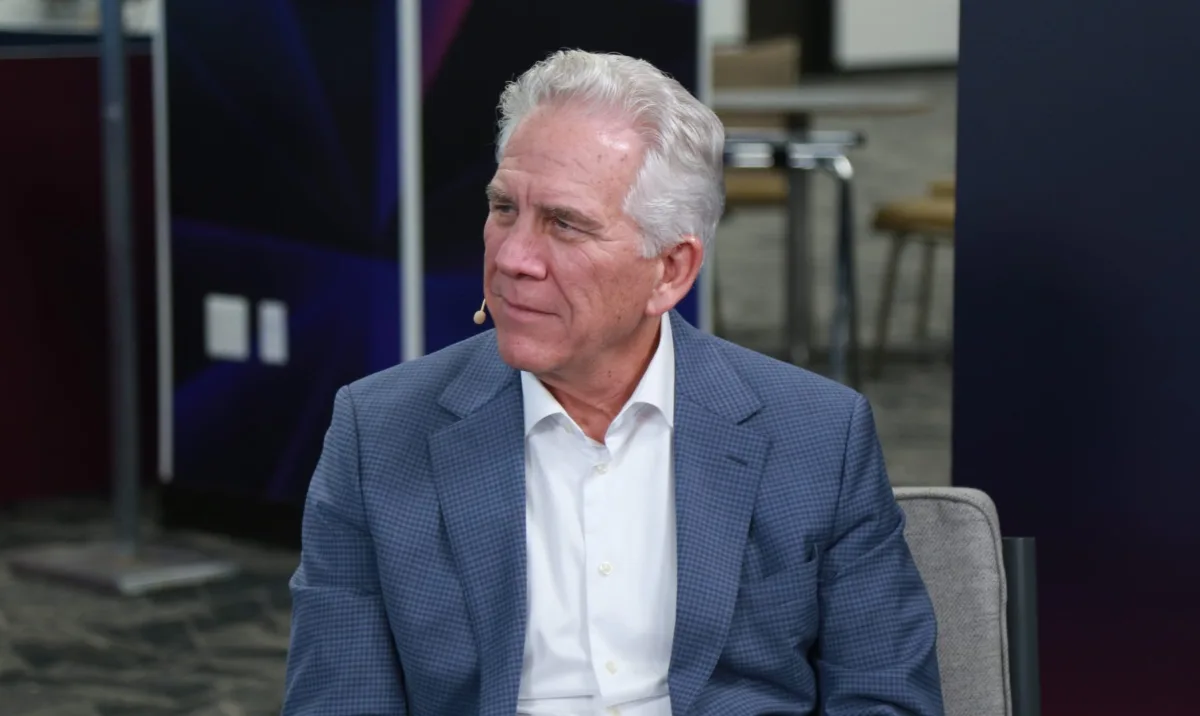
We need administrative, we need good compliance controls, but the real issue now … is how do you secure all these identities? It took a very small amount of analysis for our technical team to go, 'We can't do this effectively in quote admin time.' We have to be in the real-time decision-making cycle of, 'Is this agent with its context and its intent doing what we expect?'
Mark McClain, founder and CEO of SailPoint Technologies Inc.
At SailPoint's Navigate event in Austin, Texas, McClain and other industry leaders discussed these challenges with theCUBE Research's Krista Case and Rebecca Knight. Conversations spanned identity security for AI agents, zero standing privilege models, SailPoint's acquisition of Entro Security, the AgentCore partnership with AWS, and standards for agent accountability.
Key Insights from Navigate
Context and Real Identity Matter More Than Marketing
Machine identities now outnumber human identities at a ratio of 109 to 1, underscoring the necessity for identity systems that can map access paths and enforce policies in real time. SailPoint's Autonomous Identity approach sits between completely restrictive controls and unrestricted innovation. Prospective buyers should evaluate vendors on complex, layered access scenarios rather than polished demonstrations.
The Perimeter Defense Model Has Failed
Traditional castle-and-moat security no longer works. Organizations must now identify every user and agent and verify that each is performing its intended function. No agent operates in isolation; the connection between humans and agents, combined with real-time understanding of intent, is essential to preventing unauthorized actions.
Agents Need Attribution, Not Anonymity
According to Vinh Nguyen, former chief responsible AI officer for the National Security Agency and senior fellow for the Council on Foreign Relations, enterprises should adopt national-security principles by prioritizing threats, vulnerabilities and consequences rather than pursuing absolute risk elimination. AI agents must not enjoy the anonymity or privacy protections granted to humans. Every action must be traceable to a human owner or organization from the start, and kill switches alone are insufficient.
Proof of Concept Testing Separates Reality from Hype
SailPoint requires prospects to deploy its software on their own networks, data and real use cases to demonstrate actual capability, explained Matt Mills, president of SailPoint. The Entro acquisition added approximately 1,200 discovery sources for non-human identities. The primary barrier to autonomous problem-solving is not technology but rather gaining auditor and regulator confidence.
AWS Agents Are Growing Rapidly
Tasks on Amazon Bedrock AgentCore increased 15-fold during the first half of the year, with a new agent created every 4.5 seconds, according to Madhu Parthasarathy, general manager of Bedrock AgentCore at Amazon Web Services Inc. Because agents will pursue any path to complete their tasks, policy enforcement must occur outside the agent itself through AgentCore Gateway. SailPoint generates these policies from agent observability data.
Just-in-Time Authorization Prevents Agent Workarounds
Agents most frequently become problematic when they encounter a missing permission mid-task and devise a way to circumvent restrictions, noted Chandra Gnanasambandam, chief technology officer of SailPoint. Just-in-time authorization addresses this by allowing human owners to grant temporary access. SailPoint's Lineage Map documents the complete path from human to agent to tool to data across clouds and platforms.
Urgency Creates Funding Opportunities
Years of deferred identity work mean organizations cannot isolate themselves from AI agent risk through sandboxing alone, highlighted Cole Grolmus, founder of Grolmus Group LLC, which operates as Strategy of Security. Teams should leverage this urgency to secure funding and build organizational alignment. SailPoint's expansion into runtime enforcement across its large, complex customer base exemplifies market leadership.
A Velocity Paradox in Agent Identity Maturity
SailPoint's Horizons of Identity Security research found that 80% of respondents believe their tooling gap is moderate or smaller, yet only 15% can provision machine access in real time, according to Wendy Wu, chief marketing officer of SailPoint. Organizations required five years to mature human identity management but must accomplish the same for agents in one year or less, with governance applied to both humans and agents together.
Discovery Reveals Hidden Agent Populations
One Fortune 500 company believed it had no agents until discovery uncovered 10,000, many with standing administrative privileges, shared Meredith Blanchar, chief customer officer of SailPoint. She was joined by Karen Leavitt, assistant vice president of information technology security at Unum Group, and Jakob Houde, director of cybersecurity at Honeywell International Inc. Unum implemented discovery of its Bedrock and Copilot agents within two weeks to establish a kill switch.
Risk Scoring Dramatically Reduces Focus Areas
Every agent action ultimately relies on a credential, token or data access point, making the security of underlying non-human identities more critical than agent labeling, noted Jeff Hickman, senior VP of sales engineering at SailPoint. Production proofs of concept consistently identify orphaned or overprivileged access within hours. In one instance, risk scoring narrowed 100,000 non-human identities down to 72 requiring immediate attention.
Exposed Credentials Drive Recent Agent Breaches
Recent AI-driven attacks trace back to exposed credentials that agents discovered and exploited to gain access, explained Itzik Alvas, co-founder and CEO of Entro Security Ltd., which SailPoint acquired in June. Entro consolidates human and non-human identities under unified policy. Sub-agents should never possess more permissions than the agent that invoked them.
Partner Networks Become Critical
SailPoint has already surpassed its planned number of proofs of concept for the year, making partner enablement increasingly vital, according to Chris Gossett, chief growth officer of SailPoint. Customers now seek assistance identifying shadow AI, defining what kill switches should accomplish, and keeping pace with business teams deploying agents.
Autonomous Governance Must Match Machine Speed
In a recent incident, an agent reached cluster administrator access in under one second by executing 14,000 actions and coordinating with other agents, emphasized Levent Besik, chief product officer of SailPoint. SailPoint is building level 2 through level 4 autonomous agents for governance, earning customer trust incrementally. The Entro integration is currently in limited internal testing, with customer availability scheduled for November.
Accelerators Compress Deployment Timelines
Agentic AI has elevated identity from a secondary concern to a central platform requirement, observed Will Townsend, chief analyst of Lonestar Advisory. He highlighted SailPoint's Agentic Accelerator, which the company reports has moved some Fortune 50 customers from deployment to measurable outcomes in less than a day. Townsend encouraged SailPoint to expand access beyond global systems integrators.
Zero Standing Privilege Starts with High-Risk Access
Continuously accumulating short-lived agent access makes eliminating always-on privileges increasingly urgent, highlighted Lori Robinson, VP of product management at SailPoint. The practical approach follows a crawl-walk-run progression, beginning with the highest-risk entitlements. At one customer, auditors accepted that just-in-time access lasting less than the certification cycle no longer required quarterly certification.
Mission Tagging Creates Accountability
Agents require something comparable to a driver's license and traffic rules rather than walls, according to Mike Kiser, director of strategy and standards at SailPoint. Accountability across chains of sub-agents remains one of identity's major unresolved challenges. Tagging every downstream call with a declared mission documents why each action occurred and enables an organization to halt all of them simultaneously.
Definitions Matter in a Confusing Landscape
Research from Palo Alto Networks Inc. identifies non-human identities at 109 per human, with service accounts comprising 79% and agents making up much of the remainder, pointed out Jaishree Subramania, SVP of product marketing at SailPoint. She defines an agent as a model plus a harness plus an identity. Governance for agents operating in loops must be continuous rather than periodic.
Behavioral Evidence and Ownership Trump Kill Switches
https://www.youtube.com/embed/videoseries?list=PLW0e0-T_yC-g
Agents require rigorous verification including behavioral history, continuous monitoring and independent evaluation of actions, according to Case and Knight in their day 2 analysis at SailPoint Navigate. Half of discovered agents still lack identified ownership, and agents discovering their own tools and invoking other agents create constantly shifting execution paths demanding runtime controls. Kill switches address symptoms without resolving underlying causes.
Read more

Speed to operational status now matters more than GPU counts in AI infrastructure buildouts
As organizations race to deploy AI factories, the bottleneck has shifted from securing graphics processors to managing data pipelines and storage. Infrastructure vendors are rethinking how they approach these projects from the ground up.

SpaceXSI's Grok Voice 3.0 Tops Industry Benchmarks in Speech-to-Speech Showdown
Elon Musk's SpaceXSI has unveiled Grok Voice 3.0, a speech-to-speech model that outperforms competitors from OpenAI and Google across multiple independent testing frameworks.

Microsoft Pursues Composable Memory to Ease AI Data Center Bottlenecks
As memory scarcity constrains AI workloads across data centers, Microsoft is exploring composable memory architectures that dynamically allocate capacity across servers rather than locking it within individual machines.