IBM Readies Enterprise AI Orchestration for Production as TechXchange Approaches
IBM is preparing to showcase how organizations can move AI agents from experimental phases into production environments, with governance and sovereignty emerging as critical challenges for enterprises deploying systems across hybrid infrastructures.
When enterprises deploy AI agents across their existing systems, they face a new set of operational demands. Agents must work seamlessly with data, applications and infrastructure already in place, while organizations grapple with questions of access control, visibility and governance. IBM plans to address these production-stage challenges at its TechXchange conference, scheduled for Oct. 26–29 in Atlanta.
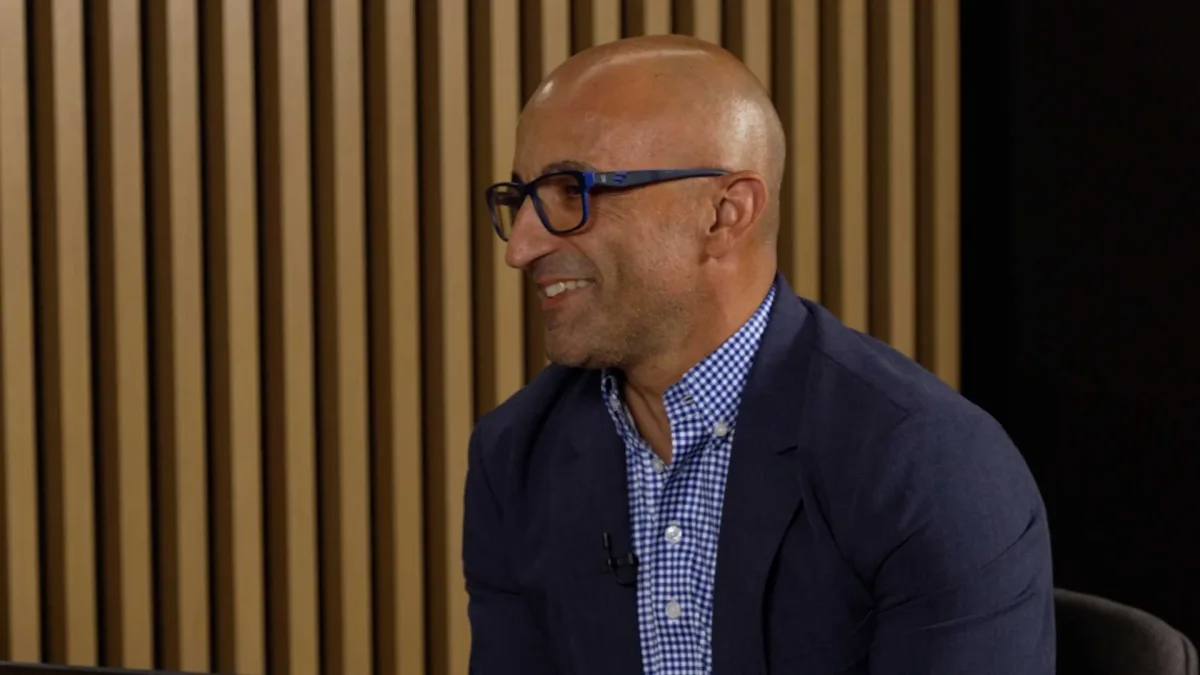
Bruno Aziza, group vice president of software, data, AI, automation and security at IBM, outlined the company's thinking during an interview with theCUBE Research. He emphasized that the market is moving toward hybrid environments across data, operations and automation. "My belief is that the market is increasingly hybrid," he said. "Hybrid data, hybrid operations, hybrid automation. The complexity is not in eliminating the hybrid world; the complexity is mastering the hybrid world."
Governance and oversight at scale
Enabling employees to build and deploy agents creates both management challenges and opportunities to enhance productivity. Organizations require visibility into what their teams are creating and the ability to coordinate those deployments across systems. Aziza noted that the volume of agents created by employees will likely exceed what traditional oversight mechanisms can handle. "That's going to be where governance breaks … the [number of agents] that's created by your employees will outpace what you can manage," he said. "So, you really need to build a platform that's going to allow you to catch up."
IBM's approach integrates agent orchestration, data integration, hybrid operations and sovereignty into a single operating model. Oversight must span applications, clouds and data sources, with monitoring systems that alert organizations when issues occur. Aziza framed governance not as a barrier to innovation but as an enabler. "[People] tend to think about compliance, stopping innovation, whereas I think what we want to do is have a continuous system that enables people to innovate," he said. "Your employees are going to innovate. You want to give them the tools to do that."
Sovereignty extends beyond data placement
Sovereignty requirements go deeper than simply deciding where data should reside. Organizations must establish responsibility across technology layers, operational control and regulatory compliance. Aziza outlined the multifaceted nature of the challenge: "You have to think about data: Where should it live? You have to think about the technology: Which layers should be run by whom? You have to think about the operations: Who can, in fact, run that? Then you have to think about regulations: How are you staying in touch with that?"
IBM's Sovereign Core product maps more than 200 compliance frameworks to controls, helping organizations navigate these dimensions. When evaluating technology partners, enterprises should examine how capabilities work together across the full scope of sovereignty rather than assuming individual products address all requirements. "True sovereignty really is across data, technology, operations and regulation. If you don't have a complete answer to that, you might actually go down a silo that will be detrimental to your organization," Aziza cautioned.
TechXchange brings practitioners together
IBM's operating model connects agentic workloads with data, hybrid cloud and infrastructure automation. Successful enterprise AI orchestration requires linking agents to existing business processes while supporting both batch and real-time data flows. The upcoming conference will feature implementation discussions and case studies from organizations including Citigroup Inc., CVS Health Corp. and DoorDash Inc.
Aziza emphasized that the conference prioritizes customer experiences over vendor messaging. "I think culture is not something you put on walls. Culture is what you do," he said. "One of the things that attracted me to IBM is a very customer-centric culture. What you will see at the conference is [that] the majority of our content is customer content; it's practitioners exchanging."
https://www.youtube.com/embed/jw2tMXONwOc?feature=oembed
The event is structured to serve organizations operating in diverse environments rather than promoting a single vendor's cloud or platform. As technology landscapes shift rapidly, practitioners benefit from learning how peers have tackled similar implementation decisions. "What [customers] have to turn to is someone they know and trust and say, 'How did you design that?'" Aziza explained. "I think building for a world that changes, building for the dimensions of hybrid, is the only way you can win today."
Read more

Speed to operational status now matters more than GPU counts in AI infrastructure buildouts
As organizations race to deploy AI factories, the bottleneck has shifted from securing graphics processors to managing data pipelines and storage. Infrastructure vendors are rethinking how they approach these projects from the ground up.

SpaceXSI's Grok Voice 3.0 Tops Industry Benchmarks in Speech-to-Speech Showdown
Elon Musk's SpaceXSI has unveiled Grok Voice 3.0, a speech-to-speech model that outperforms competitors from OpenAI and Google across multiple independent testing frameworks.

Microsoft Pursues Composable Memory to Ease AI Data Center Bottlenecks
As memory scarcity constrains AI workloads across data centers, Microsoft is exploring composable memory architectures that dynamically allocate capacity across servers rather than locking it within individual machines.