How AI Infrastructure Economics Are Shifting From Compute Costs to Intelligence Production
The economics of AI infrastructure are being redefined by the efficiency of producing intelligence rather than merely purchasing computing power, according to insights from CoreWeave and its partners at the Fully Connected event.
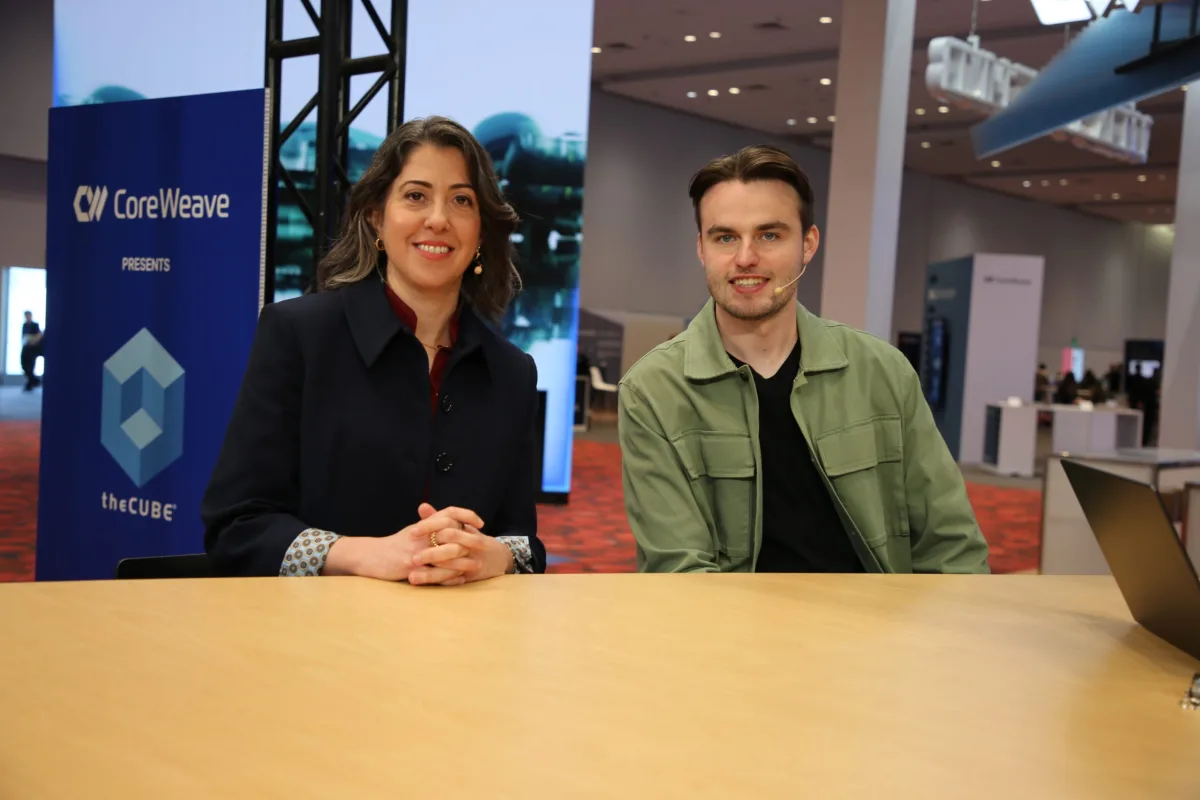
The financial model governing AI infrastructure is undergoing a fundamental transformation. Rather than focusing primarily on the expense of acquiring computing resources, the industry is increasingly centered on the cost of generating intelligence itself. As demand for inference operations accelerates beyond the growth in training workloads, both infrastructure vendors and their clients face mounting pressure to maximize productive computing output while keeping operational expenses flat. The rise of agents that learn continuously and applications built around physical AI are making this challenge even more complex.
CoreWeave Inc. exemplifies this strategic shift, expanding its service offerings well beyond raw compute capacity. According to theCUBE Research analysts Dave Vellante and John Furrier, the company is building an integrated stack that encompasses networking, storage, and a software layer that handles observability and security. Vellante explained the company's approach: "What you're seeing CoreWeave do strategically is they're expanding out beyond compute. They've got networking; they've got storage. They've got this software layer, which is observability. They've got security in there. They've got this closed-loop system between evaluation, observation [and] runtime curating … that's sort of how they're saying their software layer is now intact."
https://www.youtube.com/embed/hjV3pKJe8YM?feature=oembed
Productive Capacity Determines Inference Value
The commercial viability of inference depends on two critical factors: the volume of tokens processed and the speed at which they are delivered. Nvidia Corp.'s Groq 3 LPX inference accelerator, which integrates with its Vera Rubin platform, is gaining traction in financial services and other sectors where real-time responsiveness is essential. Ian Buck, vice president and general manager of hyperscale and HPC at Nvidia, highlighted the importance of efficiency: "Data centers have a natural cap, and that cap is actually their power. With every generation of GPU, we make sure that our tokens per watt is upwards of 10 times more efficient. In fact, we saw that with Blackwell — we got, in the end, a 30x improvement in tokens per watt."
Memory management introduces additional complexity to infrastructure economics as agents engage in longer and more complex interactions. A single session containing 500,000 tokens can occupy between 5% and 10% of a GPU's memory capacity. Storing session context in persistent storage systems can eliminate expensive recomputation cycles, according to Alon Horev, co-founder and chief technology officer of Vast Data Inc. Horev described the approach: "You can move a session from one busy GPU to one less busy GPU and move KV cache either over the network or read it from Vast. Once you look at inference as a distributed problem where you have the opportunity to use GPU memory, CPU memory and Vast across a fleet of machines, you have more optionality and you have more optimized scheduling."
For startups built around AI, specialized cloud infrastructure providers offer a compelling alternative to building and maintaining their own capital-heavy systems. LlamaIndex Inc. processes millions of document pages each day for clients in finance, legal services, and insurance sectors. Approximately 75% of its computational workload consists of inference operations, with training making up the remainder. Jerry Liu, co-founder and chief executive officer of LlamaIndex, described the operational challenge: "We serve a lot of different customers at extremely persistent and also spiky workloads. We really, really need to make sure that we have the right capacity to serve our customers without getting throttled."
https://www.youtube.com/embed/64vTNUuQaeQ?feature=oembed
Operational Risk Management Safeguards Infrastructure Investments
Protecting AI infrastructure investments begins at the manufacturing stage. Dell Technologies Inc. has engineered modular rack systems capable of accommodating diverse power and cooling requirements. The company's partnership with CoreWeave involves embedding CoreWeave's Racky management software into factory testing procedures and enhancing liquid-cooling systems with improved leak detection capabilities. Sarat Krishnan, director of PowerEdge AI architecture and systems development engineering at Dell, explained the rationale: "It becomes increasingly expensive to remediate and fix something as you go later on in the manufacturing process; [it] becomes extremely expensive if you have to replace something in the data center. What we have done over the last two years is shift our most complex diagnostics — the ones that are going to capture true hardware failures — further and further left."
Continuous model refinement at Cognition AI Inc. involves training operations distributed across data centers in multiple geographic locations. The company's Devin software engineering agent performs tasks spanning code development to fixing production problems. To enable these learning systems, CoreWeave unveiled Forge, a platform that orchestrates inference, evaluation, and model refinement while incorporating Agent Lens for monitoring agent behavior. Silas Alberti, head of research and founding team at Cognition, emphasized reliability requirements: "If you run a big training run, you're not just looking at the GPUs, but you also want uptime. If just one replica goes down, the whole training run goes down. I think a very important metric is getting to this 99.99% reliability."
International Business Machines Corp. initiated its relationship with CoreWeave in response to the power and cooling demands imposed by advanced hardware. The collaboration has evolved to encompass joint development efforts around identity management and workload isolation using CoreWeave Sandboxes. IBM additionally measures how security controls affect performance to guide architectural choices. Brian Belgodere, senior technical staff member at IBM, characterized the challenge: "This is a supply chain problem, top to bottom. It's not just the hardware: it's the firmware, kernel levels, code, your data provenance. Then you get into the whole world of agents, your images. It is an absolute provenance problem."
https://www.youtube.com/embed/Q3dG2cooq28?start=22&feature=oembed
Physical AI Applications Test Infrastructure Limits
Organizations implementing physical AI must carefully consider deployment timelines as part of their infrastructure economics. Aston Martin F1, whose race vehicles produce one million data points per second each, operates within tight budget and schedule constraints. CoreWeave's approach of deploying engineering expertise directly to customer operations brings specialized knowledge to these demanding environments. Eric Ernst, commercial technology ambassador of AMR GP Ltd., trading as Aston Martin F1, described the urgency: "We really need people that can be outside of the car development phase and come in with the fresh knowledge of what's happening in this industry that is moving extremely quickly. You can build as many processes as you want, call it agile, whatever you want. You cannot stop that process. You got to hit a deadline."
https://www.youtube.com/embed/qisuW9fW5u0?feature=oembed
Walden Robotics Inc. leverages large-scale virtual simulation to ready robots for real-world deployment. The company's robots have been operating in full production environments alongside human workers since May, handling tasks including machine tending, parts kitting, and subassembly work. Adrien Gaidon, co-founder and chief strategy officer of Walden Robotics, highlighted the importance of continuous learning: "If you're changing things and you have machines that cannot change and continuously learn in deployment, then you become a burden. We do machines that continuously learn from deployment and adapt so customers can change their mind and improve the process and give them the superpower to change even more and faster."
https://www.youtube.com/embed/y6VIAuF7H08?feature=oembed
Additional Event Coverage
- Bartley Richardson, chief of AI at CrowdStrike Holdings Inc., and Jim Higgins, chief information security officer of CoreWeave, discussed machine-speed defense, infrastructure-level security and operational trust.
- Rob Bahr, senior engineer at BattleBots Inc., explored AI simulation for robot combat design and the potential for AI-driven robot autonomy.
- Harsh Banwait, senior director of product at CoreWeave, and Hannah Coutand, director of product marketing for Vera CPU at Nvidia, addressed CPU requirements, sandbox performance and infrastructure security.
https://www.youtube.com/embed/videoseries?list=PLUcRwV5apNpA
Read more

New York enacts five-year ban on AI-powered children's toys over safety concerns
Governor Kathy Hochul signed legislation restricting artificial intelligence chatbot toys after tests revealed the devices engaged children in inappropriate conversations and graphic content.

AI chip stocks tumble as Nvidia steadies; Anthropic bounces back
A broad selloff in artificial intelligence infrastructure equities continued today, though Anthropic recovered some ground after losses earlier in the week. The downturn, which began in August and intensified following leadership turmoil at Nvidia, has spread across chipmakers and cloud providers.

OpenAI and Cisco Launch Shirudo, an AI-Powered Shield Against Exploits
The two companies unveiled an open-source Linux runtime that deploys AI agents to block malicious requests while preserving legitimate service access, addressing a critical gap in vulnerability remediation.