Google Retunes Kubernetes to Handle AI Agent Workloads Without Fragmenting the Platform
AI agents are pushing Kubernetes beyond its original design, forcing Google to optimize the orchestrator for agentic workloads while keeping the platform unified across the ecosystem.

Agentic workloads are testing Kubernetes in ways its designers never anticipated. These systems generate code dynamically without prior validation, remain inactive for extended periods, and spawn containers at rates that overwhelm the orchestrator's control plane.
Cloud infrastructure providers are reassessing whether a single cluster should serve every use case equally. Google's strategy diverges from the one-size-fits-all model: instead of maintaining universally adaptable clusters, the company is tailoring each deployment to its specific workload requirements. Jago Macleod, director of engineering for Kubernetes and Google Kubernetes Engine at Google Cloud, explained the reasoning: There isn't enough memory. There aren't enough machines. So we have to get more efficient. And so one of the ways that we do that is to focus the Kubernetes cluster on the workload it's running, and optimize it for that specific workload.
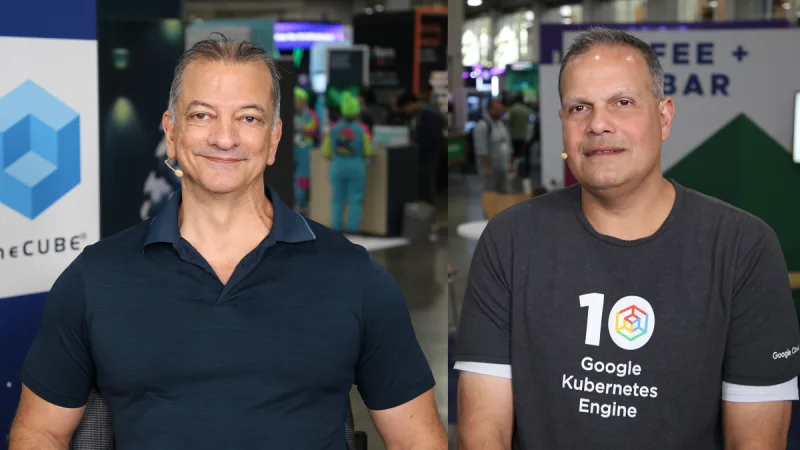
Macleod and Jaana Dogan, principal engineer at Google Cloud, shared these insights during a session at KubeCon + CloudNativeCon NA, speaking with theCUBE's Rebecca Knight on the livestreaming platform.
Agentic workloads strain the Kubernetes control plane
Kubernetes originated to orchestrate microservices, then evolved to support training jobs where individual containers consume entire nodes. Agents present yet another challenge, prompting some organizations to develop proprietary control planes to manage them. Macleod noted: I think the agentic workloads are so different in the thrash and the churn that they represent is really not what we built Kubernetes for at all. And then agentic applications are almost the polar opposite, which is, you know, in the naive implementation, you just have as many pods as you can possibly fit, and so then the API machinery is running into limits.
Platform engineering teams have invested years establishing Kubernetes as their foundational compute layer. When Google consulted with customers, they expressed concern that agent support should not splinter the platform. Google's answer is Agent Substrate, a system that executes AI agents within isolated sandboxes directly atop Kubernetes. The company contributed this technology to the Cloud Native Computing Foundation and recently shipped version 1.0.
Since agents produce their own executable code, that code carries inherent security risks and demands isolation and network restrictions, according to Dogan. Customers also identified a significant performance problem. Dogan recalled: For example, our customers came to us, 'Hey, majority of the time our agents are idle, but we have to allocate a sandbox all through the lifetime of a session.' This arrangement burns CPU resources unnecessarily.
The emergence of coding agents is reshaping how development teams operate, encouraging faster iteration cycles and leaner organizational structures, Dogan observed. As agentic systems become more prevalent, human oversight becomes increasingly critical rather than obsolete, Macleod argued. It's not really, you know, fire off a prompt and forget it and walk away. It's just a different level in the system where you're applying your judgment and expertise. And that has never been more important.
Read more

Kubernetes gets new purpose running autonomous AI agents, Google donates open-source tools
Google is repositioning Kubernetes as the platform for enterprise agentic AI workloads, donating foundational open-source projects to the Cloud Native Computing Foundation to help orchestrate autonomous software more efficiently.
Black Friday 2026: date, AI shopping agents and what changes for retailers
Black Friday 2026 falls on November 27, with Cyber Monday on November 30. This piece covers which AI assistants can check out in the US, why ChatGPT stepped back from Instant Checkout, and what Adobe and Salesforce forecast.
Google donates AI agent tools to open-source community to slash idle compute costs on Kubernetes
Google has contributed three projects to the Cloud Native Computing Foundation to help organizations reduce expenses when AI agents sit idle on Kubernetes clusters, addressing a growing cost challenge in agentic workloads.