Google DeepMind unveils Gemini Robotics 2.5 and AlphaGenome 2, advancing physical AI and genetic research
Google DeepMind released two major AI models this week: Gemini Robotics 2.5, designed to help robots operate safely alongside humans in real-world settings, and AlphaGenome 2, a genetic prediction tool for drug development and disease research.
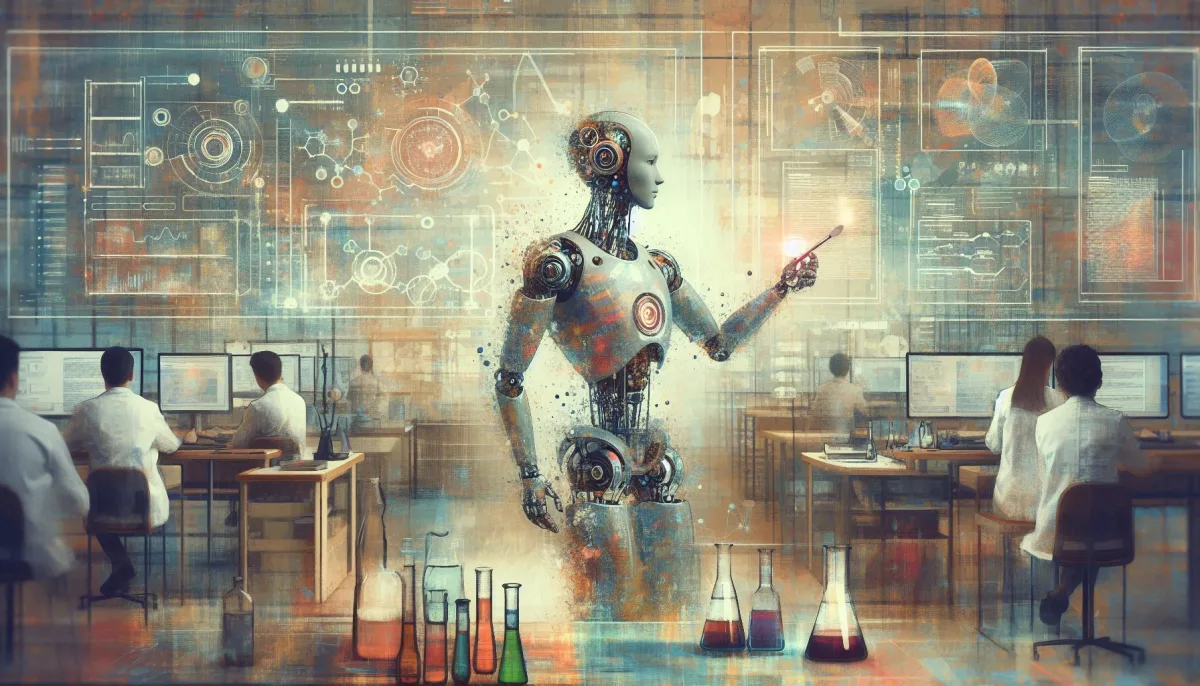
Alphabet's AI research division, Google DeepMind, unveiled Gemini Robotics 2.5 on Tuesday, positioning it as the company's most advanced vision-language-action model for building robotic intelligence. The release also included AlphaGenome 2, a successor model capable of forecasting how variations in DNA sequences influence the behavior of specific human cell types, offering new possibilities for disease treatment and pharmaceutical research.
Gemini Robotics 2.5 aims to move robotic systems from controlled laboratory environments into unpredictable, real-world settings where they must work safely with human operators. DeepMind built the model by leveraging Gemini 4 Argon, its flagship reasoning-focused large language model that launched in late September. The company tested the robotics model across more than 200 distinct tasks and plans to continue expanding its capabilities.
Three key improvements in Gemini Robotics 2.5
The new version delivers measurable gains in three critical areas. Enhanced dexterity allows robots to execute tasks with greater precision, including manipulating delicate and flexible materials using standard tools. Improved reliability was demonstrated during testing at Mercedes-Benz, where the system achieved a 96% success rate when packing automotive components. Safety enhancements include better physical control and a new evaluation framework designed to test resistance against jailbreak attempts.
Performance metrics show substantial improvements over the previous iteration. Depending on the specific task, Robotics 2.5 achieves success rates ranging from 30% to 100%, while completing assignments 20% to 30% faster than its predecessor. The model maintains compatibility with multiple robot platforms, including Apptronik's Apollo 2 humanoid and the Franka Duo with dual-finger grippers.
Apptronik co-founder and Chief Executive Jeff Cardenas commented on the partnership: "This is what we built Apollo for: useful work alongside people in real industrial settings. Pairing Apollo 2 with Gemini Robotics, we saw the models improve dramatically in just a few weeks of post-training and carry over to Mercedes-Benz production with very little drop-off."
Gemini Robotics 2.5 is now available through DeepMind's robotics partners, which include Agile Robots SE, Apptronik and Boston Dynamics Inc.
AlphaGenome 2: Mapping cell-specific genetic effects
AlphaGenome 2 addresses a fundamental challenge in genetic research: every cell in the human body contains identical DNA, yet different genes activate at different moments to create specialized cell types. A heart muscle cell and an immune cell fighting infection share the same genetic code but activate different genes to produce the proteins and enzymes needed for their distinct functions. Predicting which genetic variations trigger these activation patterns across different cell types has remained a significant obstacle for researchers.
The new model incorporates data from the Human Cell Atlas, a global research initiative that catalogued gene expression patterns across millions of cells. This foundation allows AlphaGenome 2 to provide unprecedented insight into how various cell types utilize genetic information. The model can now forecast several key measures of genetic function, including gene expression, histone modification, chromatin accessibility and DNA methylation—the latter representing an important epigenetic mechanism through which environmental factors and life experiences can influence gene activity.
A distinctive capability of AlphaGenome 2 is its ability to adapt to newly collected single-cell data without requiring retraining, even when working with limited sample sizes. Professor Sarah Teichmann, co-founder of the Human Cell Atlas and professor of Stem Cell Medicine at the University of Cambridge, highlighted this strength: "how it adapts directly to new single-cell data without retraining, predicting how DNA variants act in newly profiled cell states."
DeepMind emphasizes that AlphaGenome 2 serves as a research tool to guide investigation and prioritize experiments rather than replace laboratory validation. The model is not authorized for clinical diagnosis or direct medical use.
Read more

Kubernetes gets new purpose running autonomous AI agents, Google donates open-source tools
Google is repositioning Kubernetes as the platform for enterprise agentic AI workloads, donating foundational open-source projects to the Cloud Native Computing Foundation to help orchestrate autonomous software more efficiently.
Black Friday 2026: date, AI shopping agents and what changes for retailers
Black Friday 2026 falls on November 27, with Cyber Monday on November 30. This piece covers which AI assistants can check out in the US, why ChatGPT stepped back from Instant Checkout, and what Adobe and Salesforce forecast.
Google donates AI agent tools to open-source community to slash idle compute costs on Kubernetes
Google has contributed three projects to the Cloud Native Computing Foundation to help organizations reduce expenses when AI agents sit idle on Kubernetes clusters, addressing a growing cost challenge in agentic workloads.