Financial Services Grapple With Protecting AI Agent Data During Processing
As AI agents enter production environments on Kubernetes, financial institutions face a critical security gap: encryption protects data at rest and in transit, but safeguarding information while it is actively being used requires a different approach.

Financial services firms deploying AI agents on Kubernetes infrastructure are confronting a security challenge that goes beyond traditional encryption. Container orchestration has emerged as the standard platform for running AI workloads, making the data these agents process a prime target for attackers.
Payment networks face particular vulnerability because transactions inherently involve sensitive customer information alongside significant regulatory obligations. The shift toward protecting data while it undergoes processing—rather than only when stored or transmitted—has become essential for operating agents at enterprise scale, according to Krishna Mayuram, senior principal engineer and vice president of cloud engineering at Mastercard Inc.
What we call confidential computing is when you are launching these applications in a highly secure, virtualized secure environments or confidential environments or confidential containers, you are able to protect the data in use. We have protected data at rest, data in motion. Now, what is happening to the data in use?
Krishna Mayuram, Mastercard
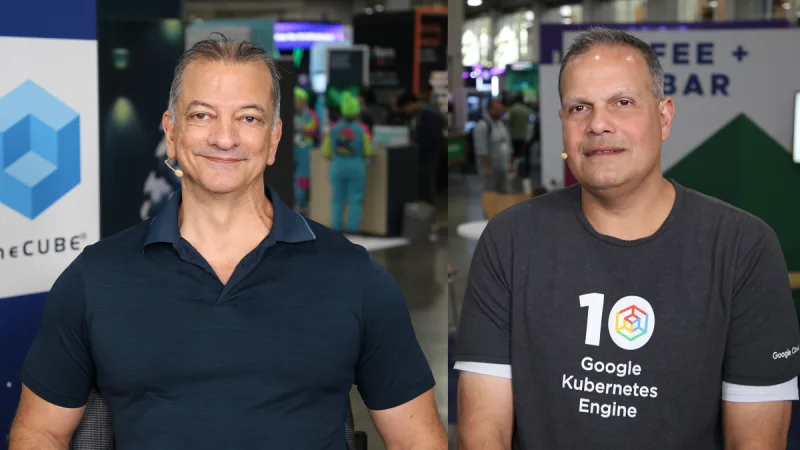
Mayuram shared these insights during an exclusive conversation with theCUBE Research's John Furrier and Rebecca Knight at KubeCon + CloudNativeCon NA, which aired on theCUBE, SiliconANGLE Media's livestreaming platform. The discussion centered on cloud infrastructure decisions, emerging security challenges and the technical hurdles involved in safeguarding data throughout its lifecycle.
Kubernetes as the foundation for agent infrastructure
Mastercard operates its systems using Red Hat Inc.'s OpenShift, a Kubernetes distribution that Red Hat is actively enhancing to accommodate AI agents. Red Hat has also integrated confidential containers into OpenShift deployments on bare metal infrastructure. Agents function similarly to microservices, requiring the same scalability and resource flexibility that Kubernetes provides, Mayuram explained.
We need to scale the platform, that's Kubernetes which gives horizontal scaling, vertical scaling, if you will, and also the agents, just like applications, require all the elastic capabilities of Kubernetes.
Krishna Mayuram, Mastercard
Scaling introduces heightened security risks, particularly for organizations operating across multiple jurisdictions with varying legal requirements. Mastercard recently introduced trust services designed for agentic commerce, and the company applies similar governance principles internally, implementing safeguards throughout the entire development and deployment pipeline.
https://www.youtube.com/embed/hCBumDt6ZrE?feature=oembed
The business is distributed, the industry is very distributed, and we have different laws of the land. So all these things need to be encompassed with guardrails. Whether agents or regular, the guardrails remain the same. The enterprise security remains same.
Krishna Mayuram, Mastercard
Read more

Kubernetes gets new purpose running autonomous AI agents, Google donates open-source tools
Google is repositioning Kubernetes as the platform for enterprise agentic AI workloads, donating foundational open-source projects to the Cloud Native Computing Foundation to help orchestrate autonomous software more efficiently.
Black Friday 2026: date, AI shopping agents and what changes for retailers
Black Friday 2026 falls on November 27, with Cyber Monday on November 30. This piece covers which AI assistants can check out in the US, why ChatGPT stepped back from Instant Checkout, and what Adobe and Salesforce forecast.
Google donates AI agent tools to open-source community to slash idle compute costs on Kubernetes
Google has contributed three projects to the Cloud Native Computing Foundation to help organizations reduce expenses when AI agents sit idle on Kubernetes clusters, addressing a growing cost challenge in agentic workloads.