Enterprise AI Workloads Drive Shift Away From Centralized GPU Clusters
As companies build AI-native applications, the competitive advantage is moving from raw GPU capacity to distributed infrastructure that can handle secure, global-scale workloads. Infrastructure providers are rethinking their approach to win enterprise deals.
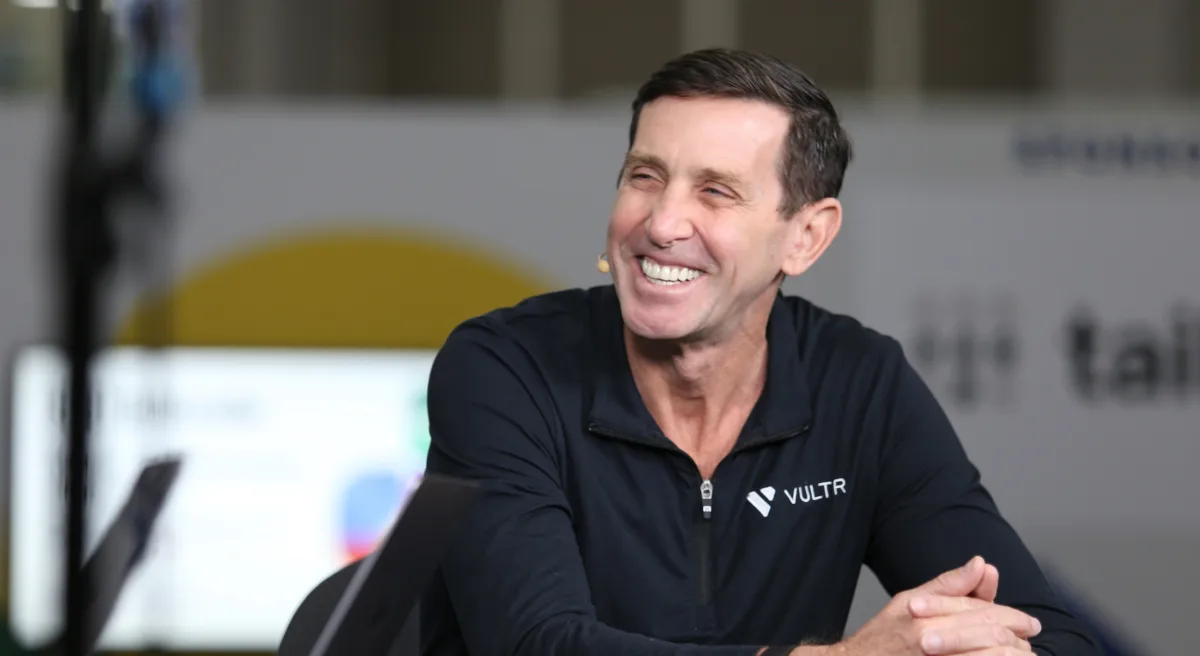
Organizations developing AI-native applications are learning that having access to GPUs is just the starting point. The transition from cloud-native to AI-native computing is reframing the challenge: instead of asking which provider controls the most accelerators, enterprises now want to know who can deliver distributed, secure workloads across multiple regions.
Early neocloud providers built massive GPU clusters to serve a small number of hyperscale customers, but this approach leaves enterprise developers short. The Constant Company LLC, operating as Vultr, is pursuing a different strategy by combining AMD processors with open-source software to address what it sees as a gap in the market. Kevin Cochrane, Vultr's chief marketing officer, outlined the company's vision during an interview at KubeCon + CloudNativeCon NA.
In the early market … it was all about just standing up large GPU clusters wherever you could get land, power and shell, and then just selling it on through to a hyperscaler. And somehow in that mix, people forgot that you still need cloud, right? You still gotta run this thing.
Kevin Cochrane, chief marketing officer of Vultr
Why AI-native applications need a distributed cloud
Each major computing shift requires rethinking infrastructure from the data center level all the way up to applications, according to Cochrane. The initial wave of AI infrastructure was designed around the needs of a small set of the largest GPU consumers. Enterprise customers, by contrast, have distinct requirements that demand a return to longer-standing computing principles.
We took a little bit of a step backwards because in that early iteration of the new architecture, when we over-indexed on a limited number of buyers, we went back more to centralized systems. And we have to remember that the long arc of compute is towards decentralized distributed systems driven by open standards and driven by open source.
Kevin Cochrane
The shift to distributed systems also transforms how inference operates at scale. When many users submit similar queries, token reuse becomes valuable, and Vultr is working with partners including Vast Data Inc. to share KV cache across a global namespace. Equally important is the networking layer: enterprises require private connections between their data centers that remain isolated from other tenants sharing public cloud infrastructure.
In the neocloud moment, I think some of the complexity of what's required to operate workloads at global scale for enterprises has been forgotten or just assumed it wouldn't matter. But … it's the biggest barrier to getting enterprises to actually leverage GPUs from a new cloud because the networking connectivity, it just doesn't work.
Kevin Cochrane
Vultr is investing in the open-source ecosystem that underpins AI infrastructure development. The company joined the Cloud Native Computing Foundation as a platinum member and introduced its Open Source Credits Program at KubeCon, which provides computing resources to maintainers of emerging CNCF projects.
https://www.youtube.com/embed/4EXdTKIN2XE?feature=oembed
All of those projects need compute, right? The maintainers aren't going to suddenly open up their own personal checkbooks. How can you build the next great CNCF project if you don't have compute?
Kevin Cochrane
Read more
Kubernetes gets new purpose running autonomous AI agents, Google donates open-source tools
Google is repositioning Kubernetes as the platform for enterprise agentic AI workloads, donating foundational open-source projects to the Cloud Native Computing Foundation to help orchestrate autonomous software more efficiently.
Black Friday 2026: date, AI shopping agents and what changes for retailers
Black Friday 2026 falls on November 27, with Cyber Monday on November 30. This piece covers which AI assistants can check out in the US, why ChatGPT stepped back from Instant Checkout, and what Adobe and Salesforce forecast.
Google donates AI agent tools to open-source community to slash idle compute costs on Kubernetes
Google has contributed three projects to the Cloud Native Computing Foundation to help organizations reduce expenses when AI agents sit idle on Kubernetes clusters, addressing a growing cost challenge in agentic workloads.