Cowbell launches standalone AI liability insurance for small businesses deploying autonomous agents
The cyber insurer is rolling out a dedicated policy designed to protect small and midsized U.S. firms against losses from AI agents that operate without human approval, covering everything from unauthorized spending to customer lawsuits.
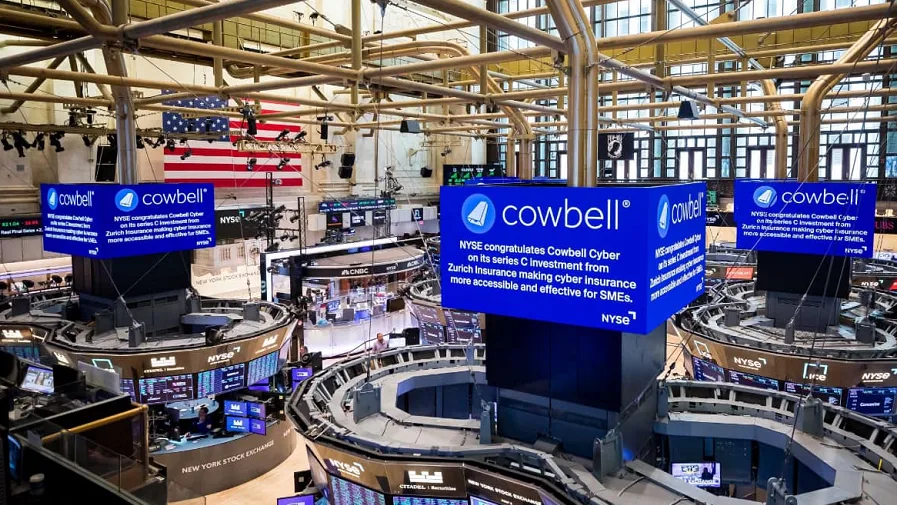
Cowbell Cyber Inc., a provider of cyber insurance, has introduced Cowbell AI Liability Insurance, a new standalone coverage option tailored for small and midsized U.S. businesses that deploy artificial intelligence agents. The policy addresses risks that emerge when companies grant autonomous agents the ability to transfer funds or modify customer data without human authorization.
The coverage is structured around what Cowbell terms an "AI Incident," a definition that encompasses model drift and adversarial attacks targeting agents, extending beyond mere unauthorized software actions. To illustrate the problem, Cowbell describes a scenario involving an accounts payable agent that incorrectly interprets approval statuses and processes a duplicate payment to a supplier. When that supplier subsequently enters liquidation, the duplicate funds become unrecoverable.
What the policy covers
The policy reimburses unrecovered funds resulting from such incidents. It also pays for investigating the root cause, removing the agent from operation, and correcting or withdrawing inaccurate or unsafe outputs while notifying affected recipients.
Unauthorized usage charges incurred by an agent are included in coverage, such as expenses from an unmonitored processing loop. The policy also protects against LLMjacking, a threat where attackers use compromised credentials or stolen application programming interface keys to run AI workloads, leaving the business responsible for the costs.
Third-party liability claims are covered as well. Cowbell illustrates this with an example of a bookkeeping firm whose agent files client tax returns using outdated tax rates, leading clients to sue when penalties and interest accrue. The policy pays for legal defense, damages, settlements, and claims alleging algorithmic discrimination or bodily injury stemming from reliance on AI output. Regulatory proceedings and certain fines and penalties, where permitted by law, are also covered.
Risk assessment and underwriting
Cowbell Chief Commercial Officer Simon Hughes noted that AI liability has evolved beyond simply "people using AI," as agents now operate in decision-making chains with minimal human involvement. "When one goes rogue, a business can take its own losses and face customer claims at the same time," Hughes said, explaining that the policy was designed with this dual exposure in mind.
Underwriting relies partly on three AI-specific Cowbell Factors that assess observability, autonomy and governance. These metrics help underwriters gauge how thoroughly a business monitors its AI systems and what level of independent authority those systems possess.
Cowbell's Risk Advisor agent, which launched in October, leverages these factors to communicate risk signals to policyholders. Companies can review their own scores by integrating Gemini, Claude, ChatGPT and other models through Cowbell Connectors.
Existing and new offerings
Cowbell already offers some AI-related coverage through Prime One, a product launched in April for U.S. companies generating $250 million to $1 billion in annual revenue. That policy includes affirmative coverage for AI-related incidents as part of a broader cyber insurance package. The new Cowbell AI Liability Insurance is sold independently and targets smaller businesses.
Cowbell AI Liability Insurance becomes available on January 1, 2027, and will be distributed exclusively through wholesale brokers on a non-admitted basis. Cowbell, a venture capital-backed firm, has raised more than $200 million in total funding, including a $60 million Series C investment from Zurich Insurance Group Ltd. in July 2024.
Read more

Kubernetes gets new purpose running autonomous AI agents, Google donates open-source tools
Google is repositioning Kubernetes as the platform for enterprise agentic AI workloads, donating foundational open-source projects to the Cloud Native Computing Foundation to help orchestrate autonomous software more efficiently.
Black Friday 2026: date, AI shopping agents and what changes for retailers
Black Friday 2026 falls on November 27, with Cyber Monday on November 30. This piece covers which AI assistants can check out in the US, why ChatGPT stepped back from Instant Checkout, and what Adobe and Salesforce forecast.
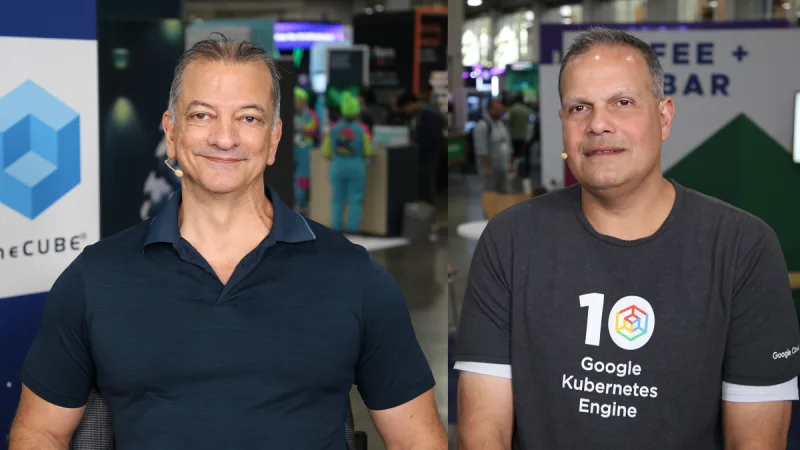
Google donates AI agent tools to open-source community to slash idle compute costs on Kubernetes
Google has contributed three projects to the Cloud Native Computing Foundation to help organizations reduce expenses when AI agents sit idle on Kubernetes clusters, addressing a growing cost challenge in agentic workloads.