CoreWeave Ascends to Kubernetes Foundation's Top Tier as AI Inference Demands Reshape Cloud Infrastructure
CoreWeave has elevated its commitment to the open-source Kubernetes ecosystem by joining the Cloud Native Computing Foundation at its highest membership level, positioning itself to influence how the platform evolves to handle massive AI workloads in production.
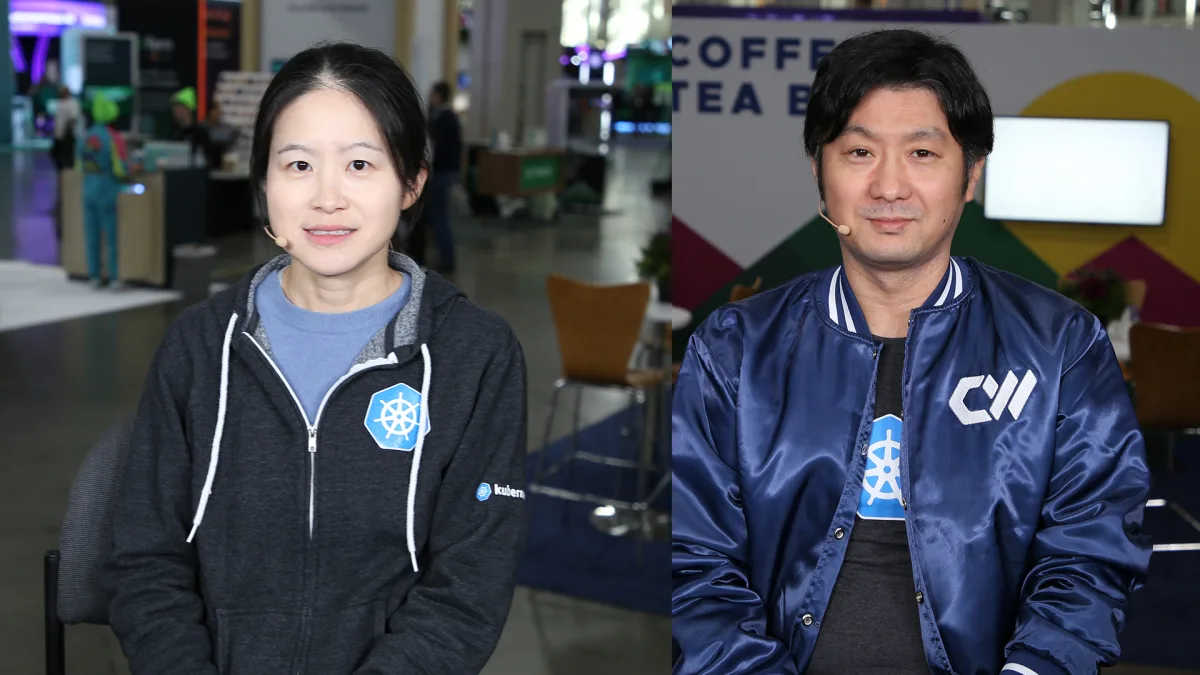
As cloud infrastructure providers push Kubernetes to handle inference workloads for cutting-edge AI models, the real-world challenges they face in production are directly influencing the development of the open-source tools they depend on. CoreWeave Inc., which operates a cloud platform purpose-built for AI workloads rather than adapted from general-purpose infrastructure, finds itself at the forefront of this transformation. The company's expansion has been closely tied to Kubernetes' open architecture and the broader ecosystem surrounding it, according to Yoshi Tamura, principal product manager at CoreWeave. In recognition of this relationship, CoreWeave has now reached Platinum status within the Cloud Native Computing Foundation, the organization's most prestigious corporate membership category, granting it greater influence over how Kubernetes evolves to support the demanding AI applications its customers deploy.
Without [Kubernetes], I don't think we would've been able to get this kind of explosive growth. With this upgrade to Platinum, we indicate that we really mean it. We want to give back to the community. We want to be more involved.
Yoshi Tamura, principal product manager at CoreWeave
Tamura and Rita Zhang, principal software engineer at CoreWeave, shared insights into the company's decision and the operational realities of deploying Kubernetes at scale during an exclusive conversation at KubeCon + CloudNativeCon NA, recorded for theCUBE, SiliconANGLE Media's livestreaming platform.
Kubernetes inference and the hard work of running AI in production
While open-source tools can deploy a model into a Kubernetes cluster, successful operation at production scale requires substantially more work. CoreWeave's inference division combines infrastructure experts with machine learning specialists, collaborating with model developers and open-source inference frameworks to optimize engines and runtimes for newly released models, according to Zhang.
Running in production is hard. We work a lot with the open-source community, not just on the inference stack, but also with the model providers. Just because it's on Hugging Face and you download the weights doesn't mean it will work per your requirement. This is where we work very closely with the labs and the open-source community — like vLLM, SGLang — to make sure that for day-zero models we actually are able to patch the engines and provide our own kernels and patch the runtime.
Rita Zhang, principal software engineer at CoreWeave
Kubernetes special interest groups depend on practitioners to surface production challenges, including locating nodes equipped with specific hardware and managing cluster topology considerations when scheduling large-scale training and inference operations, Zhang noted. Tamura emphasized that CoreWeave, despite its rapid growth, remains considerably smaller than established cloud providers and relies on open-source infrastructure more extensively than many competitors. The company's partnerships with major AI model creators provide it with early visibility into the trajectory of frontier workloads.
We're in a very unique position. Maybe we can actually find a way to kind of bring it back to the community and sort of lead which direction Kubernetes, a larger community, could go.
Yoshi Tamura, principal product manager at CoreWeave
Read more

Kubernetes gets new purpose running autonomous AI agents, Google donates open-source tools
Google is repositioning Kubernetes as the platform for enterprise agentic AI workloads, donating foundational open-source projects to the Cloud Native Computing Foundation to help orchestrate autonomous software more efficiently.
Black Friday 2026: date, AI shopping agents and what changes for retailers
Black Friday 2026 falls on November 27, with Cyber Monday on November 30. This piece covers which AI assistants can check out in the US, why ChatGPT stepped back from Instant Checkout, and what Adobe and Salesforce forecast.
Google donates AI agent tools to open-source community to slash idle compute costs on Kubernetes
Google has contributed three projects to the Cloud Native Computing Foundation to help organizations reduce expenses when AI agents sit idle on Kubernetes clusters, addressing a growing cost challenge in agentic workloads.