Atlassian Unveils Framework for AI Agents and Humans to Work as Teammates
The company introduced Agentic Multiplayer Protocol at Team '26 Europe, positioning AI agents as governed collaborators that operate alongside humans within shared digital workspaces rather than as autonomous systems.
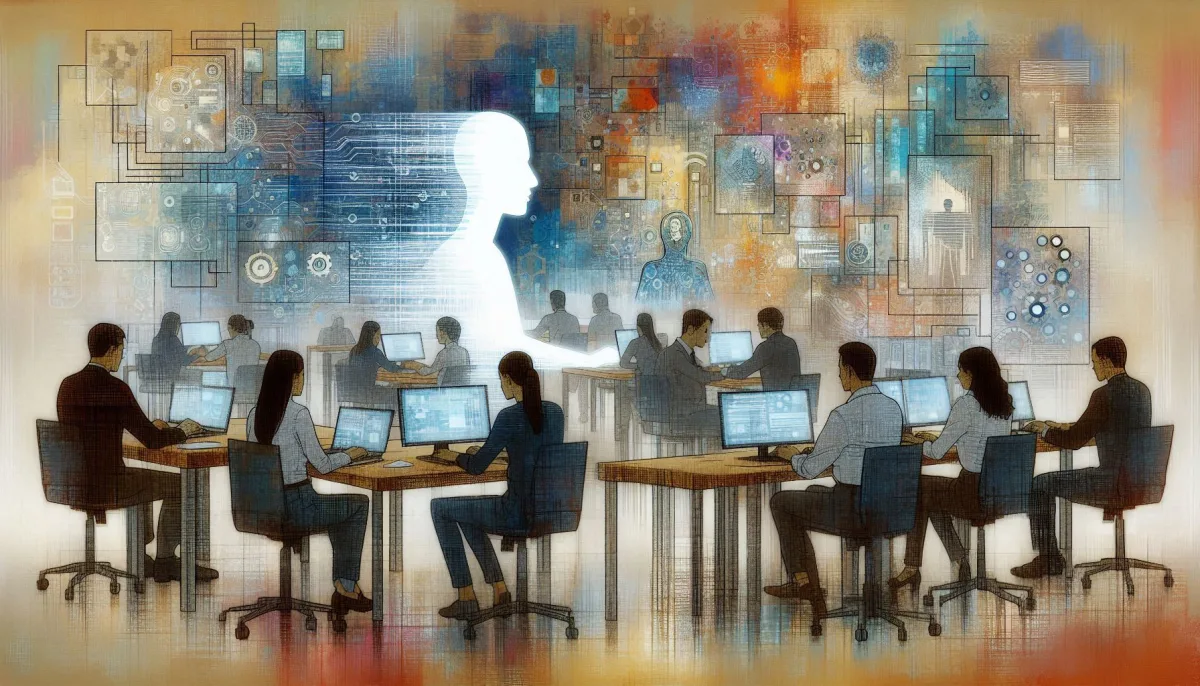
Atlassian Corp. revealed Agentic Multiplayer Protocol, a platform update intended to reshape collaboration between humans and artificial intelligence agents by enabling them to share context and tasks in a unified digital environment. Presented at Team '26 Europe, the initiative frames AI agents as team members functioning within a fully governed system where humans and machines work openly together.
The protocol equips each agent with the data context necessary for effectiveness while imposing safeguards to maintain security within the platform boundaries. Every agent receives an identity managed by administrators, complete with defined authority levels and operational scope.
According to Jamil Valliani, Head of AI Product, "This is a multiplayer game. Humans and agents are working together in a very dynamic space, and there are lots of players." Yet agents operate under constraints. Valliani emphasized that Atlassian follows an internal principle: "Headless software means brainless software." The company's vision extends beyond merely providing software for autonomous agents to operate independently; autonomy gains value only through collaboration.
Rovo, Atlassian's AI assistant, demonstrates this collaborative model. While capable of working independently for extended periods, the human user establishes objectives, reviews proposed plans, provides course corrections and validates final results.
To operationalize this approach, Atlassian introduced Rovo Work, a new Rovo Chat mode designed for complex, multi-step tasks requiring human review and approval. The feature targets long-horizon assignments. Valliani explained, "When you opt to send a query to Rovo Work, you're actually giving Rovo permission to go and actually unleash itself fully."
Rovo Work extends beyond standard task completion. When encountering unfamiliar assignments lacking relevant training data, the system attempts self-education. In one instance, a product manager requested an Instagram-ready reel. Rather than relying solely on existing training, Rovo researched appropriate instructions, learned the necessary output format specifications and obtained video synthesis tools.
This represents a fundamental shift from the conventional AI model approach of "Is this already in my training data?" to "How do I learn to accomplish this?" For advanced users, Rovo can generate custom skills during work execution, though this remains a separately supported capability rather than automatically exporting all learned behaviors. Valliani stated, "We can't really imagine the creativity our customers are going to ask it to unleash. We want customers to go and challenge it, and tell it what they really want."
Loom: Replacing prompt engineering with "show me what you mean"
Atlassian is extending to general users a capability developers have long employed with coding agents: visual demonstration instead of verbal instruction. Loom, an Atlassian product enabling users to record video of themselves and their screens for sharing, now supports agent instruction. Users can draw circles around interface elements, demonstrate button clicks and show data entry into fields.
The challenge with AI agents often stems not from intelligence limitations but from humans struggling to articulate requirements verbally. When users can visually indicate needs alongside spoken direction—"Make this larger, move this, turn it green"—the process becomes straightforward. Two humans viewing the same screen while communicating share identical context and a visual reference alongside words.
Valliani described the integration: "With Loom, it'll actually capture you saying all that, and the actual references on screen that you're pointing to when you say it, and then format it into the prompt."
Atlassian broadens the envelope around code and context for developers
For development teams, Atlassian's platform enhancements provide AI agents with expanded context and operating capacity. Rovo Code Search, unveiled today, integrates source code into the Teamwork Graph, a centralized intelligence and context system mapping connections among people, code and documents. Data Context broadens this perspective to include structured information from platforms including Databricks Inc., Snowflake Inc. and Google LLC's BigQuery. Combined, these capabilities grant agents a comprehensive understanding of both software construction methods and the business rationale driving development.
The expanded Model Context Protocol server furnishes external coding and AI agents with a standardized interface to the Atlassian platform. Valliani noted that a significant portion of these interactions now involve agents writing data back, not merely retrieving it. This transformation positions Atlassian as part of the shared workspace where agents deposit work for humans and other agents to retrieve, rather than serving solely as a data source.
The MCP server currently exposes 200 tools and processes approximately 15 million tool calls daily. This aligns with Atlassian's objective to integrate agents as team members with defined roles and permissions, reinforcing the "multiplayer" concept.
Consider an AI agent operating within Confluence, Atlassian's knowledge management and document collaboration workspace functioning as an internal centralized wiki. If the agent detects another agent or human editing the same document, it recognizes real-time collaboration with a teammate because all pages remain live and structured. The agent can monitor edits and modify its approach accordingly.
Read more

Speed to operational status now matters more than GPU counts in AI infrastructure buildouts
As organizations race to deploy AI factories, the bottleneck has shifted from securing graphics processors to managing data pipelines and storage. Infrastructure vendors are rethinking how they approach these projects from the ground up.

SpaceXSI's Grok Voice 3.0 Tops Industry Benchmarks in Speech-to-Speech Showdown
Elon Musk's SpaceXSI has unveiled Grok Voice 3.0, a speech-to-speech model that outperforms competitors from OpenAI and Google across multiple independent testing frameworks.

Microsoft Pursues Composable Memory to Ease AI Data Center Bottlenecks
As memory scarcity constrains AI workloads across data centers, Microsoft is exploring composable memory architectures that dynamically allocate capacity across servers rather than locking it within individual machines.