Anthropic Unveils Claude Fable 5.2 and Mythos 5.2 With Major Gains in Science and Code
Anthropic has released two new large language models that represent its most capable offerings yet, with substantial improvements in scientific research and coding tasks across multiple benchmarks.
Anthropic PBC has introduced Claude Fable 5.2 and Claude Mythos 5.2, marking the company's most advanced large language models to date. While the two models share identical underlying capabilities, they differ significantly in their safety approach: Fable 5.2 restricts access to certain biology and cybersecurity applications, whereas Mythos 5.2 operates with more permissive safeguards and remains accessible only to vetted researchers through restricted-access programs.
Scientific and Mathematical Breakthroughs
Anthropic evaluated Fable 5.2 against its predecessor, Fable 5.1, using 14 artificial intelligence benchmarks. The new model surpassed Fable 5.1 by more than 10% on most assessments. In scientific research specifically, Fable 5.2 achieved 74.6% on Terminal-Bench-Science 0.1, representing a 22% leap forward from its predecessor.
The company demonstrated the model's mathematical prowess through a practical application. Earlier in the year, Anthropic had employed an unreleased language model to produce a computer-verifiable rendering of a well-known mathematical proof, a process requiring 11 days. Fable 5.2 compressed this workflow to 30 hours by deploying 1,000 agents to distribute computational work. In another demonstration, the model successfully resolved two previously open questions concerning a theoretical physics concept related to black holes.
Mythos 5.2 exhibited exceptional capability in biological modeling. When tasked with examining the protective shells of benign viruses known as AAVs, Mythos 5.2 accurately modeled the structure of 28 out of 34 AAV capsids. This accomplishment stands out because capsids contain dozens of distinct proteins. Competing models optimized for biological research, including Google DeepMind's AlphaFold2, can only model individual proteins. AlphaFold2's creators shared half of the 2024 Nobel Prize in chemistry.
Safety Guardrails and Coding Performance
Fable 5.2 incorporates safeguards that prevent responses to most research biology inquiries and numerous cybersecurity-related requests. When users submit prompts falling into these categories, the system routes them to either Opus 4.8 or Opus 5. According to Anthropic, Fable 5.2 demonstrates a 55% reduction in false blocks of legitimate prompts compared to Fable 5.1.
The new model also excels at programming tasks, outperforming Fable 5.1 by more than 13% across two coding benchmarks: FrontierCode 2.0 and FrontierSWE 2.0. An Anthropic engineer tested the model's programming abilities by requesting it to construct an operating system. Fable 5.2 coordinated 1,000 agents to finish the project in approximately eight days, producing a functional operating system capable of running on a laptop with network connectivity and an integrated Claude sidebar.
Pricing and Use Cases
Fable 5.2 and Mythos 5.2 are positioned for handling intricate, open-ended technical challenges that demand substantial computational resources. Anthropic suggests that Opus 5.5, an earlier model launched in July, remains better suited for automating routine workflows. Users can also layer the models strategically, with Opus 5.5 consulting Fable 5.2 or Mythos 5.2 when facing performance constraints.
The two new models carry pricing of $8 per million input tokens and $40 per million output tokens, representing a 20% cost reduction relative to Anthropic's prior-generation models. Both offer a high-performance mode that delivers responses 2.5 times faster than standard operation at twice the cost.
Read more

Kubernetes gets new purpose running autonomous AI agents, Google donates open-source tools
Google is repositioning Kubernetes as the platform for enterprise agentic AI workloads, donating foundational open-source projects to the Cloud Native Computing Foundation to help orchestrate autonomous software more efficiently.
Black Friday 2026: date, AI shopping agents and what changes for retailers
Black Friday 2026 falls on November 27, with Cyber Monday on November 30. This piece covers which AI assistants can check out in the US, why ChatGPT stepped back from Instant Checkout, and what Adobe and Salesforce forecast.
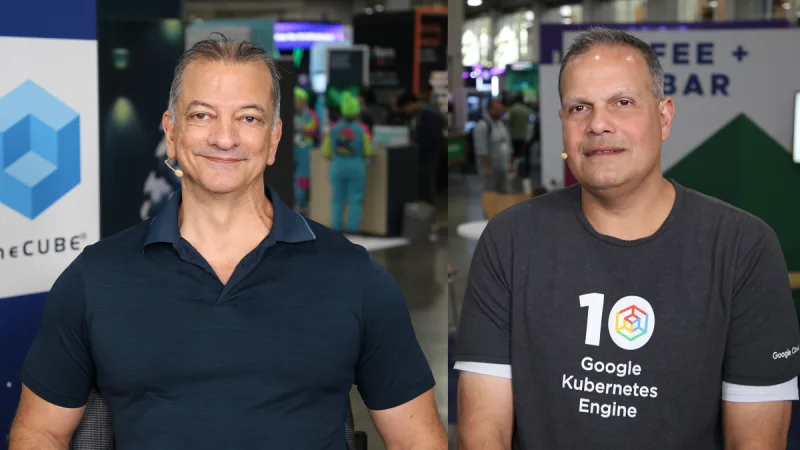
Google donates AI agent tools to open-source community to slash idle compute costs on Kubernetes
Google has contributed three projects to the Cloud Native Computing Foundation to help organizations reduce expenses when AI agents sit idle on Kubernetes clusters, addressing a growing cost challenge in agentic workloads.