AI workloads reignite Kubernetes evolution as enterprises demand security and portability
Kubernetes has shifted from a stable container platform into critical infrastructure for running AI systems, prompting vendors to rebuild security boundaries and ensure workloads run consistently across different cloud environments.

What was once a maturing container orchestration system has transformed into the foundational layer that organizations depend on for deploying artificial intelligence applications. This evolution has brought renewed attention to security perimeters and intensified the need for workloads to function reliably across multiple cloud providers.
Technology vendors are working to streamline deployment and strengthen operational safety. At KubeCon, Broadcom Inc. introduced two open-source projects and signaled a major shift for a platform that had appeared to reach a stable state. Dilpreet Bindra, senior director of engineering in the VCF Division at Broadcom, characterized the moment as a turning point.
There were a few that were like, Kubernetes is becoming mature, and so things were stabilizing, and they were less energy, I would say. And this KubeCon just blasts those doors wide open because Kubernetes has become the foundation for AI.
Dilpreet Bindra, Broadcom
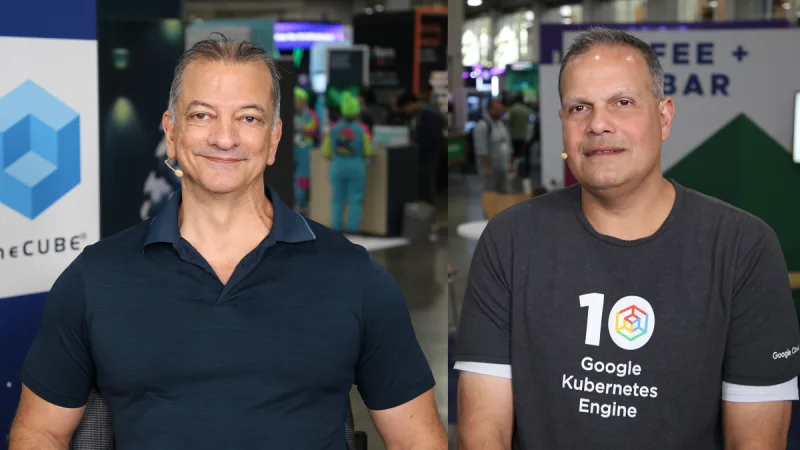
Bindra shared these insights during an exclusive conversation with theCUBE Research's John Furrier and Rebecca Knight at KubeCon + CloudNativeCon NA. The discussion centered on how Kubernetes now serves as the agent substrate and how Broadcom is layering in security controls and workload conformance capabilities to enable portability across cloud platforms.
Securing the agent substrate across clouds
The rise of agents is reviving security concepts that the cloud computing era had largely abandoned. Broadcom's strategy employs layered security, combining its vDefend firewall at the network edge with additional controls deeper in the stack to prevent unauthorized agent activity, according to Bindra.
How do you then isolate them in a compute boundary in our vSphere Pods, which is a micro VM, so you can have a very secure runtime. You can employ things like Agent Substrate to be able to run within them.
Dilpreet Bindra, Broadcom
Standardization across distributions represents the second pillar of Broadcom's initiative. The company is co-leading a new working group focused on Kubernetes workload conformance, with the goal of eliminating redundant validation cycles that software vendors currently perform for each Kubernetes variant, including VMware vSphere Kubernetes Service. Additionally, Broadcom contributed its VM API project to the Cloud Native Computing Foundation, granting virtual machines first-class status within Kubernetes environments.
https://www.youtube.com/embed/1uybdi7pkFg?feature=oembed
We want Kubernetes to be Kubernetes wherever it runs in any environment. You don't have to do individual validations of VKS, and then do individual validations of other Kubernetes distributions. You can do it as one Kubernetes.
Dilpreet Bindra, Broadcom
Read more

Kubernetes gets new purpose running autonomous AI agents, Google donates open-source tools
Google is repositioning Kubernetes as the platform for enterprise agentic AI workloads, donating foundational open-source projects to the Cloud Native Computing Foundation to help orchestrate autonomous software more efficiently.
Black Friday 2026: date, AI shopping agents and what changes for retailers
Black Friday 2026 falls on November 27, with Cyber Monday on November 30. This piece covers which AI assistants can check out in the US, why ChatGPT stepped back from Instant Checkout, and what Adobe and Salesforce forecast.
Google donates AI agent tools to open-source community to slash idle compute costs on Kubernetes
Google has contributed three projects to the Cloud Native Computing Foundation to help organizations reduce expenses when AI agents sit idle on Kubernetes clusters, addressing a growing cost challenge in agentic workloads.