Unicorn Ranks Swell to 1,900 as AI Startups Race to Billion-Dollar Valuations
The Crunchbase Unicorn Board expanded by 34 companies in October, crossing 1,900 total private firms valued at $1 billion or more. Half of the month's newcomers were less than four years old, underscoring how rapidly artificial intelligence is creating billion-dollar enterprises.

October saw 34 startups achieve unicorn status, bringing the Crunchbase Unicorn Board to a record 1,900 companies. The cohort injected more than $96 billion in aggregate value and $14.8 billion in fresh funding into the list. The U.S. now hosts over 1,000 of these billion-dollar firms, marking an all-time high for the nation.
The speed at which the current AI wave is minting unicorns stood out in October's data. Seventeen of the 34 newcomers were founded within the past four years, with nine reaching unicorn status through seed or Series A financing rounds. Frontier labs, agentic AI systems, aerospace ventures and semiconductor makers dominated the month's unicorn formation.
Geography spread across multiple regions: the U.S. contributed 23 companies, while China and South Korea each added three. Estonia recorded two new unicorns in a single month—a national record. Singapore, Germany and Japan each produced one.
The three most valuable entrants were Axiom Solutions International in electrical infrastructure, TypeSafe AI in model development, and Manus AI in agentic AI assistants. Andreessen Horowitz led financing rounds for seven portfolio companies in the batch, while Sequoia Capital and General Catalyst each backed four, and Eclipse three.
AI models, assistants and agents
- TypeSafe AI, based in San Francisco, secured $870 million in Series A funding at a $7.5 billion valuation, led by Andreessen Horowitz with DCVC and Sequoia Capital joining. The two-year-old firm develops the Jev model for structured decision-making, automating classification, scoring and routing tasks with confidence estimates.
- Manus AI, headquartered in Singapore, raised $500 million at a $4 billion valuation from Boyu Capital and IDG Capital. The three-year-old company builds general-purpose AI agents for research, browser automation, content creation and software development. Meta agreed to acquire Manus in December 2025, but Chinese regulators reversed the transaction.
- Nous Research in Austin brought in $90 million in Series D funding at a $1.5 billion valuation, led by Robot Ventures with backing from Nvidia, Microsoft's M12, Menlo Ventures and Union Square Ventures. The three-year-old developer of the open-source Hermes agent creates models and infrastructure for AI development and deployment.
- Upstage, a South Korea-based firm, raised $30 million in Series C at $1.5 billion valuation. The six-year-old company develops the Solar language models and document-processing technology that transforms unstructured business data into usable information.
- Wabi, a San Francisco personal AI assistant, secured $55 million in Series A at $1.25 billion valuation, led by IVP with Andreessen Horowitz, Forerunner and Amazon's Alexa Fund. The one-year-old startup builds an AI assistant for trip planning, meal coordination and task organization.
- Town, based in San Francisco, raised $108 million in Series B at $1 billion valuation from Forerunner and Menlo Ventures, with Andreessen Horowitz, First Round Capital and others participating. The two-year-old company develops personalized AI assistants that integrate with workplace tools to manage email, prepare meeting briefings, organize schedules and complete recurring tasks.
Aerospace, defense and space
- Air Space Intelligence in Boston raised $325 million in Series C at $3 billion valuation, led by Spark Capital with Andreessen Horowitz, Citadel Securities, Craft Ventures, Energy Impact Partners and Meritech Capital Partners. The eight-year-old company develops AI software for managing complex physical operations in aviation, defense, energy and logistics.
- Xona, located in Burlingame, California, secured $250 million in Series D at $2.45 billion valuation, led by Future Ventures with Industrious Ventures and Woven Capital. The seven-year-old company is building a low Earth orbit satellite network for precise positioning, navigation and timing services for defense, transportation and autonomous systems.
- Firehawk Aerospace in Dallas raised $150 million in Series D at $1.4 billion valuation from Advent International and Rochefort, with Nomi Capital also investing. The seven-year-old munitions manufacturer uses additive manufacturing to produce rocket motors, engines and propellant for defense applications.
- Warhound, a Dallas-based company breeding genetically optimized service dogs for the military, raised $200 million in seed funding at $1.2 billion valuation, led by Sequoia Capital with 8VC 1, Lux Capital, Breyer Capital and IQT. The less-than-one-year-old firm was conceived by Anduril Industries founder Palmer Luckey and Colossal Biosciences founder Ben Lamm. It develops genetically optimized dogs by licensing Colossal Biosciences technology and equipping working dogs with Anduril cybernetic technology for military, law enforcement and emergency response.
- Reliable Robotics in Mountain View, California, raised a $90 million Series D extension that pushed valuation above $1 billion, with total Series D funding of $250 million plus a $25 million term loan led by Nimble Partners. The nine-year-old company develops aircraft automation systems for remotely operated and autonomous flight for commercial and defense use cases.
AI data, analytics and coding
- Labelbox in San Francisco raised $100 million in Series E at $1.35 billion valuation including equity and a credit facility, led by Infinitum Partners with Andreessen Horowitz, B Capital and Wipro Ventures. The eight-year-old data learning platform provides data infrastructure and reinforcement-learning data services for AI laboratories and enterprises.
- Hex Technologies in San Francisco secured $100 million in Series D at $1.2 billion valuation, led by 137 Ventures and Peak XV Partners with Andreessen Horowitz, Amplify Partners, Redpoint and Sequoia Capital. The seven-year-old business intelligence platform has rebuilt BI for the AI era with context and controls, code at the center and data in disparate places.
- SignSplit in New York raised $400 million in seed funding at $1 billion valuation, led by W Group. The two-year-old data licensing platform develops infrastructure for collecting, licensing and monetizing human data with consent, combining identity verification, consent management, attribution and compensation for data used in AI, robotics, research and media.
- Blacksmith in San Francisco raised $66 million in Series C at $1 billion valuation, led by Sequoia Capital with Google Ventures, Peak XV Partners, Premji Invest and Y Combinator. The two-year-old code deployment service provides an environment to build and test automated code for continuous integration and deployment to production.
- Daytona in New York raised $60 million in Series B at $1 billion valuation, led by FirstMark with Pace Capital, Upfront Ventures, Qualcomm Ventures and Samsung Next. The three-year-old company provides isolated cloud environments where developers can run AI-generated code, test applications and execute autonomous agent workflows.
Industrial technology and manufacturing
- Re:Build in Framingham, Massachusetts, raised $2.1 billion in private equity financing led by General Catalyst and J.P. Morgan Asset Management. Valuation was not disclosed, though Crunchbase estimates approximately $5.8 billion post-money. The six-year-old manufacturing startup partners with industrial companies from product design through large-scale production with 2.4 million square feet of manufacturing capacity.
- Vinci in Palo Alto, California, raised $250 million in Series B at $1.5 billion valuation, led by Advent International, Temasek and Xora Innovation with AMD Ventures, Eclipse, Khosla Ventures and Madrona. The three-year-old software builder for hardware design develops physics-based AI software that simulates thermal and mechanical behavior in semiconductor and electronics designs.
- Arda in San Francisco raised $160 million in Series A at $1.5 billion valuation, led by Accel, Altimeter Capital and Khosla Ventures with 8VC, Felicis 2, SV Angel 3 and XYZ Venture Capital. Founded by Bob McGrew, former chief research officer at OpenAI, and a former product and engineering lead at Palantir Technologies, the one-year-old company develops software that turns product design into an assembly line. Arda announced its $72 million seed round the same day as its Series A.
- Tractian in Atlanta raised $130 million in Series D at $1.4 billion valuation, led by Sapphire Ventures with M&G Catalyst, General Catalyst, Bosch Ventures and Monashees. The seven-year-old company combines industrial sensors, AI diagnostics and maintenance software to monitor equipment, detect failures and improve factory performance.
Energy and cloud infrastructure
- Axiom Solutions International in Austin raised $2 billion in Series A at $37.5 billion valuation, led by General Catalyst and Koch Equity Development. The five-year-old company, a business division of Flex, develops digital and electrical infrastructure for power applications.
- Atlas Atomics in Austin raised $400 million in Series A at $1.9 billion valuation, led by General Catalyst with Andreessen Horowitz. The one-year-old nuclear-energy startup, co-founded by Vivek Ramaswamy, is operating in stealth.
- Skeleton Technologies in Tallinn, Estonia, raised $100 million in corporate funding at $1 billion valuation from Siemens. The 17-year-old company develops ultracapacitors and high-power energy-storage systems using curved-graphene technology, serving data centers, industrial, automotive and other applications.
Semiconductors
- MHX Technology in Shanghai, a chip subsidiary of Li Auto, raised $243 million in Series A at $2.5 billion valuation, led by BlueRun Ventures, Huaye Tiancheng Capital, Li Auto and Matrix Partners China. The less-than-one-year-old company develops AI chips and associated software, including inference hardware for automotive and edge-computing applications.
- Isabers in Beijing recorded a venture round at $1.1 billion with investors including Advanced Micro-Fabrication Equipment, CCB Investments, Cowin Capital and Inno-Chip; funding amount was not specified. The six-year-old company develops semiconductor integration and advanced packaging technologies to improve chip performance, manufacturing yields and costs.
- FuriosaAI in Seoul raised $610 million in Series D at $2.9 billion valuation, anchored by South Korea's state-backed National Growth Fund with Cisco Investments, Korea Development Bank, Korea Investment Partners, Naver Ventures and other firms. The nine-year-old chip developer creates energy-efficient AI chips and data center accelerators for advanced AI models and applications.
Robotics and drones
- Eka Robotics in Cambridge, Massachusetts, raised $150 million in Series A at $1.45 billion valuation, led by Andreessen Horowitz and F-Prime. The two-year-old company develops robotics systems combining computer vision, physics reasoning and tactile force feedback to automate physical tasks in manufacturing, logistics and other environments. Eka is co-founded by Pulkit Agrawal, an associate professor at MIT.
- RobCo in Munich raised a venture and secondary transaction at $1 billion valuation with investors including Lightspeed Venture Partners, Sequoia Capital, Lingotto and Cherry Ventures; funding amounts were not specified. The six-year-old company develops modular industrial robots, AI software and no-code tools to automate manufacturing tasks such as machine loading, palletizing and materials handling.
- Zero Zero Robotics in Beijing recorded a Series D at $1 billion valuation with investors including Ant Group, Boyu Capital, Delian Capital and Xianghe Capital; round amount was not specified. The 12-year-old company develops intelligent flying cameras and consumer drones.
Cybersecurity
- Armadin Security in Palo Alto, California, raised $255 million in Series B at $2.5 billion valuation, led by Accel and Andreessen Horowitz with Google Ventures, Kleiner Perkins, Menlo Ventures and Ballistic Ventures. The one-year-old company uses autonomous AI agents and human red-team expertise to test enterprise defenses, validate attack paths and identify exploitable security weaknesses.
- BlackWall in Tallinn, Estonia, raised $100 million in Series C at $2.2 billion valuation, led by AVP with Dawn Capital, MMC Ventures and Tera Ventures. The seven-year-old company protects websites, hosting providers, cloud platforms and enterprise networks against bots and other automated threats across their entire customer base.
Financial services and insurance
- Valon in New York raised $150 million in Series D at $2.3 billion valuation with Andreessen Horowitz and Ribbit Capital. The seven-year-old company develops software infrastructure for mortgage servicing, combining loan data, payments, escrow management, compliance and AI-assisted workflows in its ValonOS platform. The company services some of the largest mortgage institutions.
- Stand in San Francisco, an insurance provider for homes, raised $70 million in Series C at $1 billion valuation, led by Saga Ventures with Eclipse, Equal Ventures, Inspired Capital Partners, Lowercarbon Capital and Neotribe Ventures. The three-year-old company provides homeowners insurance and property-risk management, using property data and physical simulations to assess natural hazards and recommend mitigation measures.
Automotive and electric mobility
- Mitsubishi Electric Mobility in Tokyo raised $728 million in secondary financing at $1.5 billion valuation from Lin Yin International Investment. The two-year-old company develops vehicle electrification systems, advanced driver-assistance technology, powertrain equipment and in-vehicle infotainment.
Methodology
The Crunchbase Unicorn Board comprises private companies with post-money valuations of $1 billion or more, based on Crunchbase data. New entrants are added as they reach the $1 billion valuation mark during a funding round. The board does not reflect internal company valuations set through 409a processes for employee stock options, which typically differ from and fall below priced funding rounds. Valuations are not adjusted based on investor writedowns, which shift quarterly, since different investors may value the same company inconsistently within a single quarter.
Funding figures include all private financings to companies tagged as unicorns, as well as those that have graduated to the Exited Unicorn Board. Exit analysis covers only the first time a company exits. All funding values are expressed in U.S. dollars unless otherwise noted. Crunchbase converts foreign currencies to U.S. dollars at the prevailing spot rate from the date funding rounds, acquisitions, IPOs and other financial events are reported, even if those events were added to Crunchbase long after announcement.
Read more
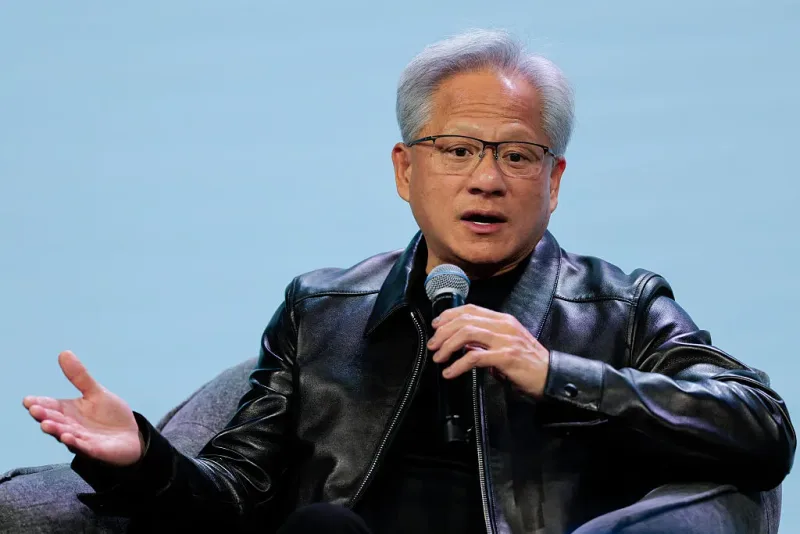
Huang's exit creates funding vacuum for AI startups as Nvidia shifts investment strategy
Jensen Huang's departure from Nvidia removes a major source of capital for early-stage AI companies, with investors warning that his successor is likely to be far more selective about startup backing.
Nvidia's Startup Investment Spree Hits 120+ Deals in 2026, But Leadership Transition Raises Questions
Nvidia and its venture arm NVentures have backed more than 120 startups this year, surpassing last year's record, but Jensen Huang's sudden departure creates uncertainty about the company's future investment strategy.

LangChain Raises $300M at $3B Valuation as AI Agent Management Heats Up
The open-source framework turned enterprise platform has doubled its valuation in a year, backed by CapitalG and others, as it positions itself as a vendor-neutral alternative for building and managing AI agents.