Journey Clinical and Nurx Founders Launch Siggy With $6M Pre-Seed for AI-Powered Mental Health Care
Jonathan Sabbagh and Edvard Engesæth, who previously built healthcare startups enabling treatment outside traditional settings, have secured $6 million to launch Siggy, a mental health platform that uses AI to bridge gaps between patient appointments with licensed clinicians.

Two seasoned healthcare entrepreneurs have launched Siggy, a New York-based mental health startup that raised $6 million in pre-seed funding. The platform combines AI-driven patient intake and monitoring with licensed clinician oversight to address fragmentation in mental healthcare treatment.
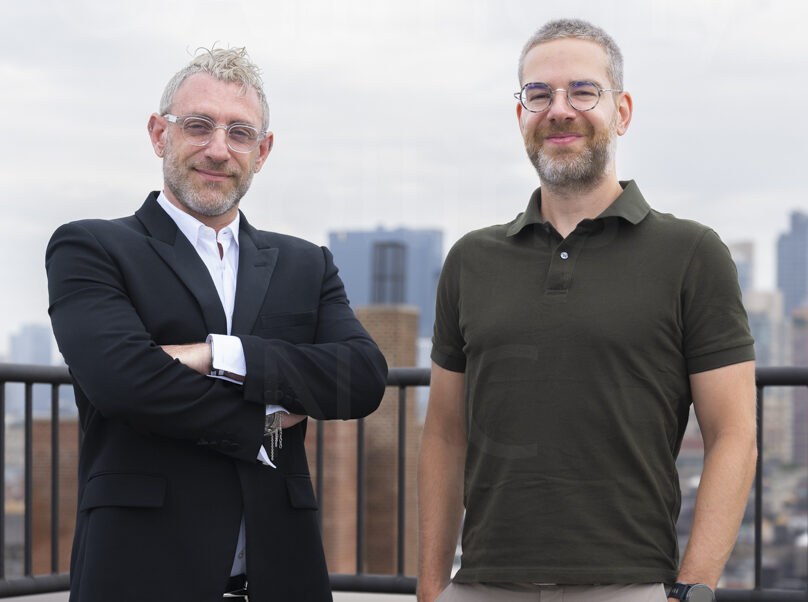
Jonathan Sabbagh, who previously co-founded Journey Clinical—a company supporting ketamine-assisted psychotherapy practices—serves as Siggy's CEO. Edvard Engesæth, who co-founded Nurx, an online healthcare service offering birth control and other medications, is the company's COO. Village Global led the funding round, which closed in late 2025 and represents Siggy's first outside capital.
The investor group included Albert Wenger of Union Square Ventures, Mercury co-founder Immad Akhund, Toyin Ajayi of Cityblock Health through Coalition Operators, as well as PsyMed Ventures, Mystic Ventures and Gokul Rajaram. Several backers had previously invested in one or both founders' earlier ventures.
Closing the gap between visits
Sabbagh identified a core inefficiency in mental healthcare: therapists and prescribing clinicians often operate independently. Patients might attend weekly therapy sessions but see their prescriber only every few months, leaving minimal time to discuss symptom changes or medication side effects.
Siggy addresses this through AI conversations and daily check-ins that gather clinical information between appointments. According to Engesæth, "AI helps maintain the conversation and organize what patients share, so clinicians have a richer picture of the person that they're treating."
The patient journey begins with a free AI conversation covering medical history. Patients then meet a licensed clinician via video to review that information, receive a diagnosis and obtain prescriptions if needed. Between appointments, patients can engage with Siggy's AI and complete daily check-ins reporting sleep, mood, medication use and physical sensations.
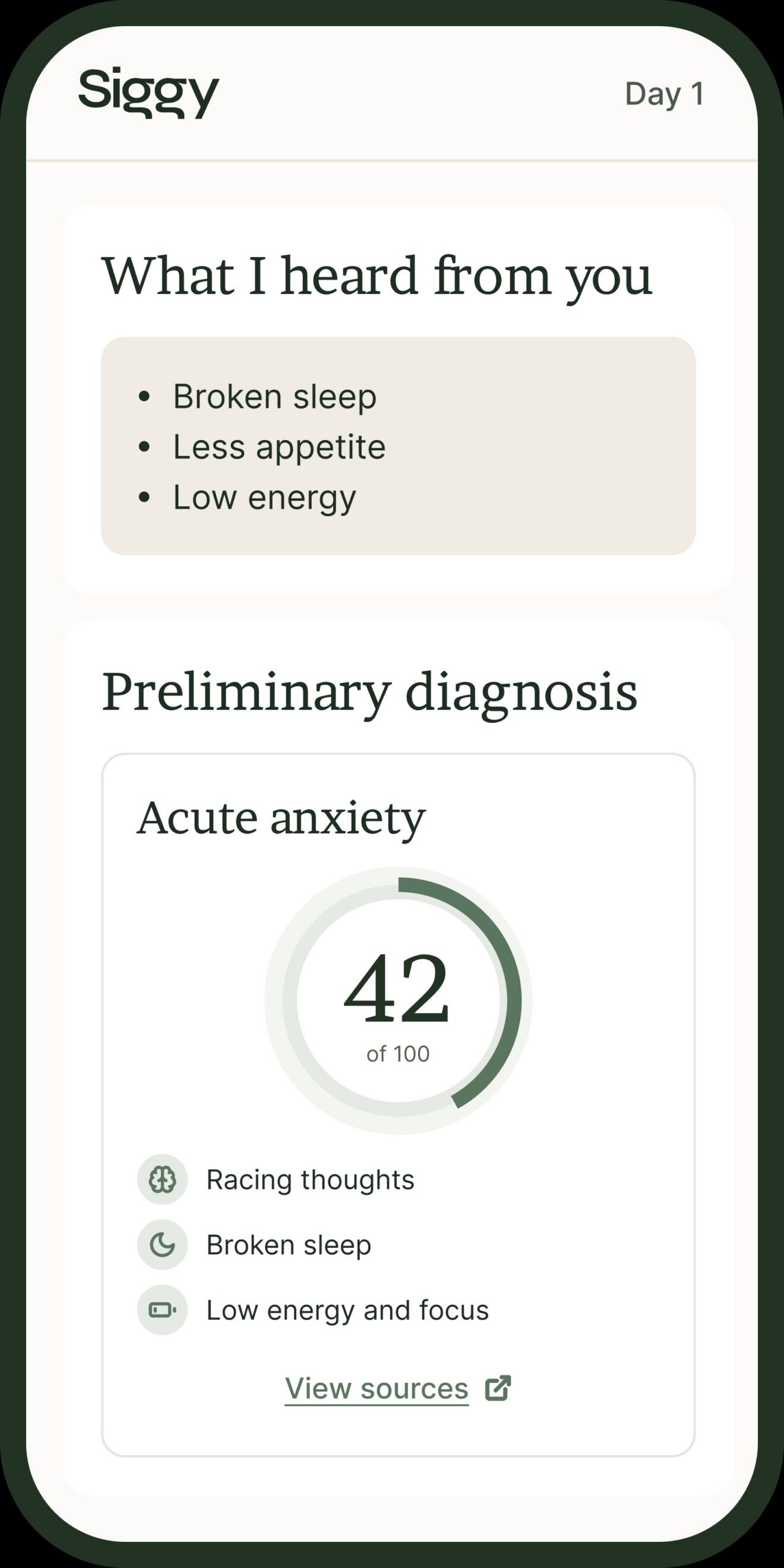
The platform generates a daily "Siggy Score" out of 100 by combining patient responses with data from connected wearable devices such as Whoop, Oura or Apple Watch. This score incorporates sleep, activity, heart rate and heart rate variability metrics. Both patient and clinician can view the score, and any significant changes trigger a flag for clinical review.
During the first eight weeks of treatment, patients receive weekly check-ins. Clinicians manage all medical decisions, including medication adjustments and gradual tapering when appropriate. Siggy does not prescribe controlled substances and does not function as a crisis service. Patients retain the option to continue seeing their existing therapists while using the platform, and a planned feature will enable information sharing with other providers and family members.
Founder backgrounds and partnership
Sabbagh's path to mental health entrepreneurship began with personal experience. After two decades in finance, he experienced burnout and was eventually diagnosed with PTSD stemming from childhood trauma. He credits ketamine-assisted therapy with his recovery and subsequently pursued formal psychology education at age 38. He went on to co-found Journey Clinical and now serves as its executive chairman while leading Siggy as CEO.
Engesæth, a trained physician, was an early investor in Journey Clinical and provided strategic guidance as Sabbagh built the company. Before that involvement, Engesæth co-founded Nurx, which began by helping patients obtain birth control prescriptions and receive medications at home. Nurx grew to serve more than 2 million patients with an annual revenue run rate exceeding $100 million before merging with Thirty Madison in 2022.
The two founders had discussed launching a company together for years. With Siggy, they aim to extend the coordinated care and regular clinician contact that benefited Sabbagh personally to a broader patient population.
Insurance and access model
Siggy accepts commercial insurance across all 50 states and is expanding into government insurance programs. Patients may also pay out of pocket, with insured patients' costs determined by their specific plan. The founders prioritized insurance acceptance because many prospective patients cannot afford private pay treatment. Additionally, Siggy's service will be permanently free to veterans.
Investor perspective
Amrit Rao, a general partner at Village Global, emphasized the founders' track record building healthcare companies as a key investment driver. He also highlighted the significance of Siggy's insurance-based model: "Pairing that vision with an insurance-based model makes the ambition about access as much as technology."
Immad Akhund, Mercury's co-founder and CEO, invested personally and is a repeat backer of both founders. He pointed to their longer-term vision of using AI to understand individual brain health deeply enough to detect changes early. "That's why I'm backing them again with Siggy," Akhund said, "and why I'm excited to be in early on what they build next."
The company has begun accepting paying patients ahead of its broader public launch and plans to expand further following additional patient testing.
Read more

Huang's exit creates funding vacuum for AI startups as Nvidia shifts investment strategy
Jensen Huang's departure from Nvidia removes a major source of capital for early-stage AI companies, with investors warning that his successor is likely to be far more selective about startup backing.

Nvidia's Startup Investment Spree Hits 120+ Deals in 2026, But Leadership Transition Raises Questions
Nvidia and its venture arm NVentures have backed more than 120 startups this year, surpassing last year's record, but Jensen Huang's sudden departure creates uncertainty about the company's future investment strategy.

LangChain Raises $300M at $3B Valuation as AI Agent Management Heats Up
The open-source framework turned enterprise platform has doubled its valuation in a year, backed by CapitalG and others, as it positions itself as a vendor-neutral alternative for building and managing AI agents.