Liquid cooling supply chains strain under AI data center demands
As artificial intelligence facilities intensify thermal loads in server racks, component suppliers and distributors are racing to scale production of cooling hoses, couplings and connectors to keep pace with accelerating buildouts.

The infrastructure supporting liquid cooling systems faces unprecedented strain as operators deploy increasingly dense AI computing environments. Suppliers and data center builders are responding by expanding inventory, accelerating manufacturing timelines and engineering new connection types to handle thermal management across a broader range of rack components.
Operators have made substantial capital commitments to denser rack configurations and liquid cooling infrastructure, requiring hoses and couplings to be manufactured and delivered at volumes and speeds that outpace historical norms. Component manufacturers must do more than simply increase production shifts to meet this demand. The scope of liquid cooling has expanded significantly beyond traditional applications, according to Tyler Glenn, engineer for product applications and data centers at Danfoss Power Solutions, a division of Danfoss A/S.
We went from air cooling to hybrid cooling and we're moving a lot now towards full liquid cooling. Traditionally, it was just the CPUs and GPUs that were being liquid cooled. But as more components are starting to have to get integrated, there's a lot more opportunity for us to have different types of connections to solve specific challenges that this industry faces.
Tyler Glenn, Danfoss Power Solutions
Glenn and Lauren Witter, vice president of sales at Omni Services Inc., discussed these supply chain dynamics during an exclusive broadcast at SC26, speaking with theCUBE Research's John Furrier and Rebecca Knight on theCUBE, SiliconANGLE Media's livestreaming studio. Their conversation covered liquid cooling infrastructure, universal quick disconnect technology and the engineering requirements for managing escalating heat density in data center racks.
Forecasting and inventory strategy in a high-velocity market
When data center construction projects require components on compressed timelines, suppliers must maintain ready inventory to support rapid assembly of cooling systems. Danfoss maintains minimum stock levels through its distributor network, using a strategy that anticipates demand beyond customer forecasts. Glenn explained the approach: "A lot of times our customers will provide us forecasts, but we like to shoot above that and look ahead and make sure that in case that the demand increases beyond that, that we're prepared for that. When it comes to our component suppliers, we're making sure to order additional materials, but also keeping track of making sure we have enough stock."
https://www.youtube.com/embed/rC6nkqj7BVc?start=2&feature=oembed
Having components in stock provides distributors with a competitive advantage when urgent requests arrive for accelerated data center deployments. Omni Services' CoolFlow division coordinates directly with Danfoss's data center team to fulfill these time-sensitive orders. Because both organizations concentrate exclusively on liquid cooling systems, Omni can route urgent requests directly to the engineers already embedded in the workflow. Witter noted the collaborative dynamic: "No one gets frustrated when we're calling Tyler saying we need these parts yesterday. They get it. They're playing the same game we are."
Read more
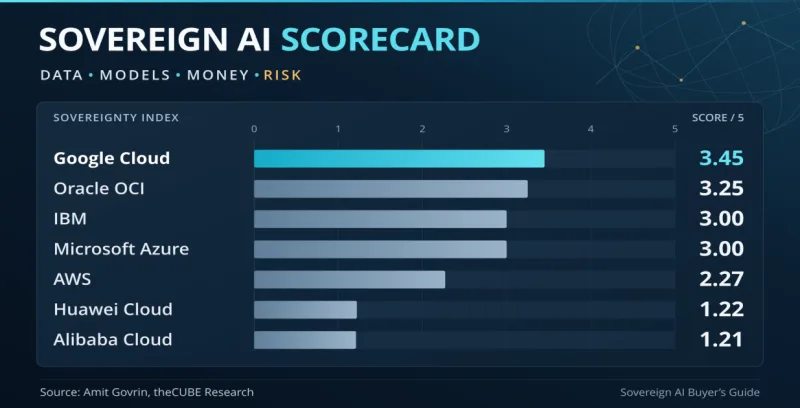
Sovereignty by Design: Why AI Control Is Now a Business Requirement
As U.S. technology dominates global AI infrastructure, organizations in regulated industries face a critical architectural choice: how much control do they need over the systems generating their intelligence, and what risks emerge when that control passes to external vendors?

Anthropic Researcher Claims Claude Proved the Riemann Hypothesis
Levent Alpöge, a researcher at Anthropic, announced he used Claude to prove one of mathematics' most significant unsolved problems, though the company has not officially confirmed the breakthrough.

Beyond Token Prices: Why Enterprise AI Cost Accounting Demands a Deeper Look
Companies pursuing multi-model AI strategies are discovering that token pricing alone masks the true cost of AI deployment. New data shows task efficiency and user consumption patterns drive the real bill.