Huawei Pivots to AI-Driven Operating System With HarmonyOS 6
Huawei's latest mobile operating system places artificial intelligence agents at its core rather than treating them as add-on features, signaling a fundamental shift in how platforms compete beyond app stores and interfaces.
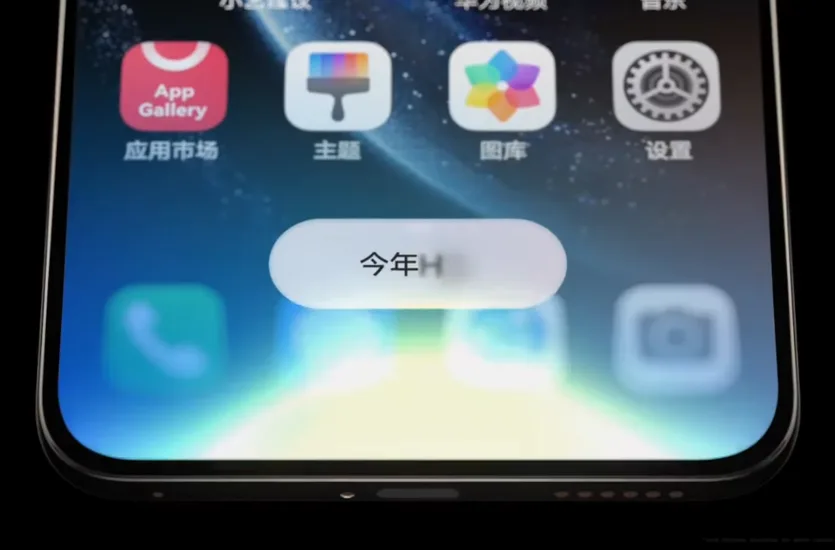
Competition in the mobile operating system space has shifted away from app marketplaces and design toward artificial intelligence capabilities. Huawei's response is HarmonyOS 6, where AI agents function as the fundamental architecture for how users interact with the system rather than serving as peripheral tools.
The developer beta release demonstrates an industry-wide movement in which operating systems are evolving from inert software layers into intelligent systems capable of predicting user needs, adapting to behavior patterns, and executing tasks autonomously on users' behalf.
AI agents become the foundation
HarmonyOS 6's defining feature centers on an AI agents framework that enables developers to construct intelligent automated systems without requiring them to construct or train their own foundational AI models from the ground up.
Richard Yu Chengdong, who leads Huawei's consumer business division, revealed that over 50 AI agents sourced from prominent Chinese services such as Weibo and Ximalaya will be integrated into the system upon its consumer launch. During a developer conference presentation on Friday, Yu did not announce a specific date for public availability.
This integration reflects a broader industry pattern wherein operating systems function as deployment platforms for artificial intelligence rather than merely as application execution environments. By positioning AI capabilities at the operating system level, Huawei frames HarmonyOS 6 as the infrastructure for emerging computing paradigms.
Developer base and application reach
The HarmonyOS ecosystem encompasses eight million registered developers and contains more than 30,000 applications alongside "atomic services," which are minimal programs that function without requiring installation. HarmonyOS 5 currently powers more than 40 distinct device models.
Yu acknowledged that HarmonyOS remains substantially behind iOS and Android when measured by worldwide market penetration and application availability. However, he noted that "the top 5,000 apps accounted for 99.9 per cent of consumer time spent" on Huawei devices, emphasizing that the company prioritizes widely-used applications over sheer volume.
This strategy reflects recognition that platform viability depends on delivering essential applications that drive user engagement rather than accumulating the largest possible app catalog. The emphasis on high-impact applications demonstrates a sophisticated understanding of competitive dynamics with established platforms.
Pangu AI models for enterprise sectors
Huawei unveiled Pangu 5.5, the newest iteration of its AI model family designed for business and industrial deployment. The natural language processing variant contains 718 billion parameters, while the computer vision variant incorporates 15 billion parameters, positioning these systems competitively within today's AI landscape.
The company has identified five target sectors for these models: healthcare, financial services, public administration, industrial production, and transportation. This sector-specific approach indicates Huawei is leveraging AI advancement to deepen enterprise partnerships while consumer market expansion faces limitations stemming from geopolitical constraints.
Integrating Pangu AI models with HarmonyOS 6 establishes a vertically integrated technology stack in which Huawei manages both the AI layer and the operating system, potentially enabling superior optimization and system performance.
Growth trajectory and strategic direction
Canalys data indicates Huawei has distributed more than 103 million smartphones and 21 million tablets operating HarmonyOS, with approximately half shipped during 2024. This acceleration demonstrates rising adoption within China and suggests momentum building in the domestic market.
Huawei has extended HarmonyOS deployment beyond smartphones and tablets, introducing two laptop models running the operating system in the previous month. This cross-device strategy seeks to establish a cohesive software experience comparable to Apple's integrated ecosystem, though delivering this vision across disparate hardware platforms presents substantial engineering obstacles.
HarmonyOS 6 exemplifies Huawei's transformation from a hardware manufacturer into a software and services enterprise. This transition, catalyzed by placement on the US Entity List beginning in 2019, has necessitated inventive approaches to technology creation and market strategy.
Read more

Identity governance faces new test as AI agents proliferate across enterprises
Autonomous AI agents are forcing organizations to rethink how they manage access and permissions at machine speed. SailPoint's Navigate conference will explore how identity security must evolve to handle this expanding population of non-human actors.

Vertical AI and Purpose-Built Hardware Drive Next Wave of Technology Growth
Specialized AI systems tailored to specific industries are emerging as the primary engine for the next phase of technology expansion, according to insights from the Bank of America Private Tech Trailblazers Conference 2026.
CrowdStrike and CoreWeave Partner to Automate AI Security at Machine Speed
As cyberattackers breach systems in seconds, CrowdStrike and CoreWeave are embedding automated defenses throughout AI infrastructure, turning attacks into training data for faster response.