AWS Strengthens Strands Agents With Smarter Decision Models and Sandbox Security
Amazon Web Services has released Strands Decider v2, a new family of decision models designed to make AI agents more accurate and cost-effective, alongside Box CLI to secure agent operations without sacrificing speed.
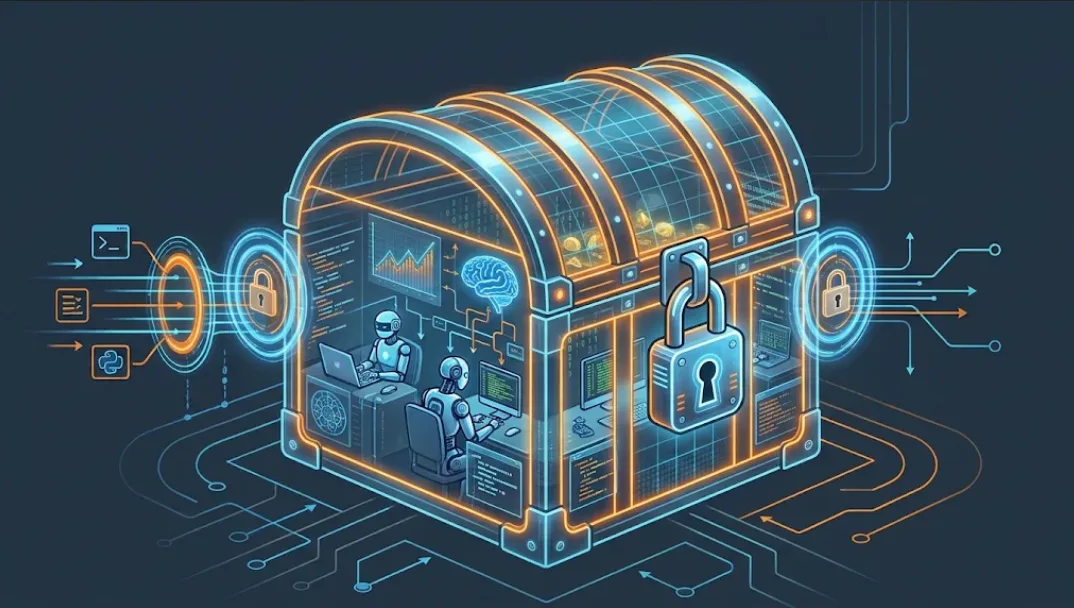
Amazon Web Services is addressing critical challenges faced by developers building artificial intelligence agents through a substantial upgrade to Strands Agents, its open-source framework for creating autonomous systems. The company has introduced Strands Decider v2, a collection of open-weight decision models, and unveiled Box CLI, which provides native sandbox capabilities for popular coding agents including Claude Code, Codex and Kiro CLI.
AWS launched Strands Agents in May 2025, and the toolkit has since become central to the company's strategy for agentic development. The software development kit enables developers to establish a flexible, model-driven architecture for integrating large language models with enterprise systems and data sources. Following the September rollout of Strands Harness, which permits Strands agents to operate across any computing environment, AWS released Strands Decider one month later. Unlike conventional LLMs that generate text, Strands Decider represents a distinct category of decision models that assess situations and assign probability scores to predetermined options. AWS indicated that decision models enhance the performance of AI agent workflows, such as directing support tickets or determining which software tool to deploy for a specific objective.
More decisive agents
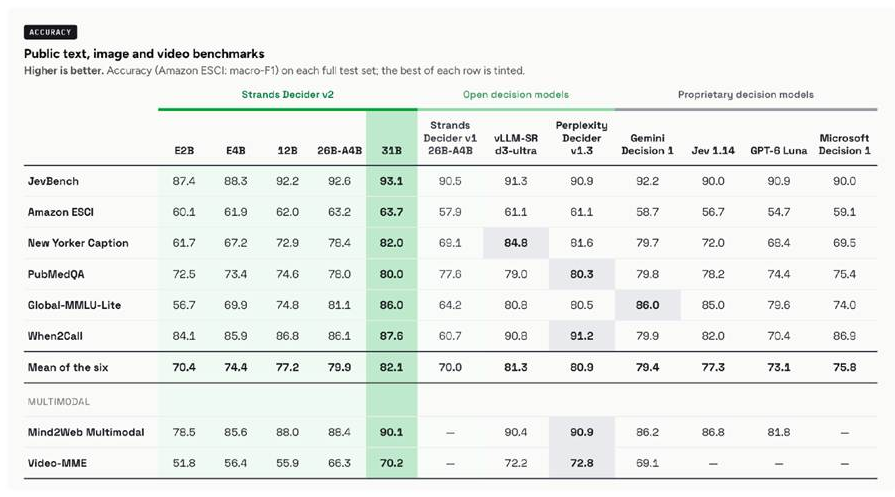
Strands Decider v2 expands the portfolio with five additional decision models offering enhanced capabilities. Built on Google LLC's Gemma 4 architecture, these open-weight models come in multiple configurations, from a compact edge variant to a robust 31 billion-parameter version designed for intricate decision-making scenarios. According to AWS's announcement, the updated models deliver improved accuracy for text, image and video analysis, and generate more reliable confidence scores that help agents determine whether to proceed with an action or defer to human judgment.
The Strands Decider v2 models have been enhanced to handle extended inputs, including comprehensive agent execution logs, enabling coordination between multiple agents.
AWS has deployed Strands Decider v2 agents internally with notable outcomes. The company's engineering team replaced Claude Sonnet 4.6 with Strands Decider v2 on its largest internal ticketing infrastructure, achieving a 98% reduction in labelling expenses. Additionally, ticket response times decreased by 78%. The new decider models demonstrated further capabilities in AWS testing, including the ability to direct robotic arms, assess other AI agents and route routine inquiries to less resource-intensive models when deploying a more powerful frontier model would be excessive.
The Strands Decider v2 models are now available to all developers under an Apache 2.0 license via Hugging Face and the Strands Decider repository on AWS.
Security without sacrifice
While Strands Decider concentrates on accelerating agent performance and reducing operational costs, Box CLI addresses agent security concerns.
AWS noted that many developers have adopted what is termed "YOLO mode" when operating coding agents. This approach involves deactivating permission and configuration checks, permitting agents to execute terminal commands, modify files and invoke third-party services freely to accomplish tasks. The term derives from the colloquial expression "you only live once."
Agents functioning in YOLO mode operate considerably faster, but this speed comes at the expense of human oversight. The absence of safeguards creates substantial risks. An unrestricted agent might inadvertently remove critical files, expose confidential credentials, or be exploited through a harmful prompt injection to inflict serious damage.
AWS addresses this vulnerability through Strands Box, an open-source operating system sandbox that applies rigorous security controls to all agent operations. Introduced last month, the sandbox now includes Box CLI, which extends compatibility to coding agents from Anthropic PBC (Claude Code), OpenAI Group PBC (Codex) and AWS's own Kiro CLI.
The approach allows developers to encapsulate their complete workflow within a protected sandbox, mitigating the risk of unintended consequences. Within the sandbox environment, agents can function without constraints, eliminating the need for repeated interruptions to request developer authorization for necessary operations.
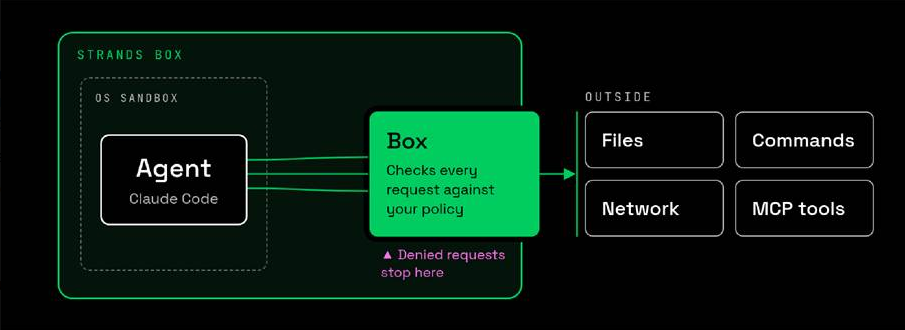
Instead, the developer establishes security policies to regulate agent behavior. These policies specify which files, commands and network destinations an agent may access, as AWS explained.
Agent credentials remain isolated outside the sandbox, with application programming interface keys and AWS tokens delivered only when a policy-compliant request exits the sandboxed space. This architecture ensures the agent never directly accesses these sensitive credentials.
AWS provides developers the ability to alternate between task-specific profiles, such as granting a coding agent access to a code repository while limiting a diagnostic agent to read-only access for troubleshooting purposes.
Box CLI within Strands Box launches today alongside the new decider models. The release represents a significant advancement for autonomous agents, enabling them to operate efficiently with minimal human interruption while maintaining strict operational boundaries.
Read more
Supertake Lands $20M to Automate Investment Decisions Through AI Trading Agents
The AI-powered investing platform, which converts market insights into automated stock portfolios, has closed a seed round led by Adjacent to expand its team and broker partnerships.

Williams-Sonoma Deploys AI Across Customer Experience and Internal Operations
The home goods retailer is using artificial intelligence to personalize shopping and streamline back-office work, with customer-facing chatbots handling over 1 million conversations since launch.

Innovaccer Taps SpaceXSI's Grok Voice to Handle Healthcare Phone Traffic
The healthcare AI platform has integrated Elon Musk's speech-to-speech model to automate routine patient calls like appointment booking and prescription refills, expanding capabilities across its voice agent system.