Microsoft Build 2026 puts production AI at center stage for developers
The June conference in San Francisco emphasizes operational realities of shipping AI systems at scale, with free online access to over 90 sessions led by CEO Satya Nadella.
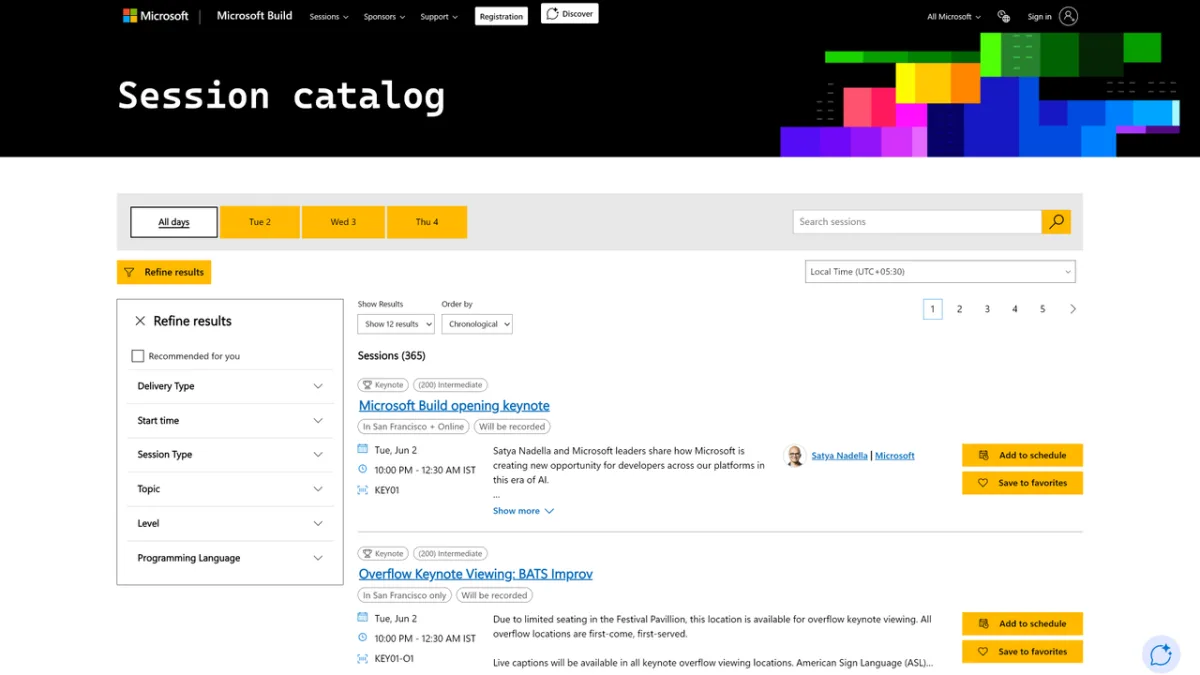
For developers building on Microsoft's stack, Build has solidified itself as the year's marquee technical event. This June's gathering, scheduled for June 2–3 at Fort Mason Center in San Francisco, continues that trajectory by making AI the throughline across nearly every track on the agenda. Attendees can participate in person or stream the full program online at no charge, gaining access to an expanded catalog of more than 90 sessions that span everything from agentic systems to model training.
The free online registration unlocks the complete two-day experience, including the opening keynote delivered by CEO Satya Nadella, for anyone with internet access.
Why Build 2026 matters for AI development
Build 2025 established a formidable precedent, unveiling more than 50 announcements centered on AI agents. Among them was a GitHub Copilot coding agent capable of fixing bugs, generating tests, and submitting pull requests without human intervention. This progression—from AI as an assistant tool to AI as an autonomous actor—defines the narrative threading through this year's sessions.
Microsoft's development pace has accelerated considerably. Copilot Studio now incorporates autonomous agent functionality, and AutoGen, the multi-agent framework, has evolved into a production-ready platform. Build 2026 will showcase much of this progress in public demonstrations for the first time, with six organizing themes: developer tools and frameworks, cloud platform and data, model training, agents and apps, responsible AI, and Windows.
The event's structure reflects a deliberate shift. This iteration expects approximately 2,500 in-person participants, a reduction from prior years. Microsoft and GitHub leadership have characterized this as an intentional move to prioritize technical substance over mass-market product reveals.
Azure's role remains fundamental. The Azure AI platform has grown substantially, incorporating capabilities for retrieval-augmented generation, fine-tuning, and agent orchestration. Sessions will move beyond foundational material to confront the practical economics of deploying AI applications reliably across large user bases.
For those seeking to understand the trajectory of AI-assisted development, Build 2026 provides direct insight into Microsoft's engineering direction and candid perspectives from practitioners on what currently functions in production environments.
10 sessions worth your time
All keynotes and the majority of breakout sessions are available online without cost. Microsoft's published session catalog confirms that online streaming or recorded access is available for each session listed below. These ten represent the most valuable sessions for developers focused on AI agents, Copilot enhancements, local model execution, or Microsoft's vision for the next generation of developer AI.
The complete keynote and event lineup is accessible through Microsoft's online session catalog.
Opening keynote: Creating new opportunity for developers in the era of AI
The conference's opening session establishes Microsoft's strategic priorities. Satya Nadella will lead this keynote, which according to the session description centers on "creating new opportunity for developers across our platforms in this era of AI." Expect live demonstrations and announcements from Azure and Windows teams, with OpenAI participation likely given the centrality of that partnership to Microsoft's current strategy. This is the essential starting point for understanding the conference's overarching direction before exploring specialized technical sessions. The keynote typically carries substantial news density, making it worthwhile to watch live and revisit the recording for detailed notes.
BRK233: Software defensibility in the era of AI coding
This session tackles a conceptual question that resonates with many development teams: as AI agents gain the ability to generate code, write tests, and deploy applications autonomously, what remains distinctly human in software development? The session will likely reframe this challenge as an opportunity, offering practical guidance on higher-order work that AI cannot readily perform. Engineering leaders and product teams will find actionable perspectives on where to concentrate development resources in an AI-first context.
BRK260: Build local AI experiences that harness the GPU, NPU and CPU on every Windows PC
Microsoft's on-device AI capabilities have become substantially more defined over the past year. This session explores Windows AI APIs, now extended to encompass GPU and CPU alongside NPU support, along with Foundry Local for executing open-source models directly on Windows hardware. New VS Code tooling assists in optimizing and preparing models for on-device use, and Windows ML now enables web applications through WebNN. Developers building applications requiring local model execution rather than cloud API calls should prioritize this session. On-device inference becomes critical when data confidentiality and minimal latency are essential requirements, particularly in isolated or air-gapped environments.
BRK261: Build and ship faster with a developer-optimized experience on Windows
This session bridges Windows platform development and AI tooling, examining how Microsoft's developer experience enhancements over the past year interconnect. The content will likely cover improvements to the inner-loop development workflow on Windows, including Copilot's integration into daily development routines for those building cloud-native and AI-powered systems. Even developers not yet working with autonomous AI agents will find practical value in the accelerated feedback loops being introduced to the platform, regardless of their project focus.
BRK222: The honest practitioner's take on agentic AI on Kubernetes
The title conveys the session's essence: a grounded reality assessment from engineers who have deployed agentic AI systems in production on Kubernetes. This perspective stands apart in a catalog sometimes dominated by polished demonstrations rather than field experience. Attendees will likely encounter discussions of specific failure modes in multi-agent systems operating at scale and the distance between product announcements and actual production outcomes. For developers already constructing agentic systems or planning to do so, this session offers the most direct practical value in the entire program.
BRK207: GitHub Copilot in Visual Studio: agents that debug, profile, and test
This demonstration-focused session showcases Copilot agents within Visual Studio performing functions beyond code generation. Attendees will observe agents diagnosing bugs through live runtime analysis and identifying performance issues with targeted remediation suggestions. The session also covers building test coverage to prevent regressions from reaching production, with emphasis on enterprise developers using C#, .NET, and C++. For teams relying on Visual Studio for production applications, this session delivers the most immediately actionable content at the conference. The emphasis on diagnostics and code quality rather than mere code generation distinguishes it from other Copilot-related offerings in the catalog.
BRK202: Azure DevOps meets GitHub, the path to AI-powered SDLC
Many development organizations operate both Azure DevOps and GitHub simultaneously, managing overlapping systems that lack complete integration. This session outlines Microsoft's current integration approach and future direction, with AI-powered software development lifecycle management as the unifying element. The AI dimension extends beyond GitHub Copilot to encompass hybrid patterns linking GitHub with Azure Boards and Azure Pipelines, enabling what Microsoft terms Agentic DevOps. The session includes firsthand accounts from Microsoft's own engineering teams who have already implemented this approach. Engineering managers contemplating tooling consolidation or migration will gain clarity on what's presently available.
DEM322: Smaller, faster, smarter: distilling agents with fine-tuning
As teams scale AI applications, inference expenses become increasingly problematic. This session addresses a pragmatic cost-management strategy: model distillation, in which a smaller model learns to replicate a larger model's outputs, enabling teams to meet latency and cost objectives without substantial quality degradation. The content covers distilling large models into specialized agents, a pattern gaining adoption in production settings where running large models for every request lacks economic justification. Expect concrete illustrations of where distilled models excel and where they underperform—the nuance typically absent from mainstream AI cost discussions.
BRK234: Shipping custom models at scale from fine-tuning to inference
Fine-tuning a model on Azure presents a relatively manageable process. Moving it into production, maintaining performance as demand increases, and handling operational complexity present substantially greater challenges. This session covers the complete workflow, including operational aspects that product demonstrations typically omit. Attendees will encounter discussions of infrastructure choices affecting cost and reliability at scale, alongside monitoring strategies that surface issues before customers experience them. The handoff between training and operations teams also receives attention, addressing one of the practical concerns that production-focused teams genuinely care about.
DEM364: Simplify app dev with cloud-native PostgreSQL in Azure HorizonDB
This technically specialized session addresses a growing problem: AI-driven applications are fragmenting across multiple services for vector search, models, and retrieval operations, and the resulting complexity creates operational burden. The session introduces Azure HorizonDB, which integrates AI and search capabilities directly into a cloud-native PostgreSQL database. Developers will learn how to execute hybrid vector queries and invoke managed AI models directly from SQL, enabling agentic workflow prototyping without assembling a separate technology stack. For those seeking to maintain architectural simplicity and accelerate delivery, this session merits attention.
What to expect from Microsoft Build 2026
Build 2026 occurs at a moment when the initial surge of AI announcements has matured into operational concerns. This year's focus shifts from whether AI belongs in development workflows to how to make it function dependably at production scale without excessive cost. This reorientation manifests clearly in session titles, which emphasize production realities and practical tradeoffs rather than introductory material.
The San Francisco location represents a notable change. Fort Mason differs from the Seattle convention facilities hosting most recent editions. Microsoft appears to have leveraged the venue change to justify a more focused gathering with reduced participant numbers. Smaller attendance enables fewer broad-appeal sessions and greater technical depth, making the programming more valuable for developers who have found earlier editions too general.
Free online attendance remains available, making Build accessible to developers outside San Francisco. Keynotes and recorded breakout sessions are accessible via build.microsoft.com, with many sessions running simultaneously online and in person. For tracking how AI development is progressing within the Microsoft ecosystem, Build 2026 offers the most comprehensive two-day perspective available.
Read more
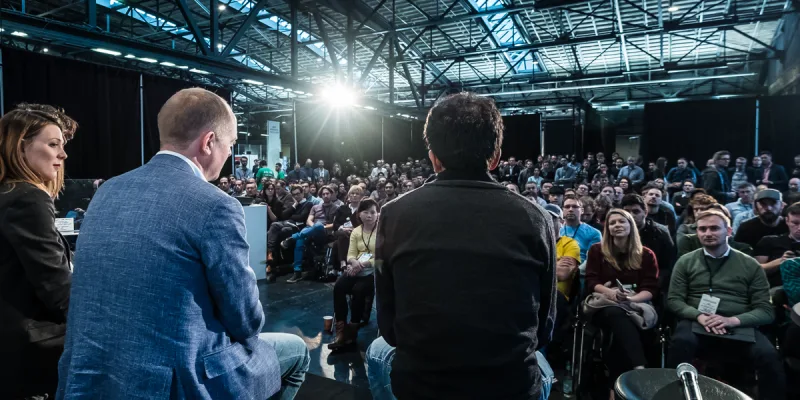
TechCrunch Disrupt 2026 offers $75 passes for laid-off workers seeking their next opportunity
Those affected by recent tech layoffs can attend TechCrunch Disrupt 2026 at San Francisco's Moscone West for $75, with the discounted Expo+ Pass limited to the first 100 qualifying applicants before the event opens October 13.
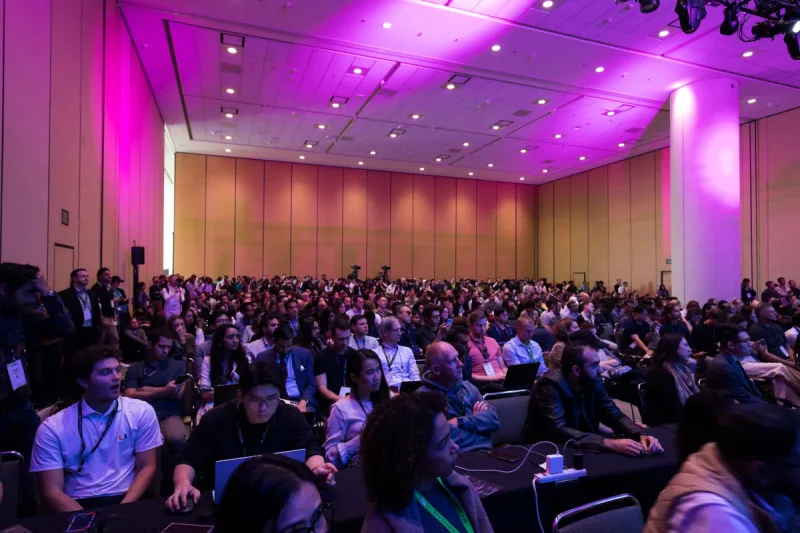
How AI Created the GTM Engineer: Clay's Kareem Amin on a Rapidly Emerging Role
A position that barely existed two years ago is now appearing across technology companies. At TechCrunch Disrupt 2026, Clay's founder will explain how AI and automation are reshaping go-to-market work.
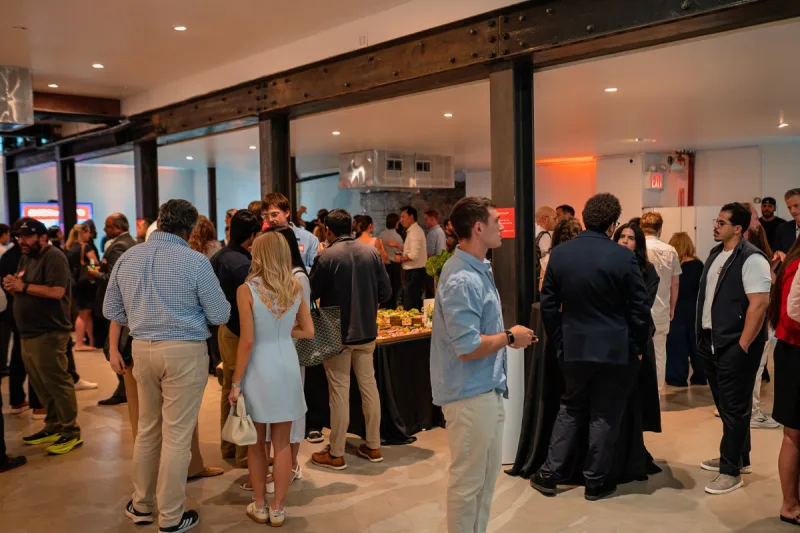
Deadline Tonight: Last Chance to Host a Side Event at Founder Summit 2026
Applications to host a Side Event during TechCrunch Founder Summit 2026 in Boston close at midnight PT tonight. The event runs November 1–7 and will draw over 1,000 tech leaders.