Dubai Summit Draws 3,500 AI Leaders as Startups Pitch to Major Investors
The third Machines Can See Summit concluded at Dubai's Museum of the Future with over 300 startups presenting to investors and delegates from 45 countries, generating 4.7 million online views.
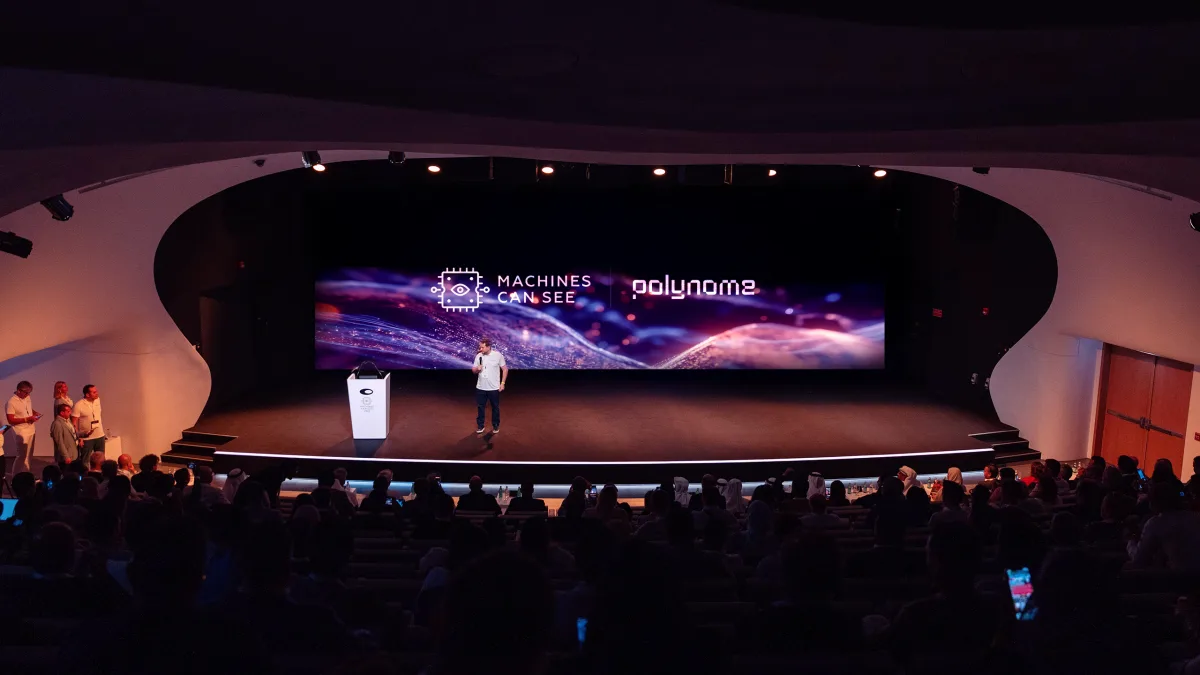
Polynome Group wrapped up the third iteration of its Machines Can See (MCS) Summit at Dubai's Museum of the Future, bringing together more than 3,500 participants representing 45 nations. The two-day event featured pitches from over 300 startups seeking backing from prominent venture firms including EQT Ventures, Balderton, Lakestar, e& capital and Mubadala. Digital engagement proved substantial, with 4.7 million views recorded across social channels and projections suggesting the total will surpass 5 million views.
The gathering operated under the patronage of H.H. Sheikh Hamdan bin Mohammed bin Rashid Al Maktoum and received backing from Digital Dubai, Dubai Police, Emirates, Amazon Web Services, NVIDIA, IBM, SAP, and MBZUAI, among other strategic partners.
"In just three years, MCS has evolved from a specialist meet‑up into a true crossroads for the world's top minds in science, business and public policy. The week proved that when researchers, entrepreneurs and governments share one stage, we move a step closer to transparent, human‑centred AI that delivers real value for society," according to Alexander Khanin, founder & CEO of Polynome Group.
Landmark agreements announced live on stage
The summit saw the signing of several significant partnerships and initiatives:
- A trilateral Memorandum of Understanding linking Astana Hub (Kazakhstan), IT‑Park Uzbekistan and Al‑Farabi Innovation Hub (UAE) to establish a Central‑Asia‑to‑MENA soft‑landing platform for high‑growth start‑ups.
- A Google Cloud programme providing no‑cost "Gen‑AI Leader" learning paths and discounted certification vouchers to advance responsible AI adoption throughout the region.
Polynome Group unveiled AI Academy, developed alongside the Abu Dhabi School of Management and backed by NVIDIA's Deep Learning Institute. The initiative will deliver short executive seminars and a four‑month Mini‑MBA in AI, designed to equip business leaders and innovators with hands‑on AI capabilities and narrow the divide between academic research and market deployment.
Policy & talent
The opening day featured a ministerial discussion titled "Wanted: AI to Retain and Attract Talent to the Country." Participating ministers—Omar Sultan Al Olama (UAE), Amr Talaat (Egypt), Gobind Singh Deo (Malaysia), Zhaslan Madiyev (Kazakhstan) and Meutya Hafid (Indonesia)—outlined expedited visa schemes, national GPU infrastructure and cross‑border regulatory sandboxes aimed at reversing talent outflows and accelerating research and development.
Breakthrough research
- Prof. Michael Bronstein from the University of Oxford and Google DeepMind showcased Geometric Deep Learning applications that reduce drug‑discovery timelines and simulate subatomic physics.
- Marco Tempest, working with NASA JPL and MagicLab.nyc, combined GPT‑4o conversation with mixed‑reality holograms to transform the stage into an interactive mind‑map.
- Prof. Michal Irani of the Weizmann Institute presented perception‑to‑cognition systems capable of reconstructing scenes from a single gaze sequence.
- Andrea Vedaldi from Oxford unveiled a 3‑D generative‑AI pipeline for rapid city‑scale digital twin creation, while Marc Pollefeys of ETH Zurich and Microsoft demonstrated real‑time spatial mapping achieving sub‑10 ms latency.
Industry workshops & panels
AWS conducted a hands‑on workshop titled "Building Enterprise Gen‑AI Applications," addressing RAG, agentic orchestration and secure deployment practices. NVIDIA presented its platform strategy for production generative‑AI on Hopper‑class GPUs and announced a new Service Delivery Partnership with Intelligent Machines Consultancies, Polynome Group's legal entity. Dubai Police held a private session on predictive policing, while X and AI workshops examined social‑data pipelines operating on GPU clusters.
The Machines Can Create forum ran in parallel, investigating AI's applications in luxury, digital art and media. Participants included speakers from HEC Paris, The Sandbox, IBM Research and BBC, concluding with a panel discussion titled "Pixels and Palettes: The Canvas of Tomorrow."
"We are at a turning point where technologies like spatial AI and real-time 3D mapping are moving from laboratories into everyday life, transforming cities, workplaces, and how we interact with the digital world. The Machines Can See Summit underscores how collaboration between researchers, industry, and policymakers accelerates this transition, bringing innovative solutions closer to everyone," said Prof. Marc Pollefeys, Director of the Mixed Reality and AI Lab at ETH Zurich and Microsoft.
Ethical & security focus
Sessions including "Good AI: Between Hype and Mediocrity" and "Defending Intelligence: Navigating Adversarial Machine Learning" emphasized the importance of regular audits, red‑teaming and transparent supply chains. Dubai Police, TII UAE and IBM advocated for implementing ISO‑aligned governance frameworks to protect government sector AI deployments.
High‑profile awards
On the second day, H.H. Sheikh Hamdan bin Mohammed bin Rashid Al Maktoum awarded prizes for the Global Prompt Engineering Championship, recognizing achievements in multilingual, safety‑aligned LLM prompting.
Key takeaways
The summit identified three critical priorities for the coming decade. Talent retention and attraction—supported by coordinated tech visas, national GPU infrastructure and government‑backed sandbox environments—represents the strongest strategy to counteract AI brain‑drain. Spatial computing is transitioning from research settings to real‑world deployment as sub‑10‑millisecond mapping enables safe humanoid robotics and city‑scale augmented‑reality applications. Additionally, generative AI must combine adversarial resilience with transparent, interpretable processes before achieving widespread adoption in regulated sectors.
Read more
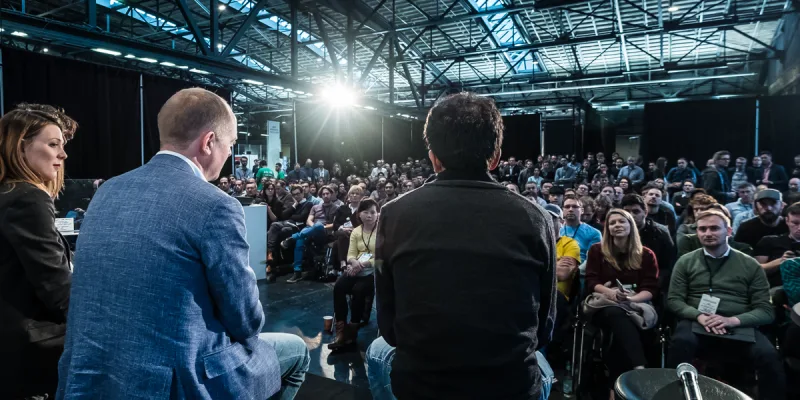
TechCrunch Disrupt 2026 offers $75 passes for laid-off workers seeking their next opportunity
Those affected by recent tech layoffs can attend TechCrunch Disrupt 2026 at San Francisco's Moscone West for $75, with the discounted Expo+ Pass limited to the first 100 qualifying applicants before the event opens October 13.
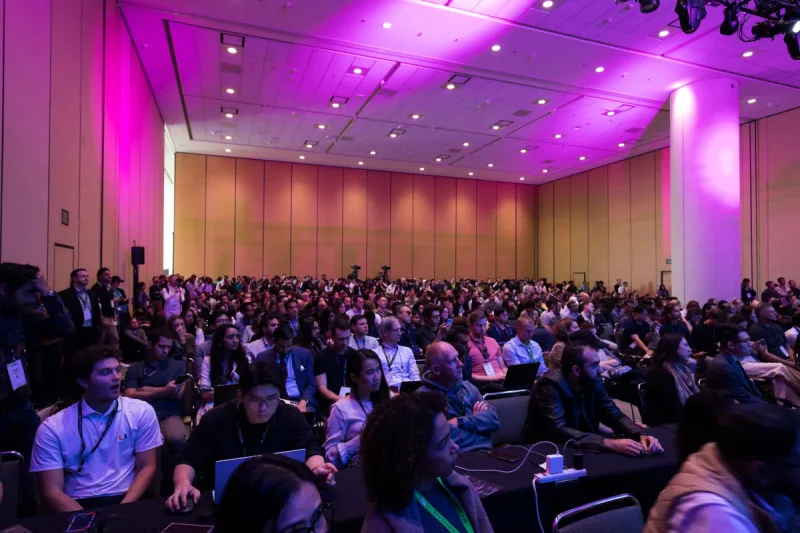
How AI Created the GTM Engineer: Clay's Kareem Amin on a Rapidly Emerging Role
A position that barely existed two years ago is now appearing across technology companies. At TechCrunch Disrupt 2026, Clay's founder will explain how AI and automation are reshaping go-to-market work.
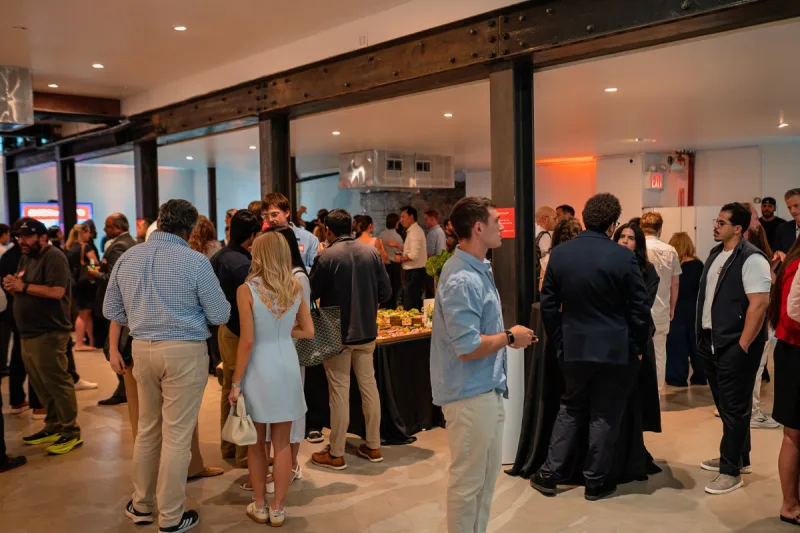
Deadline Tonight: Last Chance to Host a Side Event at Founder Summit 2026
Applications to host a Side Event during TechCrunch Founder Summit 2026 in Boston close at midnight PT tonight. The event runs November 1–7 and will draw over 1,000 tech leaders.