Deloitte Launches Open Model Engineering Practice to Guide Enterprise AI Hybrid Strategies
Deloitte is establishing a new service line to help organizations navigate mixed-model AI deployments, combining open-source and proprietary platforms as enterprises build more complex technology stacks.

Deloitte unveiled its Open Model Engineering practice on Wednesday, positioning the offering as a resource for enterprises seeking to integrate open-source AI models alongside proprietary solutions. The initiative, housed within Deloitte's broader AI services division, will recruit, develop and certify forward deployed engineers through 2027, expanding capacity to serve organizations building enterprise AI applications on open-source frameworks and models. The practice will establish operations across North America, Europe and the Asia Pacific region.
Open-source models are increasingly becoming a strategic component of enterprise AI environments and can work alongside proprietary platforms, according to Nitin Mittal, global AI leader and principal at Deloitte. "By helping organizations take a mixed-model approach to building, deploying, and scaling multi-agent systems, we can help optimize technical choices while preserving flexibility across their AI stack and maximizing return on investment," Mittal stated in the announcement.
The Hybrid Model Trend
Organizations are increasingly adopting portfolios that combine proprietary and open-source models when constructing their AI infrastructure, and service providers are responding to this shift in demand.
Nvidia's acquisition of open-source AI platform Hugging Face for nearly $13 billion, confirmed shortly before Labor Day, demonstrates the escalating significance of open models in the sector.
Deloitte's initiative reflects a broader industry movement toward deploying forward deployed engineers—specialized, embedded developers who accelerate enterprise AI adoption. Palantir, AWS, Microsoft and other major players have similarly adopted this staffing model to expedite AI delivery and shorten time-to-deployment.
Within enterprise AI environments, open models are functioning as additions to rather than replacements for proprietary tools, representing a deliberate hybrid strategy. Jim Rowan, U.S. head of AI and principal of Deloitte Consulting, explained that this blended approach provides organizations greater autonomy regarding expenses, data handling and the location of computational inference. "We see the future as a portfolio approach — frontier models handling complex reasoning and orchestration, open models handling specialized execution," Rowan said.
The Open Model Engineering practice exists to support enterprises in constructing this balanced architecture, which presents considerable technical complexity, according to Rowan.
Enterprises face multiple architectural challenges when implementing hybrid AI strategies. These include determining the appropriate model and architecture for individual workloads, forecasting expenses as agentic AI systems expand, securing control over deployment locations and methods, and safeguarding proprietary data, intellectual property and model governance.
The Open Model Engineering practice will initially concentrate on building enterprise AI applications using Nvidia's Nemotron models. Through this service, organizations will gain the capability to evaluate and select from proprietary models, open models, agentic platforms, cloud infrastructure and on-premises deployment options.
Read more
Money20/20 USA 2026: dates, agenda themes and startup events in Vegas
Money20/20 USA 2026 runs October 18-21 at The Venetian Resort in Las Vegas. Here are the daily hours, the four agenda pillars, the headline sessions and the startup programme.
FII10 2026 in Riyadh: dates, agenda, speakers and the startup pitch
FII10 runs from October 26 to 29, 2026 at the King Abdulaziz International Conference Center in Riyadh. Here is the day-by-day agenda, the AI sessions with times, the confirmed speakers and the five startups pitching on Investment Day.
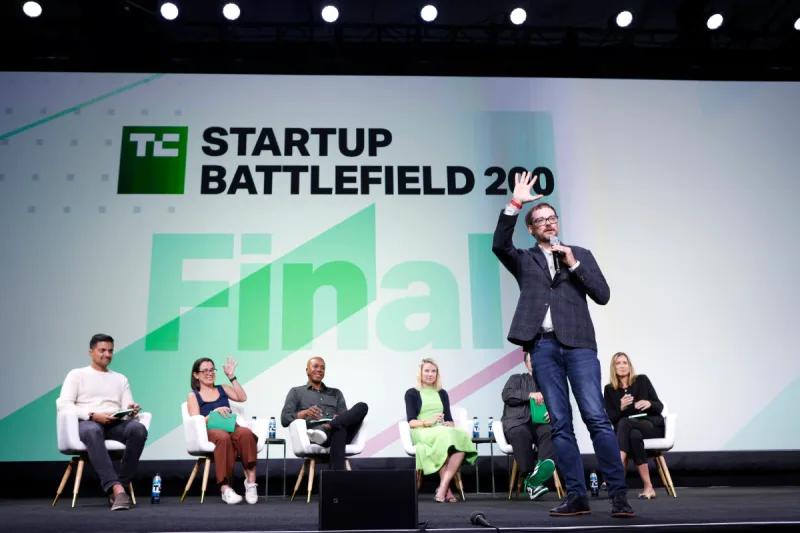
Five Founder-Led Investors to Judge Startup Battlefield 200 at TechCrunch Disrupt 2026
TechCrunch has selected five venture capitalists who each founded their own firms to judge the final round of Startup Battlefield 2026, where 20 startups will compete across three days in October.