A decade-plus of developer bets: tracking Microsoft Build's product launches from Windows 8 to AI agents
Since 2011, Microsoft Build has served as the stage where the company reveals its strategic direction to developers. We tracked 10 major product announcements across 15 editions—some became foundational tools, others faded away entirely.
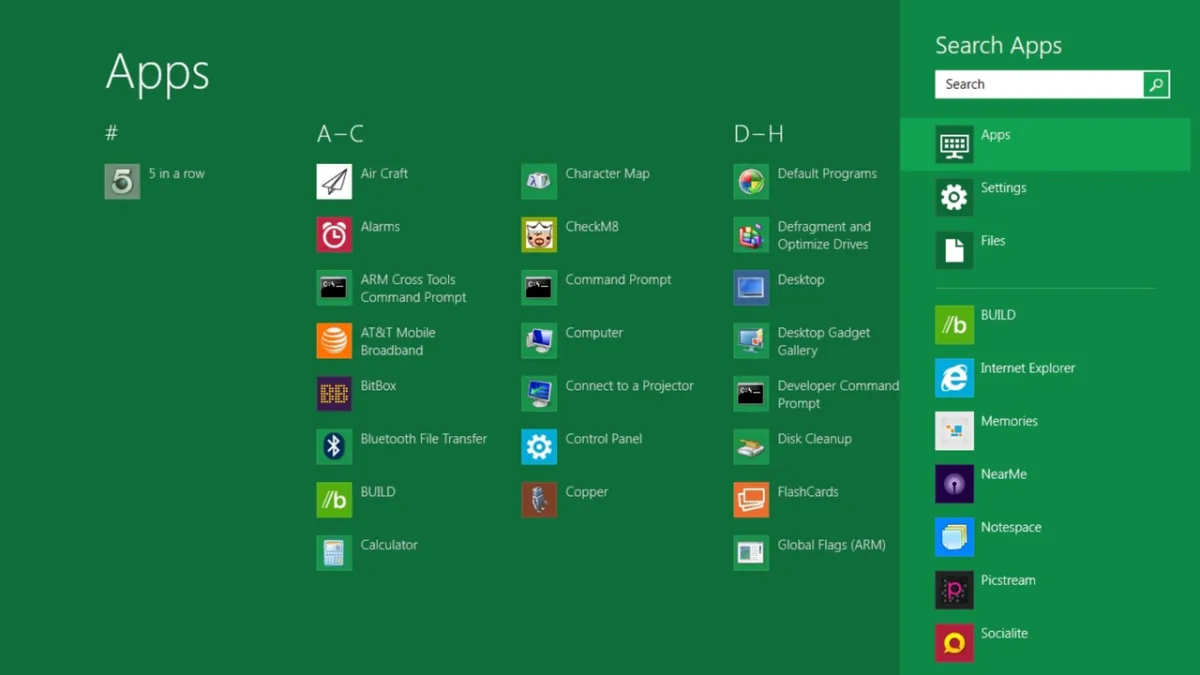
For over a decade, Microsoft Build has functioned as the primary venue where the software giant communicates its priorities to the developer community. Starting in 2011, the annual gathering has evolved into a crucial moment on the technology calendar, where Microsoft previews technologies months before general release or unveils finished products ready for immediate adoption.
The 2026 edition will take place June 2 and 3 at Fort Mason Center in San Francisco—the first time the conference has relocated outside Seattle since 2016. Attendance is capped at approximately 2,500 developers, a notably tighter constraint than recent years. In-person tickets are priced at $1,099, though keynotes and selected sessions will stream without charge.
What distinguishes Build from Microsoft's other major conferences is its singular focus on software developers. While Ignite targets IT administrators and enterprise procurement, and Surface events cater to consumers, Build speaks directly to engineers deciding whether to adopt new Microsoft technologies. The agenda emphasizes APIs, SDKs, preview features, and platform architecture—practical technical details rather than marketing narratives.
The conference's timing matters commercially as well. Google I/O and Apple's WWDC occur in the same window, creating direct competition for developer mindshare. The interval between a Build announcement and actual product availability can shift adoption decisions, sometimes in Microsoft's favor and sometimes not. In recent years, Build has also incorporated voices from partners like OpenAI and GitHub leadership, broadening its signal beyond Microsoft's own engineering priorities.
The character of Build has shifted substantially over its 15 editions. Early conferences centered on Windows, with Microsoft attempting to mobilize developers around Windows 8 and its app store. By the late 2010s, Azure and cloud infrastructure dominated the agenda. Today, artificial intelligence threads through nearly every session and announcement.
Ten products that shaped developer platforms
Microsoft introduces products at Build in varying states of completion. Some appear as rough developer previews with substantial work remaining; others reach preview status and ship to general availability within weeks. The consistent goal is placing the product in developers' hands early to generate momentum before broader release.
Windows 8 developer preview (Build 2011)
The inaugural Build conference ran September 13–16, 2011, at the Anaheim Convention Center. Windows 8 was the event's raison d'être. Microsoft distributed a developer preview and handed every attendee a Samsung tablet running the tile-based Metro interface.
When Windows 8 reached consumers in October 2012, reception proved mixed. The elimination of the Start button, emphasis on touch-first design even on desktops, and sparse Windows Store app selection generated more friction than Microsoft anticipated. Windows 8.1 arrived in 2013 to address the most acute complaints. Windows 10 launched in 2015 as a comprehensive reset, restoring conventional design while retaining the technical foundations from the Windows 8 era.
Cortana (Build 2014)
Microsoft unveiled Cortana at Build 2014 in San Francisco as its competitor to Apple's Siri and Google Now. Named after a character from the Halo franchise, Cortana shipped on Windows Phone 8.1 shortly after and reached Windows 10 desktops in 2015, where it integrated into the taskbar search function.
For several years, Cortana expanded across Microsoft's portfolio—Xbox One, Microsoft Band, Android, and iOS all received versions. Yet it never achieved significant market traction, partly because it was bound to a mobile platform already in decline, and partly because Amazon's Alexa had already established the smart speaker category. By 2019, Microsoft began removing Cortana from Windows search. The standalone Windows application shut down in August 2023, with remaining integrations discontinued by June 2024. Microsoft Copilot now fills the role Cortana was originally designed for on Windows.
HoloLens (Build 2015)
Developers experienced HoloLens firsthand at Build 2015. The headset had been announced months earlier as a holographic computing platform, and hundreds of units were available on the show floor. Demonstrations included using holographic panels to control a robot, and the floor response was sufficiently positive to establish HoloLens as a well-received debut.
A developer edition shipped in 2016 at $3,000; HoloLens 2 followed in 2019 with enhanced hand tracking and expanded field of view. Microsoft progressively narrowed its vision for the product, pivoting toward enterprise applications in surgery, manufacturing, and training. Consumer development never materialized. Early 2023 reports confirmed Microsoft was discontinuing HoloLens hardware development, with no third-generation device planned.
Azure Functions (Build 2016)
Azure Functions entered public preview at Build 2016 as Microsoft's serverless computing offering. The service enabled developers to execute event-driven code without provisioning infrastructure, paying only for consumed compute cycles. Microsoft positioned it directly against AWS Lambda and Google Cloud Functions as part of a broader effort to establish Azure as the default cloud platform for Microsoft developers.
General availability arrived by year-end 2016, followed by continuous refinement. Azure Functions now integrates with Azure AI Foundry, enabling developers to construct and trigger serverless AI agents—a capability nonexistent at launch. The current stable runtime is version 4.x, with earlier versions progressively retired. Among all Build 2016 announcements, Azure Functions has demonstrated the most enduring relevance.
Windows Subsystem for Linux (Build 2016)
WSL debuted at Build 2016 as a mechanism for executing Linux command-line utilities natively on Windows, eliminating the need for virtual machines or dual-boot configurations. It represented Microsoft's response to developer dissatisfaction with Windows as a development environment relative to macOS and Linux, signaling a fundamental shift in the company's stance toward open-source software.
WSL 2, announced at Build 2019, replaced the original compatibility layer with a full Linux kernel operating inside a Hyper-V virtual machine. Microsoft decoupled WSL from the Windows codebase in 2021 to enable independent update cycles. At Build 2025, WSL became open source, formally resolving a GitHub issue that had remained open since the project's inception in 2016: "Will this be open source?"
Windows Terminal (Build 2019)
Build 2019 saw the introduction of Windows Terminal, a contemporary, open-source successor to the Windows Console. It delivered tabbed interfaces, GPU-accelerated text rendering, and consolidated access to all major command-line environments—PowerShell, Command Prompt, and WSL—within a single application. For developers spending substantial time at the command line, it addressed a long-neglected area of the Windows experience.
The first stable release shipped at Build 2020, precisely one year after announcement. Windows Terminal is now the default terminal in Windows 11, receiving regular updates through the Microsoft Store. Version 1.24, the most recent stable release, arrived in April 2026. What began as a developer quality-of-life enhancement has become a standard component of the Windows environment.
GitHub Copilot (Build 2022)
GitHub Copilot reached general availability at Build 2022, following nearly a year in technical preview. Developed with OpenAI and trained on publicly available code repositories, it was the first mainstream AI coding assistant to achieve general availability, providing context-sensitive code completion, function generation from natural language comments, and full code block suggestions directly within developers' existing editors.
The product attracted over 400,000 subscribers in its first month, according to Microsoft CEO Satya Nadella during a subsequent earnings call. By early 2024, paid subscriptions had grown to 1.3 million. Early research indicated developers using the tool completed tasks up to 55% faster than those working without it. GitHub Copilot has since expanded beyond code completion into chat, code review, and pull request summaries, with a fully autonomous agent mode introduced at Build 2025 that operates in the background without active developer input.
Windows Copilot (Build 2023)
Build 2023 marked the moment when artificial intelligence transitioned from a supporting theme to the organizing principle underlying every product discussion. Windows Copilot was unveiled as a sidebar assistant embedded in Windows 11, delivering a Bing AI-powered chatbot accessible from the taskbar on compatible devices. Simultaneously, Microsoft announced that Bing would become ChatGPT's default search engine, demonstrating how thoroughly the Microsoft-OpenAI partnership had penetrated Microsoft's product strategy.
Windows Copilot has undergone substantial evolution since its debut. The original branding was retired in late 2023 as Microsoft consolidated its various assistant products under the unified Microsoft Copilot brand. The assistant now spans Windows, Microsoft Edge, and Microsoft 365, with capabilities extending well beyond the Build 2023 preview.
Copilot+ PCs (Build 2024)
The day before Build 2024 commenced, Microsoft introduced Copilot+ PCs: a hardware category distinguished by a dedicated neural processing unit capable of delivering at least 40 TOPS (trillion operations per second) of on-device AI performance. Surface Pro and Surface Laptop models became the first devices to receive the designation. Microsoft framed this as the opening of a new era in AI-capable personal computing, differentiated from standard Windows devices specifically through on-device AI capabilities enabled by the NPU.
The category has expanded to encompass devices from Qualcomm, AMD, and Intel, with dozens of Copilot+ PC models from multiple manufacturers now available. AI features exclusive to the category include real-time captioning and on-device image generation. Recall—a searchable archive of all on-device activity—generated substantial privacy criticism at launch and was postponed before returning under more restrictive parameters.
GitHub Copilot for autonomous coding (Build 2025)
Build 2025 witnessed GitHub Copilot's evolution from coding assistant to autonomous agent. The new agent mode permits Copilot to execute complete coding tasks independently: generating files, executing tests, resolving bugs, and submitting changes to draft pull requests—all without active developer participation.
GitHub CEO Thomas Dohmke stressed that every action is logged transparently, enabling developers to review the work afterward, and that existing security mechanisms such as branch protection remain fully operational. Satya Nadella compared the transition to other pivotal moments in Microsoft's history, including the shift to 64-bit Windows and the company's cloud transformation. Whether this framing proves prescient depends on how rapidly agent-mode coding becomes standard practice, but the announcement represents the most substantial expansion of GitHub Copilot's capabilities since its 2022 launch.
What's ahead for Build 2026
Satya Nadella is confirmed to deliver the opening keynote, which Microsoft describes as focused on "creating new opportunity for developers across our platforms in this era of AI." The session catalog published in April identifies four primary themes: developer tools and frameworks, cloud platform and data, model training, and agents and apps.
Given the trajectory established at Build 2025, further announcements regarding GitHub Copilot's autonomous capabilities and Azure AI Foundry integration appear probable. Beyond agents, Build 2026 is anticipated to address Windows AI tooling, MCP (Model Context Protocol) integration across Microsoft's developer platform, and enhancements to the Copilot+ PC category.
What Microsoft ultimately announces will likely surprise even seasoned observers—which is, historically, precisely the point of the event.
Read more
TechCrunch Disrupt 2026 offers $75 passes for laid-off workers seeking their next opportunity
Those affected by recent tech layoffs can attend TechCrunch Disrupt 2026 at San Francisco's Moscone West for $75, with the discounted Expo+ Pass limited to the first 100 qualifying applicants before the event opens October 13.
How AI Created the GTM Engineer: Clay's Kareem Amin on a Rapidly Emerging Role
A position that barely existed two years ago is now appearing across technology companies. At TechCrunch Disrupt 2026, Clay's founder will explain how AI and automation are reshaping go-to-market work.
Deadline Tonight: Last Chance to Host a Side Event at Founder Summit 2026
Applications to host a Side Event during TechCrunch Founder Summit 2026 in Boston close at midnight PT tonight. The event runs November 1–7 and will draw over 1,000 tech leaders.