Utah Clears First AI-Powered Prescription System for Acne, Minimal Doctor Oversight
Nolla Health has won regulatory approval to operate an artificial intelligence system that can issue prescription refills for acne treatment with limited human physician review, marking the first such authorization in the United States.
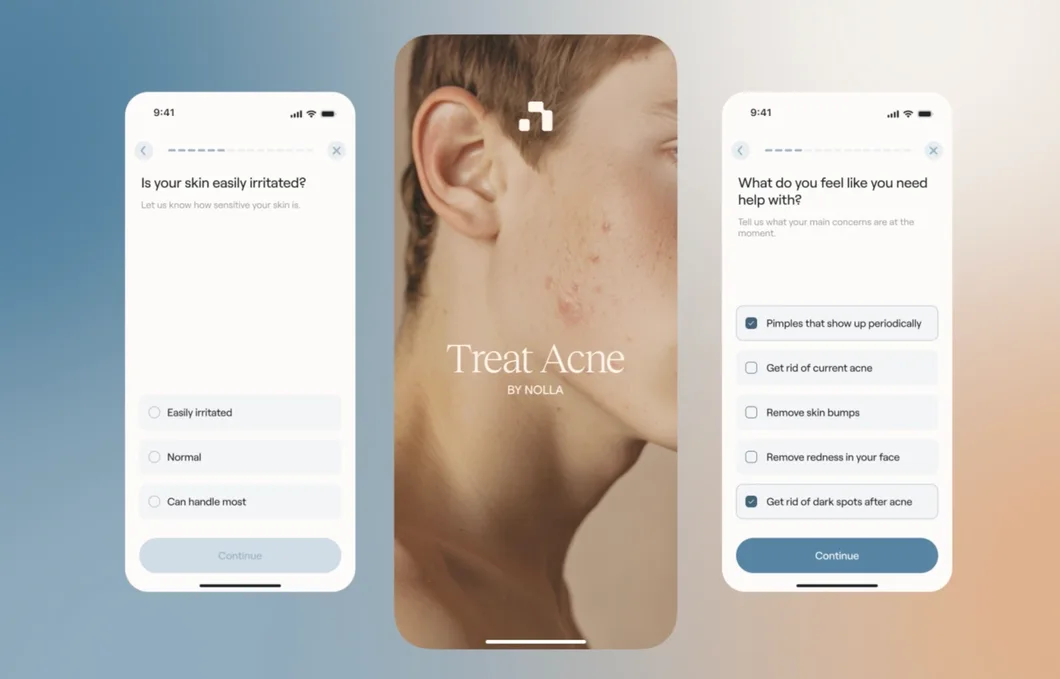
Utah has become the first state to authorize an artificial intelligence startup to automate prescription refills for a medical condition with only minimal physician supervision. Nolla Health announced it received state approval to operate a pilot program allowing patients to interact with an AI agent, submit facial photographs, and obtain prescriptions without direct doctor consultation.
The Nolla Derm iOS application uses an AI model to select medications from a curated list of physician-approved topical treatments. Founder Luis Wenus stated in a post on X that "This makes Nolla the first ever end-to-end AI doctor." Requests outside the system's defined parameters are escalated to licensed physicians.
Patients downloading the app must complete an intake process before accessing the AI doctor. Once cleared, they describe their acne, submit a facial scan documenting severity, and receive a treatment recommendation. Prescriptions can be collected at local pharmacies or delivered home. The system monitors progress through daily skin scans and adjusts treatment monthly based on results.
Until now, a licensed clinician signed every single prescription before it went out. Our AI can now make that prescribing decision itself.
Luis Wenus, Nolla Health founder
Conditional authorization with staged rollout
https://x.com/luiswenus/status/2107123349348298800?ref_src=twsrc%5Etfw
The Utah Office of Artificial Intelligence Policy, Utah Division of Professional Licensing, Utah Medical Association, and American Academy of Dermatology granted approval. The AI system is restricted to topical acne creams and cannot prescribe isotretinoin or oral medications.
The pilot operates in three phases. Phase one requires two physicians to approve every AI prescription before delivery, continuing through at least 100 patients with no serious incidents. Phase two expands to 500 patients, with the AI issuing prescriptions directly while physicians review afterward. Phase three involves physicians reviewing at least 10 percent of monthly automated prescriptions.
The program operates under Utah's AI Learning Lab sandbox, which exempts participating companies from certain state regulations during supervised testing. The Utah Office of Artificial Intelligence Policy clarified that participation "does not mean the State of Utah has approved, endorsed, certified, or vouched for the product."
Acne as stepping stone to broader applications
Nolla Health Chief Medical Adviser Zaid Fadul indicated acne represents only an initial use case. The company intends to expand to other straightforward conditions that are easily assessed remotely and respond well to medications with established safety records.
Fadul told Inc.com that conditions including influenza and uncomplicated urinary tract infections warrant exploration, particularly when objective testing data supplements patient symptoms and medical records. He emphasized that "The key is having very clear guardrails."
Within a decade, Fadul projected AI will handle substantial portions of routine healthcare including diagnostics, treatments, prescription refills, and standard testing. However, he does not anticipate AI deployment for serious conditions, life-altering diagnoses, major surgical procedures, or high-risk medications.
Stimulants, opioids, and benzodiazepines present excessive risk for autonomous AI prescribing due to potential manipulation by patients seeking specific drugs. Fadul noted that "Frankly, it may take a long time before we have enough evidence and the appropriate safeguards to support autonomous prescribing of some of these drugs."
Read more

Reflection AI Unveils Beam, a 501B-Parameter Open-Source Model Trained on SpaceX Infrastructure
The startup, valued at $25 billion, has released Beam, an open-source large language model that matches the performance of much larger competitors while requiring significantly less computational power.

Infor bets industry expertise can make AI agents trustworthy in enterprise operations
As agentic AI moves from labs into production systems, enterprises face a critical challenge: determining what autonomous systems should be permitted to do. Infor is positioning industry-specific context as the answer.
19-Year-Old Founder Raises $11M for Ghost, Launching $3,499 Personal AI Computer
Zain Javaid, who abandoned a career in quantitative finance after ChatGPT's release, has secured seed funding for Ghost, a startup building dedicated hardware for running AI agents locally on a person's device.