Universities Build GPU Clusters at Cloud Scale as AI and Supercomputing Converge
Academic institutions are constructing massive compute infrastructure that mirrors cloud provider operations, discovering that accelerated processing fundamentally transforms research timelines across molecular discovery and materials engineering.
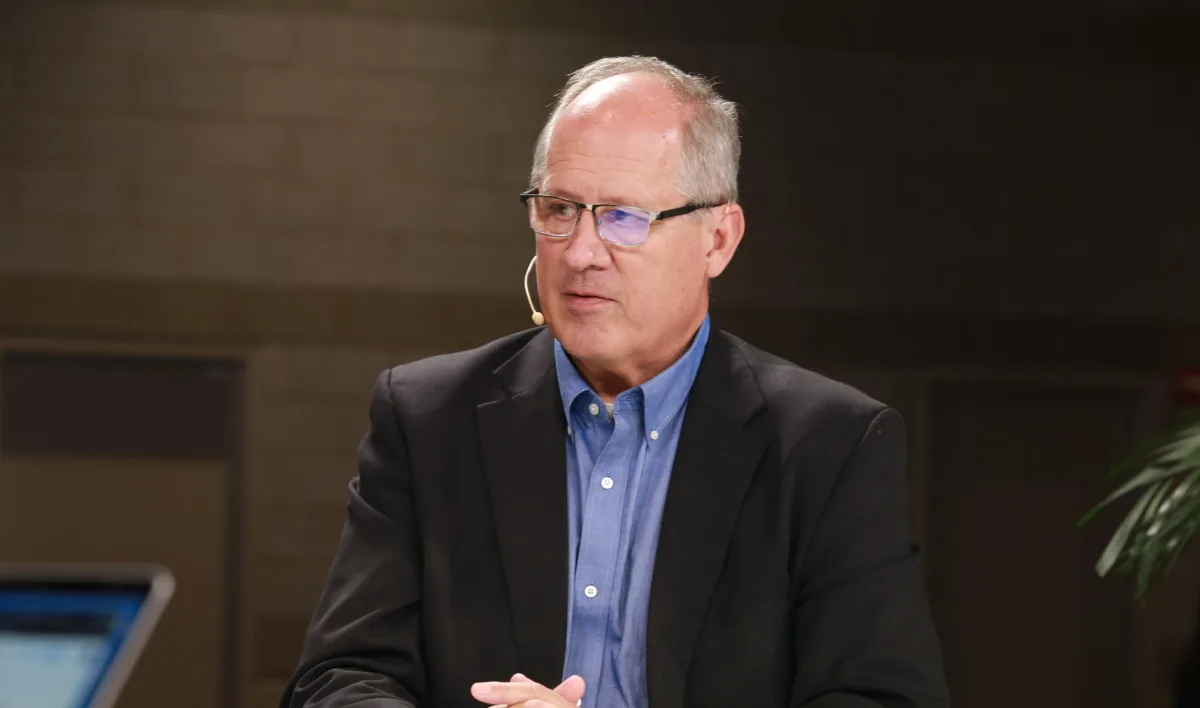
Institutions pursuing advanced AI infrastructure are recognizing that computational power fundamentally alters the velocity of scientific progress, spanning everything from molecular discovery through materials engineering.
The convergence of artificial intelligence with high-performance computing has prompted campus technology leaders to adopt operational models resembling those of major cloud providers. The Texas A&M University System is deploying two significant compute clusters serving researchers across its 12 universities and eight state agencies, according to Vince Kellen, chief information officer of The Texas A&M University System.
A lot of it is going to be related to molecules, molecular discovery, and the size of these computers lets researchers go through their research program in a fraction of the time. What would normally take five months now gets done in a week. That's a big deal for the scientists. It lets them do more exploration more frequently.
Vince Kellen
Kellen shared these insights during remarks at SC26, where he spoke with theCUBE's Rebecca Knight and Gemma Allen in an exclusive broadcast. The conversation centered on how the system's supercomputing infrastructure is accelerating molecular discovery, the operational and security considerations involved in managing these systems, and the broader fusion of AI with supercomputing capabilities.
Molecular discovery at supercomputer speed
The VISION supercomputer, an Nvidia Corp. DGX H200 SuperPOD, achieved a ranking of No. 66 on the June 2026 Top500 list, establishing it as the most powerful university supercomputer in the U.S., with a second cluster in development, according to Kellen. The Texas A&M Engineering Experiment Station engaged Dell Technologies Inc. to construct IGNITE, a system leveraging Advanced Micro Devices Inc. GPUs housed within an Equinix Inc. data center located in Dallas. Given that certain research initiatives involve highly classified federal contracts, security considerations have become the central policy priority.
On the policy side, our main concern is security. Are we doing this in a secure way? Are we vetting the employees who are coming into the platform to make sure that they're properly credentialed to come in?
Vince Kellen
As Texas A&M navigates credential verification and access protocols while expanding computational resources to its research community, the benefits extend well beyond accelerated molecular discovery. Materials engineering, fluid dynamics and additional engineering specialties represent the next wave of applications, and the institution shows no indication of decelerating its infrastructure expansion, according to Kellen.
https://www.youtube.com/embed/TQyZdVFIjrg?start=1&feature=oembed
We already know that AI and supercomputing are one and the same. That trajectory is going to continue in Texas for some time.
Vince Kellen
Read more

Anthropic Researcher Claims Claude Proved the Riemann Hypothesis
Levent Alpöge, a researcher at Anthropic, announced he used Claude to prove one of mathematics' most significant unsolved problems, though the company has not officially confirmed the breakthrough.

Beyond Token Prices: Why Enterprise AI Cost Accounting Demands a Deeper Look
Companies pursuing multi-model AI strategies are discovering that token pricing alone masks the true cost of AI deployment. New data shows task efficiency and user consumption patterns drive the real bill.

Anthropic's IPO Surge Masks Broader AI Market Jitters as OpenAI Waits in the Wings
Anthropic's initial public offering delivered a solid 17% first-day gain, but the move may have signaled caution rather than momentum across the AI sector, with broader market concerns weighing on technology stocks.