Thiel Fellow Sigil Wen Launches Underdog, a Fully Private On-Device AI Assistant
Sigil Wen, who tested early versions of Claude, Midjourney and GPT-3 in an AI hacker house at 17, is now launching Underdog, an AI assistant that runs entirely on users' machines with no data collection.
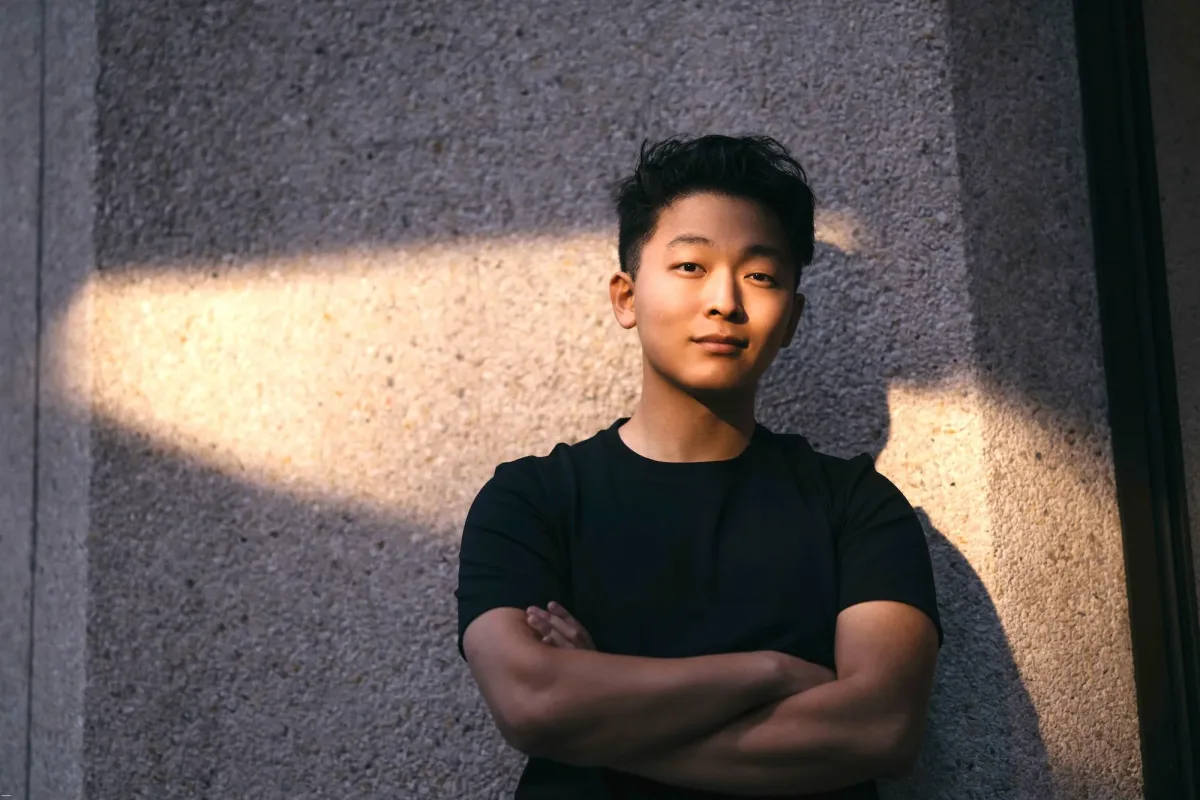
Sigil Wen's path to founding Conway Research began when he was a teenager. At 17, the self-taught programmer relocated to Silicon Valley and joined an AI hacker house where he lived alongside renowned researcher Andrej Karpathy. During his time there, Wen worked alongside individuals who would later become prominent figures in artificial intelligence, including Aravind Srinivas, who founded Perplexity, and Noam Brown, a researcher at OpenAI. He gained early exposure to tools that would shape the AI landscape, testing prototypes that evolved into Claude (shared by Anthropic co-founder Ben Mann), Midjourney (from David Holz), OpenAI's GPT-3, and Stable Diffusion. Naval Ravikant, a prominent investor and entrepreneur, brought Wen on to work on Airchat, his unsuccessful competitor to Clubhouse. As a side project, Wen even managed to deploy GPT-2 on his Apple Watch. "It was a magical time," Wen told TechCrunch.
Now a Thiel Fellow—part of Peter Thiel's program supporting young founders who skip traditional college—Wen unveiled Underdog this week as an invite-only beta release. The platform distinguishes itself as among the most privacy-focused AI assistants available, with all processing happening directly on users' machines. Currently supported on macOS and Windows, the service plans to expand to Linux, iPhone, and Android in the coming months.
Technical Architecture and Performance
The foundation of Underdog's privacy approach is Husky, an inference engine that Wen developed to execute AI models with exceptional speed. Wen emphasizes that his engine differs from competing on-device solutions by minimizing data transfers between a computer's central processor and graphics processor. The platform incorporates additional privacy safeguards, including encryption for credentials tied to email accounts and other services that users grant Underdog access to.
Underdog operates using compact models rather than the large-scale systems deployed in cloud data centers. The assistant currently relies on a 27-billion parameter reasoning model adapted from Qwen3.8 27B. Wen contends that this model performs comparably to Claude Opus 4.6 across certain benchmarks—representing capabilities from approximately six months prior. According to Wen, this capability level suffices for typical use cases such as comparative shopping or helping with math problems. "You don't need to sacrifice your privacy for the capability because they're just as capable," Wen says, adding that smaller on-device models will continue advancing in sophistication.
Business Model and Funding
Underdog's approach to monetization diverges sharply from conventional AI assistant business models. The application launches without cost and explicitly rejects advertising as a revenue source. Since computational work occurs on users' own hardware rather than company servers, Underdog avoids the substantial expenses associated with cloud inference infrastructure. "I don't have to charge you a subscription to run this because my costs are so super low," Wen explained.
Instead, Underdog adopts a transaction-based revenue model inspired by fintech companies. With Stripe co-founder Patrick Collison serving as an angel backer, the service will capture a modest percentage from payment transactions that the AI assistant facilitates through Stripe's payment infrastructure—functioning similarly to an interchange fee. This structure allows the assistant to remain financially independent from user data monetization, aligning its incentives with those of users rather than advertisers or data brokers.
This contrasts with many competing AI assistants, whose terms permit collecting user information for potential sale to advertisers, third parties, or incorporation into model training. For users of AI assistants—which may require access to sensitive personal information ranging from health details to financial records to information about family members—such data practices present significant privacy risks.
Wen articulated his philosophy in what he describes as his AI manifesto: "Why should using AI require surrendering your private information?" He elaborated to TechCrunch: "I honestly want to build Underdog for myself. I'm building a product that I would be proud for my future children to use."
Conway Research, the company behind Underdog, has secured backing from prominent venture investors. Beyond Collison's angel investment, the startup counts Andreessen Horowitz (through partner Chris Dixon), Khosla Ventures, Hummingbird, SV Angel, and the Anthology Fund—a partnership between Menlo Ventures and Anthropic—among its backers. The angel investor roster includes Guillermo Rauch of Vercel, Noam Brown, and Deedy Das, among others.
Read more

Mirror Particle Challenges LLM-Based Behavior Prediction With Foundation Model Approach
A San Francisco startup is rethinking how AI predicts human behavior, arguing that fine-tuned language models miss the mark and building a world model from scratch instead.
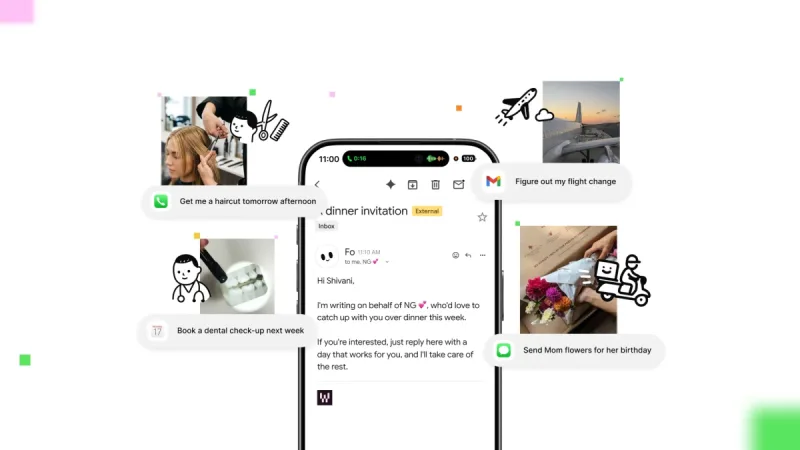
Khosla backs Wajo's trust-first approach in crowded personal-agent market
Venture capitalist Vinod Khosla is betting on Shivani Poddar's Wajo to dominate the personal-agent space, citing trust and safety as the differentiator against rivals like Meta's Muse and OpenAI's Dot.

SAP Brings Autonomous Enterprise Out of Apps With Expanded Joule Platform
SAP is shifting its autonomous AI strategy from in-app agents to a broader layer that lets users interact with AI assistants across multiple enterprise systems simultaneously. The company launched Joule Work and Desktop alongside its Autonomous Enterprise architecture in October.